Home refurbishment adds most value in London when it matches what local buyers and tenants want, such as a modern kitchen and bathroom, better energy efficiency and good decoration, without over-capitalising. This guide shows how to plan a refurbishment that raises your property’s value and attracts quality tenants, and how to check planning rules and licensing first.
Table of Contents
- Understanding Why Refurbishment Matters To Landlords And Homeowners
- Navigating Common Challenges And Misconceptions In Refurbishment Projects
- Planning And Financing Your Refurbishment For Maximum Returns
- Maximising Value After Refurbishment: Maintenance And Tenant Engagement
- Discover Expert Property Maintenance And Refurbishment Services
- Frequently Asked Questions
Key takeaways
| Point | Details |
|---|---|
| Strategic focus matters most | Prioritise kitchens and bathrooms for highest return on investment rather than extensive whole-property upgrades. |
| Planning prevents costly mistakes | Check planning regulations, HMO licensing, and Article 4 Directions before committing to finance or contracts. |
| Financing structure impacts returns | Arrange specialist finance covering purchase, works, and refinance stages before exchange to avoid mid-project surprises. |
| Market alignment beats personal preference | Match refurbishment scope to local tenant profiles and market standards to prevent over-capitalisation. |
| Ongoing maintenance protects investment | Regular upkeep preserves refurbishment quality and sustains tenant appeal long after works complete. |
Understanding why refurbishment matters to landlords and homeowners
London’s competitive rental market drives landlords and homeowners to refurbish properties for distinct strategic reasons. Attracting new tenants, reducing vacancy periods, and boosting property value rank as the primary motivations behind renovation decisions. Unlike personal homeowners who refurbish for comfort, landlords invest to meet regulatory standards and tenant expectations.
Compliance sits at the heart of landlord refurbishment strategy. Updated electrical systems, improved fire safety measures, and HMO licensing requirements force landlords to invest regardless of personal preference. These mandatory upgrades protect both tenant welfare and landlord legal standing whilst simultaneously enhancing property appeal.
Homeowners approaching refurbishment from a value perspective focus on return potential. Whether preparing for sale or rental, targeted upgrades to kitchens, bathrooms, and energy efficiency deliver measurable increases in market value. Strategic improvements attract higher-quality tenants willing to pay premium rents for well-maintained properties.
Vacancy periods erode rental income faster than most landlords realise. Each empty week costs roughly 2% of annual rental income. Smart refurbishment reduces these gaps by:
- Creating modern, appealing spaces that rent quickly
- Meeting tenant expectations for contemporary finishes
- Positioning properties competitively against local market offerings
- Building reputation that attracts referrals and repeat tenants
London’s diverse neighbourhoods demand different refurbishment approaches. Properties in Zone 2 competing for young professionals require different specifications than family homes in outer boroughs. Understanding your target tenant profile shapes every refurbishment decision, from fixture quality to layout configuration. Regular property maintenance for letting agencies becomes easier when initial refurbishment establishes solid foundations.
Navigating common challenges and misconceptions in refurbishment projects
Refurbishment projects consistently encounter two major frustrations: disruption and costs exceeding estimates. These challenges derail even carefully planned projects when landlords underestimate the complexity of coordinating trades, managing timelines, and controlling budgets. Professional project management addresses these pain points directly by establishing clear communication channels and realistic scheduling.
Unexpected costs emerge from multiple sources during refurbishment. Hidden structural issues only become apparent after works begin. Material price fluctuations impact budgets mid-project. Contractor delays extend timelines and compound labour costs. Savvy landlords build 15-20% contingency budgets to absorb these inevitable surprises without compromising project completion.
Over-capitalisation represents perhaps the most damaging misconception in refurbishment planning. Misconception: over-capitalising on a refurbishment can lead to a negative return, making it crucial to align the refurbishment with the local market and target tenant profile. Installing luxury finishes in mid-market rental areas fails to generate corresponding rent increases. Tenants pay for functional quality, not unnecessary premium features.
Disruption during works creates tangible costs beyond immediate expenses. Current tenants may terminate leases early to escape noise and inconvenience. New tenant viewings become challenging when properties sit mid-renovation. Marketing efforts stall whilst works progress. These hidden costs multiply when projects overrun original timelines.
Pro Tip: Schedule major refurbishment between tenancies rather than during occupancy. The temporary vacancy cost proves cheaper than managing tenant complaints, potential lease breaks, and the reputational damage from disruptive works.
“Successful refurbishment balances ambition with market reality. Your property competes within a specific local context, and exceeding that context’s expectations rarely translates to proportional returns. Know your market ceiling before you start spending.”
Misdirected investment wastes resources on improvements that tenants neither notice nor value. Landlords focused on personal taste rather than tenant priorities frequently over-invest in aesthetic elements whilst neglecting practical concerns. Storage space, reliable heating, and modern appliances matter more to most tenants than designer light fittings or statement walls.
Red flags in property maintenance often emerge during refurbishment when underlying issues surface. These discoveries require immediate attention to prevent future problems. The role of project managers in renovations becomes invaluable when coordinating responses to unexpected structural or systems issues.
Planning and financing your refurbishment for maximum returns
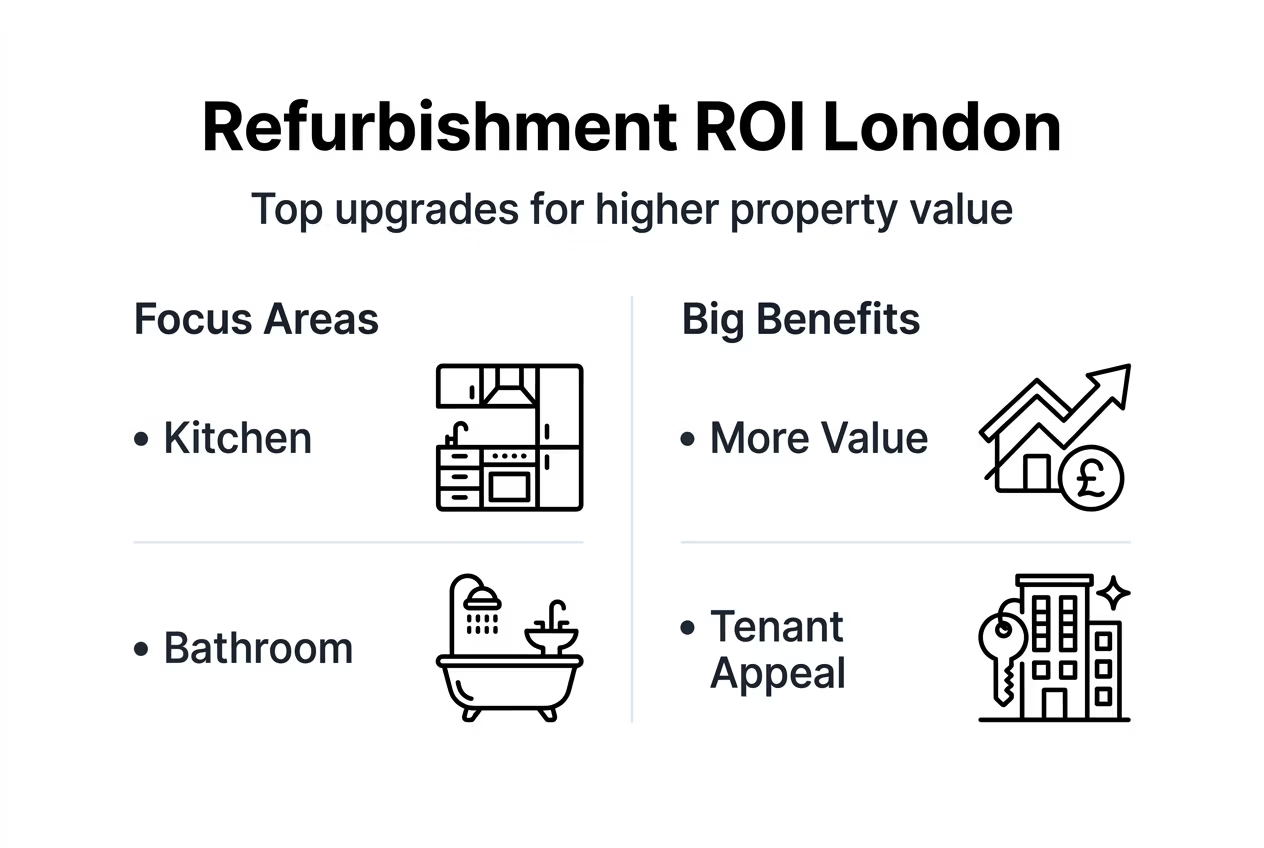
Kitchen and bathroom renovations consistently deliver the highest return on investment in London’s rental market. These spaces endure heavy daily use and demonstrate property quality to prospective tenants immediately. Budget allocation should prioritise these areas before considering other upgrades.

Regulatory checks must precede financial commitments to avoid costly surprises. Planning regulations, including Article 4 Directions, HMO licensing, and realistic build costs must be thoroughly checked before applying for finance or exchanging contracts. Many London boroughs impose Article 4 Directions restricting HMO conversions without planning permission. Proceeding without proper checks risks project termination mid-works.
Achieving high returns requires specialist finance structures that cover purchase, works, and refinance, each with distinct lending criteria and timing considerations. Traditional mortgages rarely accommodate refurbishment costs effectively. Development finance provides short-term funding for works, followed by refinancing onto standard buy-to-let mortgages once projects complete and properties generate rental income.
Financing strategy should be decided before purchase to avoid costly surprises mid-project. Waiting until after exchange to arrange development finance creates unnecessary stress and potentially forces acceptance of unfavourable terms. Early engagement with specialist lenders clarifies feasibility and shapes realistic budgets.
Effective planning follows this sequence:
- Define target tenant profile and research local market rents
- Conduct thorough property survey identifying structural and systems condition
- Check planning status, Article 4 restrictions, and licensing requirements
- Obtain minimum three contractor quotes with detailed specifications
- Arrange finance covering purchase, works, and refinance phases
- Build 15-20% contingency budget for unexpected costs
- Establish clear project timeline with milestone payments
- Confirm contractor insurance, accreditations, and references
Contingency budgets protect against common refurbishment surprises. The following table illustrates typical unexpected costs and recommended reserves:
| Issue Category | Contingency % |
|---|---|
| Structural repairs | 20% |
| Electrical upgrades | 15% |
| Plumbing complications | 15% |
| Delayed completion | 10% |
Pro Tip: Request itemised quotes rather than lump-sum estimates. Detailed breakdowns help identify where costs concentrate and enable informed decisions about specification changes if budget pressures emerge.
Smart financing structures enable capital recycling across multiple properties. Development finance typically advances 65-75% of purchase price plus 100% of refurbishment costs. Once works complete and properties re-value, refinancing onto standard mortgages at 75% loan-to-value releases initial capital for reinvestment. This approach accelerates portfolio growth compared to all-cash strategies.
Renovating vs refurbishing in London requires understanding scope and objectives. Construction services from UpKeep can guide specification decisions based on property condition and target market positioning.
Maximising value after refurbishment: maintenance and tenant engagement
Refurbishment quality deteriorates rapidly without proper maintenance schedules. Regular inspections identify minor issues before they escalate into expensive repairs. Preventative maintenance costs substantially less than reactive emergency responses whilst protecting the investment you’ve made in upgraded fixtures and finishes.
Compliance extends beyond initial refurbishment completion. Gas safety certificates, electrical inspection reports, and energy performance certificates require regular renewal. HMO properties face additional licensing conditions around fire safety, room sizes, and amenity provision. Maintaining compliance protects both tenant welfare and landlord legal standing.
Tenant engagement directly impacts retention rates and vacancy costs. Landlords are motivated by compliance and tenant appeal rather than personal comfort, making responsive communication essential. Quick responses to maintenance requests demonstrate professionalism and build tenant loyalty that reduces turnover.
Proactive management targets common issues before tenants report problems:
- Schedule annual boiler servicing before heating season begins
- Inspect seals around baths and showers quarterly to prevent water damage
- Clear gutters and drains twice yearly to avoid blockages
- Test smoke and carbon monoxide detectors during routine inspections
- Service ventilation systems to prevent mould and condensation issues
Understanding tenant profiles shapes maintenance priorities appropriately. Young professionals value reliable broadband and modern appliances. Families prioritise garden maintenance and storage solutions. Students require robust fixtures that withstand heavy use. Matching maintenance focus to tenant expectations enhances satisfaction and encourages lease renewals.
Pro Tip: Implement digital maintenance reporting systems that allow tenants to submit requests with photos. This documentation helps diagnose issues remotely, prioritise urgency accurately, and maintain records for compliance purposes.
Property maintenance for letting agencies becomes more efficient when maintenance schedules align with refurbishment specifications. Quality initial works reduce ongoing maintenance frequency and costs. Plumbing maintenance tips for landlords help prevent common issues that damage newly refurbished properties.
Seasonal maintenance cycles protect refurbishment investments throughout the year. Winter preparation includes heating system checks, pipe insulation, and draught proofing. Spring maintenance focuses on exterior painting, roof inspections, and garden clearance. Summer allows window repairs, redecorating between tenancies, and external works. Autumn requires gutter clearing, boiler servicing, and preparing properties for colder months.
Tenant retention delivers substantial financial benefits beyond avoiding vacancy costs. Established tenants cause less wear, report issues promptly, and provide stable income. Refurbishment creates the foundation for quality tenancies, whilst ongoing maintenance and engagement sustain those relationships long term.
Discover expert property maintenance and refurbishment services
Transforming refurbishment plans into successful projects requires experienced professionals who understand London’s property market complexities. UpKeep UK delivers comprehensive refurbishment and maintenance solutions tailored specifically for landlords and homeowners seeking reliable, cost-effective results.

Our specialist building maintenance services in London protect your refurbishment investment through proactive care and rapid response times. Professional project management minimises disruptions, controls costs, and ensures works complete on schedule. From initial planning through final inspections, our experienced team coordinates every trade and milestone efficiently.
Comprehensive construction services from UpKeep cover everything from minor upgrades to complete property transformations. We understand that successful refurbishment balances quality workmanship with budget discipline. Our fixed-price quotes eliminate uncertainty whilst our insured, accredited tradespeople deliver consistent standards across every project phase. Avoiding property maintenance red flags becomes simpler when working with professionals committed to transparency and communication throughout your refurbishment journey.
Frequently asked questions
What is the difference between refurbishment and renovation?
Refurbishment updates and improves existing features through repairs, redecorating, and replacing worn fixtures. Renovation involves more extensive rebuilding, potentially including structural changes, extensions, or complete system replacements. Refurbishment typically completes faster with less disruption. For detailed comparison, see our renovating vs refurbishing in London guide.
How can I finance my home refurbishment in London?
Specialist loans covering purchase, works and refinance stages provide flexible funding for refurbishment projects. Development finance advances refurbishment costs during works, then refinances onto standard mortgages once properties generate income. Plan your financing before purchase to avoid surprises. Consult construction services from UpKeep about coordinating works with finance timelines.
What are the most cost-effective upgrades to increase property value?
Kitchen and bathroom renovations offer the highest return on investment for London properties. Modern appliances, quality worktops, and efficient layouts attract quality tenants willing to pay premium rents. Smart technology including heating controls and security systems boost appeal further. Avoid over-capitalising by aligning upgrades with local market standards rather than luxury specifications.
How long does typical property refurbishment take in London?
Standard refurbishment projects spanning kitchens, bathrooms, and decorating typically complete within 6-8 weeks. More extensive works including structural changes, system upgrades, or HMO conversions may require 12-16 weeks. Timeline depends on property size, scope complexity, and contractor availability. Always include buffer time for unexpected issues and permit delays.
Do I need planning permission for property refurbishment in London?
Most internal refurbishment works fall under permitted development rights requiring no planning permission. However, HMO conversions often require permission, particularly in areas with Article 4 Directions. External alterations, extensions, and changes to listed buildings always need approval. Check with your local authority before commencing works to avoid enforcement action and costly reversals.