You usually must inform your insurer before starting structural work, and either extend your existing policy or buy specialist renovation cover. Skip this step and you risk voiding your buildings insurance entirely, right when you need it most. Start with three actions today.
- Notify your insurer with basic project details: cost, duration, and what’s changing structurally.
- Confirm your contractor’s public liability insurance before they set foot on site, ideally £2 million to £5 million.
- Get written confirmation of cover, either an extension to your current policy or a specialist renovation quote.
Check any insurer’s status on the Financial Services Register before you buy anything from them. If you’re using a contractor under a JCT contract, ask which insurance option applies. A properly insured, professional contractor such as Upkeep UK will already hold public liability cover and can supply certificates on request, which removes one variable from an already complicated process.
Key Takeaways
Home renovation insurance in the UK depends on declaring structural work promptly, verifying contractor liability cover, and reassessing your rebuild sum once the project completes.
| Point | Details |
|---|---|
| Declare structural work | Tell your insurer before major changes start or risk invalidating your buildings policy. |
| Check contractor liability | Confirm public liability cover, typically £2m to £5m, before work begins. |
| Watch unoccupancy limits | Standard cover often lapses after 30 to 60 days if the property sits empty. |
| Understand JCT Option C | Under most renovation contracts, you insure the structure and the contractor insures the works, jointly. |
| Update your rebuild sum | Recalculate rebuild cost and premium once work finishes, not before. |
Table of Contents
- What is home renovation insurance UK homeowners actually need?
- What will insurers ask before they quote you?
- Where standard cover falls short during building work
- How renovation work changes your premium and rebuild sum
- Who insures what under a JCT contract?
- How do you buy the right cover, step by step?
- How does professional project management reduce your insurance risk?
- Ready to renovate without the insurance headaches?
- Where to verify the details
- The gap between what insurers assume and what homeowners actually do
- Frequently asked questions
- Sources
What is home renovation insurance UK homeowners actually need?
Renovation insurance, sometimes called contract works or contractor’s all risks (CAR) cover, protects a property and its contents while building work is underway. It’s different from standard buildings and contents insurance because it accounts for a site in flux: exposed roofs, materials stacked in a garden, tradespeople coming and going, and a structure that isn’t in its finished state.
Standard home insurance policies generally cover minor, cosmetic work such as repainting or replacing a kitchen worktop without a fuss. Structural changes are a different matter entirely. Loft conversions, extensions, knocking through walls, or anything touching the roof or foundations typically needs to be declared, and Which? and MoneySuperMarket both confirm that failing to do so can invalidate your policy.
Two figures matter here:
- Public liability cover on renovation policies typically sits between £2 million and £5 million, protecting you if a contractor injures a passer‑by or damages a neighbour’s property.
- Employers’ liability cover, which any contractor with staff must carry by law, sits separately from public liability and should also be checked.
Only around 31% of buildings policies include accidental damage cover as standard, with contents policies at roughly 30%. If your policy doesn’t include it, add it before work starts, not after a dropped tool goes through a ceiling.
What will insurers ask before they quote you?
Insurers underwrite renovation risk based on specifics, not vague descriptions. Before you call, gather this information so you can answer without guessing:
- Total project cost, including materials and labour.
- Expected duration, from start date to practical completion.
- Structural changes involved, such as new openings, extensions, or roof work.
- Occupancy status during the works: will you stay in the property or move out?
- Contractor details, including their name, trade, and insurance limits.
Insurers frequently reassess premiums during the works and again once the project finishes, since a part-finished extension carries different risk to a completed one with a higher rebuild value. Expect a follow-up conversation, not a one-off quote that lasts forever.
Pro Tip: Keep a single folder, digital or physical, with every receipt, contractor certificate, site photograph, and approved plan. If a dispute arises over when damage occurred, this evidence settles it in days rather than weeks.

Where standard cover falls short during building work
Renovation sites create gaps that standard buildings insurance was never designed to fill. The three most common:
- Unoccupied property limits. Most standard policies restrict cover if a home sits empty, typically for 30 to 60 days, after which cover for theft or damage can lapse. Moving out for a major refit? Ask about specialist unoccupied-property cover before you go.
- Theft of materials, plant and tools. Standard contents policies rarely cover a stack of roof tiles or a hired cement mixer left on site overnight. Specialist renovation policies usually do.
- Unfinished-structure exclusions. An extension with an open roof or missing windows may fall outside your existing buildings cover entirely until it’s watertight, catching out homeowners who assumed “it’s insured” meant all of it.
Faulty workmanship by a contractor is another blind spot. Public liability covers third-party injury and damage, not the contractor’s own mistakes, which is why checking their qualifications and any warranty scheme matters as much as their insurance certificate.
How renovation work changes your premium and rebuild sum
A loft conversion, kitchen extension, or new set of bifold doors doesn’t just add value to your home. It changes what it costs to rebuild if disaster strikes, and that figure drives your premium.
Premiums typically rise when:
- You add habitable floor space (a loft conversion or extension).
- You install higher-spec finishes (underfloor heating, bespoke joinery, smart systems).
- You add new appliances or fixed installations with higher replacement costs.
Ask for a mid-project review if costs or scope change significantly partway through, insurers would rather adjust now than dispute a claim later. Once work completes, recalculate your rebuild sum insured, not the market value of your home, but what it would cost to rebuild it from scratch using current materials and labour rates. The Association of British Insurers’ rebuild calculator or a quantity surveyor can help you land on an accurate figure, and getting it wrong in either direction either overpays your premium or leaves you underinsured when it counts most.
Who insures what under a JCT contract?
If your renovation runs under a Joint Contracts Tribunal (JCT) agreement, three standard insurance options determine who arranges cover, and getting this wrong leaves gaps nobody notices until there’s a claim.
- Option A puts the contractor in charge of insuring the works themselves, common on new-build projects with no existing structure to protect.
- Option B has the employer (you, the homeowner) insure the works directly.
- Option C is the one most renovation and extension projects use: the employer insures the existing structure, while the contractor insures the new works, both typically under a joint names policy.
“Joint names” means both you and your contractor are named on the same policy, so neither party can pursue the other for a claim covered by it. That matters most under JCT clause 6.5.1, which covers non-negligent damage, harm caused to your existing building by the works even when nobody did anything wrong. Without joint names cover, you could be left arguing over liability instead of getting your home repaired.
Before work starts, ask your contractor which JCT option applies and request written confirmation of their contractor’s all risks (CAR) policy limits. If they can’t answer clearly, treat that as a warning sign, not a technicality to sort out later. Firms with established permit and planning experience tend to have this answer ready without hesitation.
How do you buy the right cover, step by step?
Arranging valid cover for a renovation isn’t complicated, but skipping a step is how homeowners end up uninsured. Follow this sequence:
- Contact your current insurer first. Give them the project basics and ask directly whether your existing policy extends to cover the works. Get their answer in writing, an email is enough, a phone call alone is not.
- Request liability certificates from every contractor. Public liability and employers’ liability certificates should be current, not expired, and should name the correct trading entity.
- Get a specialist quote if your insurer can’t help. MoneySuperMarket and comparison sites make this straightforward, and a short-term policy running 3 to 12 months is often cheaper and simpler than trying to bend a standard policy to fit.
Ask every insurer or broker: what’s excluded, what’s the unoccupied-property limit, and does cover include accidental damage? Ask every contractor: what’s your liability limit, who’s your insurer, and can I see the certificate? If you’re unsure how to interpret answers, an FCA-authorised broker registered with BIBA can check policy wording against your specific project.
Pro Tip: Before signing anything, check the master’s renovation checklist against your contractor’s paperwork. Missing items surface faster on paper than mid-project.
How does professional project management reduce your insurance risk?
Insurance cover is only as good as the evidence behind a claim, and this is where working with an established contractor changes the outcome. Upkeep UK verifies subcontractor insurance before any trade steps onto a client’s site, checking public liability and employers’ liability certificates against current registers rather than taking a contractor’s word for it.
Project managers also generate exactly the paper trail insurers want to see:
- Dated photographs at each project stage, useful evidence if a dispute arises over when damage occurred.
- Completion certificates and sign-off documentation for structural or compliance-related works.
- Coordinated scheduling that minimises the days a property sits empty or exposed mid-project.
Browse Upkeep UK’s completed projects to see the kind of documentation and finish this generates in practice, the sort of evidence that speeds up a claim rather than complicating one.
Ready to renovate without the insurance headaches?
Arranging the right cover matters, but so does working with a contractor who makes that process straightforward from the outset. Upkeep UK provides insured tradespeople, project managers, and the certificates and documentation insurers expect to see, across renovations, extensions, and refurbishments throughout London and the wider UK.
If you’re a landlord or property manager weighing up a refurbishment programme, Upkeep UK’s landlord property maintenance service covers planned works and compliance servicing alongside the reactive repairs that come up along the way. For larger renovation projects, understanding what a project manager actually delivers is worth ten minutes of your time before you commit to a contractor.
Where to verify the details
- Confirm any insurer or broker’s authorisation on the Financial Services Register.
- Read BIBA’s home renovation guidance and consumer advice from Which? or MoneySuperMarket.
- For project management or a quote, contact Upkeep UK directly.
The gap between what insurers assume and what homeowners actually do
Most guidance on renovation insurance treats “tell your insurer” as a box-ticking exercise. It isn’t. The research behind this article points to a different problem: homeowners tend to notify insurers about the big structural changes, an extension, a loft conversion, but assume smaller works fall under some vague exemption. They don’t always. Definitions of “structural” vary between insurers, and that ambiguity is exactly where claims get disputed.
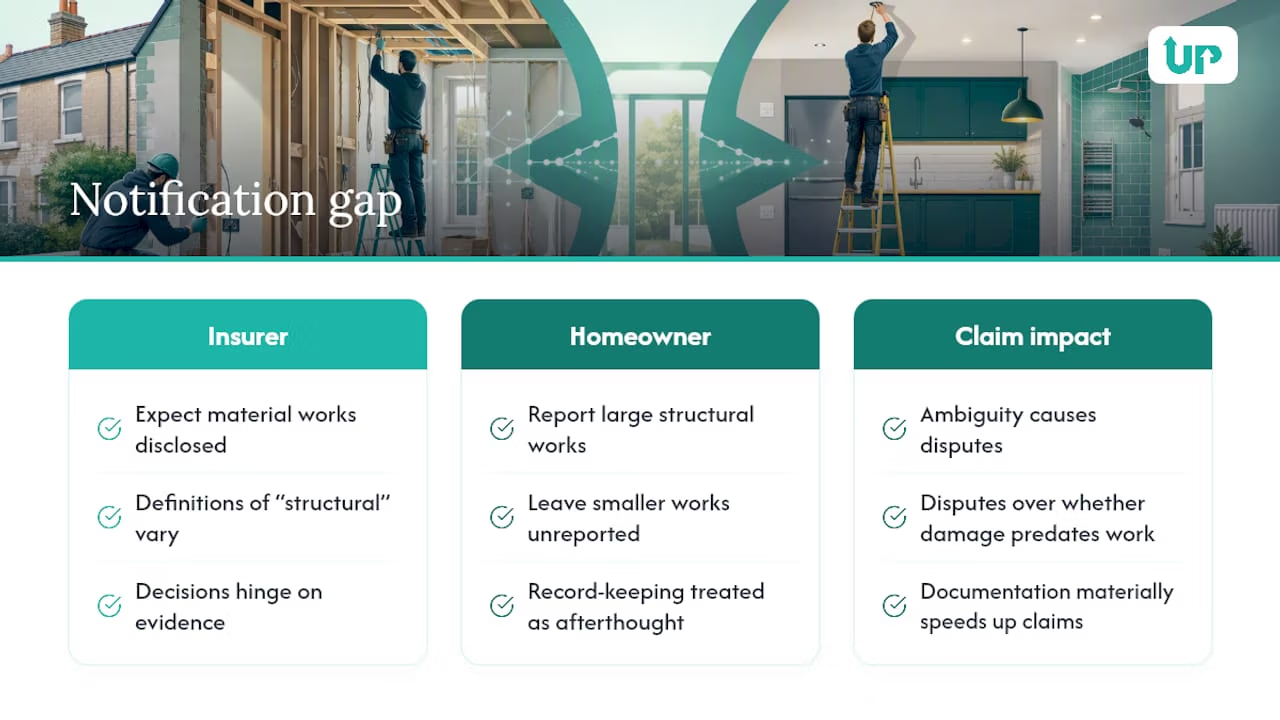
The overrated piece of advice is “get a quote and move on.” The underrated piece is record-keeping. Which? found that documentation, invoices, contractor certificates, dated photographs, materially speeds up claims and prevents disputes over whether damage predates the work. Most homeowners treat this as an afterthought rather than a condition of a smooth claim.
If you take one thing from this article, prioritise the paper trail over the policy document itself. A policy without evidence to back a claim is a promise on paper. A policy with photographs, certificates, and a clear contract structure behind it is something an insurer can actually act on.
Frequently asked questions
Do I need to tell my insurer about a kitchen renovation?
If it involves structural changes, such as knocking through a wall or altering plumbing routes significantly, yes. Cosmetic updates like new units or worktops usually don’t require notification, but check your policy wording to be certain.
What happens if I don’t declare renovation work to my insurer?
Your policy could be invalidated, meaning any claim, even one unrelated to the renovation, might be refused. Always declare structural work in writing before it starts.
How long can my house sit empty during a renovation before cover lapses?
Most standard policies limit unoccupancy to 30 to 60 days. Beyond that, you typically need a specialist unoccupied-property policy.
Who is responsible for insuring renovation works under a JCT contract?
Under the commonly used JCT Option C, you insure the existing structure while your contractor insures the new works, usually under a joint names policy.
Is specialist renovation insurance more expensive than standard cover?
Not necessarily. A short-term specialist policy running 3 to 12 months is often more cost-effective than stretching a standard policy that excludes the risks your project actually creates.
Sources
- Will your insurance cover home improvements? – Which?
- What is home renovation insurance? | MoneySuperMarket
- Confused
- Home Renovation – BIBA