


Phase 2 of Awaab’s Law takes effect on 30 November 2026 and extends the statutory repair regime to seven additional hazards, including excess cold, excess heat and structural collapse. From that date, landlords must investigate emergencies within 24 hours, complete standard investigations within 10 working days, issue a written summary within 3 working days and make homes safe within 5 working days. The first practical step is simple: log every report on receipt, triage it for emergency risk immediately and start building a timestamped evidence file from the first phone call.
Key Takeaways
Implementing Phase 2 of Awaab’s Law requires social landlords to establish quick triage systems, comprehensive documentation, and coordinated contractor responses for seven new hazards by November 2026.
| Point | Details |
|---|---|
| Identify emergency hazards quickly | Assess reports rapidly to determine if immediate action within 24 hours is necessary. |
| Build robust record-keeping | Maintain a single, timestamped tenant file with investigation notes, contractor reports, and photos for compliance. |
| Train staff on triage and vulnerability | Prepare staff to distinguish emergency cases and evaluate tenant vulnerability at first contact. |
| Coordinate multi-trade teams | Use teams capable of handling heating, electrical, and structural hazards in one visit to meet deadlines. |
| Utilize Upkeep UK support | Leverage Upkeep UK’s emergency response and digital documentation services for fast, compliant repairs. |
1. Seven hazards joining Phase 2 and typical first repairs
Phase 2 brings seven significant hazards into the statutory timeframes that previously applied only to damp and mould. Each hazard calls for a different first response, and most of these are temporary measures that buy time for permanent remedial works rather than full fixes in themselves.
| Hazard | What it looks like | Typical making-safe repair |
|---|---|---|
| Excess cold | Failed heating, poor insulation, draughts | Portable heaters, emergency boiler repair, temporary draught-proofing |
| Excess heat | Overheating flats, broken ventilation | Portable fans, temporary shading, ventilation repair |
| Falls on the level | Broken flooring, loose stair treads, missing handrails | Temporary boarding, handrail fitting, hazard tape and signage |
| Structural collapse | Cracked walls, bowing ceilings, unstable balconies | Propping, cordoning off the area, structural engineer call-out |
| Fire and explosions | Faulty gas appliances, blocked fire escapes | Isolating the appliance, clearing escape routes, gas engineer attendance |
| Electrical hazards | Exposed wiring, tripping circuits, scorch marks | Isolating the circuit, temporary power shutdown, electrician call-out |
| Domestic hygiene | Pest infestation, broken sanitary fittings, food safety risks | Pest control callout, temporary sanitary repairs, deep clean |
These fixes are expected to stabilise the property, not necessarily resolve the hazard permanently. A documented plan for full remedial works still has to follow within the statutory window.
2. Statutory timescales: a simple timeline
The clock starts the moment a tenant reports a hazard, and several deadlines run alongside each other rather than one after another. Phase 2 guidance sets these as maximum thresholds, not targets to aim for.
- 24 hours: investigate and make safe where there’s an emergency risk to health or safety.
- 10 working days: complete a standard investigation for significant, non-emergency hazards.
- 3 working days: provide the tenant with a written summary once the investigation concludes.
- 5 working days: make the home safe once the investigation is complete.
- 12 weeks: begin full remedial works where the make-safe repair is only temporary.
A standard investigation must conclude within 10 working days of the report, which sets the clock running for the written summary and the make-safe deadline that follow it. Day one is the first working day after the report is logged, not the day it arrives. A household with higher vulnerability, such as a resident with a respiratory condition facing an excess cold hazard, should never wait for the full 10 days simply because the clock allows it.
3. How to triage: emergency versus significant hazards
Deciding whether a report is an emergency or a standard significant hazard is the single decision that determines which timeline applies, so getting it wrong at the first call creates risk downstream. Guidance points to a “reasonable landlord” test: would a competent landlord, given the same facts, treat this as posing an immediate risk to health or safety? Tenant vulnerability, including age, disability and existing health conditions, has to weigh into that judgement, not just the physical state of the hazard.
Four investigation types apply once a case is triaged:
- Emergency investigation: launched immediately for reports with an immediate risk to life or safety, with make-safe action required within 24 hours.
- Standard investigation: used for significant hazards without immediate danger, completed within 10 working days.
- Renewed investigation: triggered when a tenant disputes a remote assessment and requests an in-person visit, which guidance for tenants confirms they have the right to request.
- Further investigation: opened when new evidence emerges after the written summary has already been issued, restarting the relevant clock for that new finding.
Action checklist for whoever picks up the call: confirm immediate safety, including whether anyone needs to leave the property; check tenant welfare and any vulnerability factors that change the urgency; decide whether temporary accommodation is needed because the hazard can’t be made safe quickly enough; and collect initial evidence, including photos the tenant can send immediately, before anyone attends in person.
Pro Tip: Log the vulnerability assessment at first contact, not after the visit, because that single note often decides whether a case was triaged correctly if it’s ever reviewed.
4. Contractor checklist for making a property safe
Section 8.5 of the guidance sets out what a contractor attending a Phase 2 hazard is expected to do on site, and treating this as a standard job brief reduces the chance of a compliance gap.
- Isolate the hazard first, whether that’s cutting power to a faulty circuit or shutting off a dangerous appliance.
- Carry out the temporary repair needed to make the property safe within the statutory window.
- Put up safety signage or cordon off the affected area where the hazard can’t be fully resolved on the visit.
- Secure the property before leaving, including boarding, locking or otherwise closing off any exposed risk.
- Take time-stamped photos before and after the work, noting materials used and any test results.
- Get a tenant sign-off where practical, confirming the property has been made safe.
| Report field | Why it matters |
|---|---|
| Time of arrival and departure | Confirms the 24-hour or 5-day window was met |
| Hazard identified | Matches the job to the correct Phase 2 category |
| Temporary or permanent fix | Flags whether full works are still outstanding |
| Materials and tests used | Supports the written summary and any later audit |
| Tenant contact outcome | Shows whether sign-off or further access is needed |
That job report becomes the raw material for the written summary, so a contractor who skips a field is creating extra work for whoever has to draft it under a 3-working-day deadline.
5. Record-keeping that holds up under scrutiny
Every case needs a single tenant file holding the investigation notes, contractor job reports, photos, written summaries and all tenant communications in one place, timestamped as they’re created. Statutory guidance treats contemporaneous records as the main evidence used in enforcement action or in a complaint to the Housing Ombudsman.
- Investigation notes from the first report through to triage decision and any vulnerability assessment.
- Contractor instructions and completed job reports, including photos and materials used.
- The written summary issued to the tenant, with the date it was sent.
- All tenant communications, including any request for a renewed investigation.
- A record of temporary accommodation offered or arranged, where that applied.
If a deadline is missed for reasons genuinely outside your control, such as a tenant refusing access, this same file is what demonstrates reasonable endeavours to the Regulator of Social Housing or the Ombudsman. Records kept after the fact, reconstructed from memory, carry far less weight than notes made on the day.
6. Building operational readiness before November
Meeting Phase 2 consistently is a staffing and stock question as much as a legal one, and most of the groundwork needs to start well before the deadline.
- Build a rota that can reach an emergency within 24 hours at any hour, not just during office hours.
- Separate your investigation and repair teams so a backlog in one doesn’t delay the other’s deadline.
- Hold a stock of portable heaters, dehumidifiers and boarding kits ready for immediate dispatch, rather than ordering per job.
- Train staff on triage decision-making and vulnerability assessment before Phase 2 goes live, not after the first case arrives.
- Run a written summary template through legal or compliance review now, so drafting one doesn’t become the bottleneck.
Procurement lead times for emergency equipment can run into weeks, so ordering stock against projected Phase 2 volumes now avoids a scramble once the seven new hazards start generating cases. Our guide on planning property maintenance for 2026 covers the procurement side in more detail.
Pro Tip: Run one full mock case through your new process before November, from report to written summary, to find where your current system actually slows down.
7. What Phase 2 readiness looks like in practice
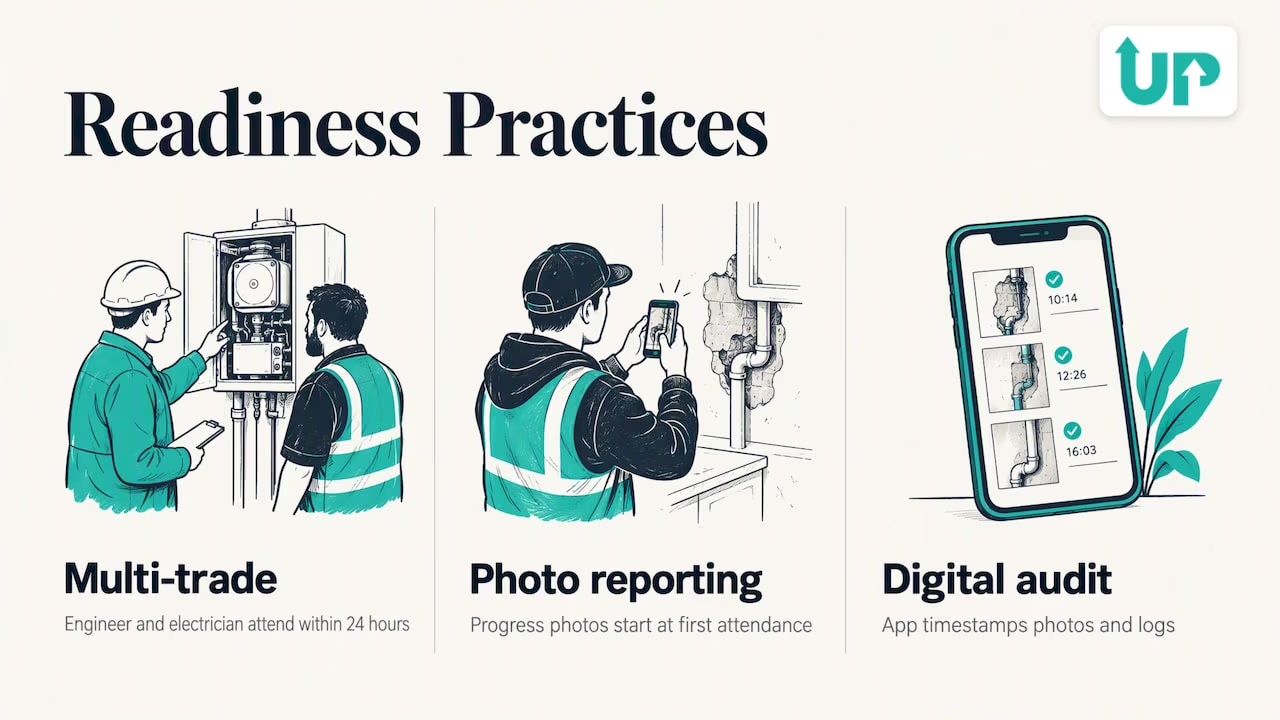
Phase 2 rewards landlords who already treat reactive repairs as a documented process rather than a series of one-off jobs. Multi-trade teams matter here because a single hazard, such as excess cold linked to a failed boiler, often needs an engineer and an electrician on the same visit to meet the 24-hour window. Photo-based progress reporting, built into the job from the first attendance, removes the gap between what a contractor did and what the written summary says happened.
We work across emergency repairs, planned maintenance and reactive contracts for property managers who need evidence they can hand to a regulator without reconstructing it afterwards. A maintenance management app that automatically timestamps photos and logs can make this easier still: resources like the residential maintenance app guide from BRCKS walk through how digital audit trails support exactly this kind of record-keeping.
— Drahim Hasula
How UpKeep UK supports your Phase 2 compliance
We cover the practical side of Phase 2: fast attendance on emergency reports, multi-trade teams who can isolate a hazard and make a property safe in one visit, and photo-based reporting that supports your documentation.
- We aim to respond to emergencies promptly, supporting the 24-hour investigate and make-safe window.
- Our trades cover plumbing, electrics, roofing and heating under one contract, reducing the need for multiple call-outs.
- Every job includes photo progress reports that support your written summary.
- Transparent pricing and insured engineers aim to keep procurement straightforward when scaling up for Phase 2 volumes.
If you need an emergency SLA in place before November, our emergency property repairs service is built for exactly that brief. Get in touch to discuss a planned maintenance contract or an emergency response agreement that fits your portfolio.
FAQ
What is Awaab’s Law Phase 2?
Awaab’s Law Phase 2 extends statutory repair timeframes to seven additional hazards, including excess cold, excess heat and structural collapse, from 30 November 2026. It builds on Phase 1, which covered damp and mould, applying the same emergency and standard investigation deadlines.
When does Awaab’s Law Phase 2 come into force?
Phase 2 takes effect on 30 November 2026. Social landlords need triage processes, contractor briefings and record-keeping systems in place before that date rather than from it.
What are the Awaab’s Law repair deadlines?
The core deadlines are 24 hours to investigate and make safe an emergency, 10 working days for a standard investigation, 3 working days to issue a written summary and 5 working days to make the home safe. Full remedial works must begin within 12 weeks where the initial repair was only temporary.
Will there be an Awaab’s Law Phase 3?
Phase 3 is expected in 2027 and is set to cover the remaining hazard categories under the Housing Health and Safety Rating System. Landlords building Phase 2 processes now should design them to extend rather than rebuild for the next phase.
What should a landlord do to prepare for Phase 2?
Build triage capacity to decide emergency versus standard cases quickly, brief contractors on the section 8.5 making-safe tasks, and set up a single tenant file for investigation notes, photos and written summaries. Services such as our emergency property repairs offering can cover the response side while you build internal processes for triage and documentation.
































