Whoever controls a London office, hotel or retail premises is the Legionella duty holder, and that responsibility stays with them even when a contractor carries out the checks. The duty requires a written control scheme, a named responsible person and up-to-date monitoring records. If you manage or own a commercial building, your immediate task is to confirm those three things exist and are current.
Key Takeaways
Maintaining a proper Legionella control system is essential for commercial buildings, requiring up-to-date records, clear responsibilities, and routine monitoring to prevent bacterial growth.
| Point | Details |
|---|---|
| Confirm duty holder and responsible person | Identify and verify who is responsible for water safety management in your building and their daily responsibilities. |
| Ensure control scheme exists and is followed | Develop, document, and actively follow a written scheme that details system management and inspection routines. |
| Monitor water temperatures and routine checks | Track hot storage at 60°C, outlets reaching 50°C within a minute, and cold below 20°C, with regular flushing and descaling. |
| Target larger or complex sites carefully | Prioritize regular flushing, sampling, and schematic updates for sites with unused areas or complex plumbing. |
| Upkeep UK offers tailored water hygiene and maintenance support | We assist with planning, carrying out, and recording water safety checks to meet legal and safety requirements. |
At-a-glance action checklist for dutyholders
Before anything else, work through this short list to see where your current arrangements stand.
- Confirm who is the named duty holder and who holds day-to-day responsibility as the responsible person.
- Check that a written control scheme exists and is being followed, not just filed away.
- Map tanks, cylinders, sentinel points and any dead legs, and keep the monitoring logs somewhere inspectors can access quickly.
If any of these is missing, that’s the starting point, not the risk assessment itself.
Duty holder responsibilities and the written control scheme
Under HSE guidance, the duty holder is responsible for implementing and managing the written control scheme, and that document has to be clearly set out rather than implied. Your legal duties generally involve several key steps.
- Identify and assess potential sources of risk across the hot and cold water systems.
- Prepare and implement a written scheme setting out who does what and when.
- Appoint a competent person to manage compliance day to day, whether that’s in-house or external.
- Keep records of checks, actions and any remedial works carried out.
A sound written control scheme names management responsibilities, holds an up-to-date schematic of the system, sets out control measures for each part of it and lays out an inspection programme with dates. Commercial buildings, hotels and sites with complex plant generally need a competent person or specialist agency because of the complexity of their systems. What matters most isn’t a certificate from a one-off visit. It’s whether your logs show the system has been controlled consistently over time.
Checks table: temperatures and routine frequencies to monitor
These are the core numbers and frequencies most London commercial sites need to track against HSE guidance.
| Check | Target or frequency |
|---|---|
| Hot water storage temperature | 60°C or higher |
| Hot water at outlets | Reaches 50°C within one minute |
| Cold water temperature | Below 20°C |
| Sentinel outlet checks | Monthly |
| Flushing of little-used outlets | Weekly |
| Showerhead descaling | Quarterly |
For offices, hotels and retail units, use the table above as a practical starting point and follow the site’s risk assessment.
Commercial risks to prioritise on larger or multi-use sites
Some building types carry more risk than others, and London’s mix of offices, hotels and retail units throws up a few recurring problems.
- Empty floors and unused hotel rooms allow water to sit still long enough for temperatures to drift into the range where Legionella thrives, so outlets there still need regular flushing and logging.
- Dead legs left behind after fit-outs are a persistent issue: redundant pipework holds stagnant water, and HSE guidance on managing legionella flags this stagnation as a major operational risk that schematics need to be updated to reflect.
- Complex plant may warrant periodic sampling as identified through the risk assessment.
- Sampling isn’t a default requirement, but where the risk assessment identifies elevated risk, it should sit inside your monitoring schedule rather than as a one-off reaction.
If you’ve recently completed any refurbishment work, our CDM client duties checklist covers the wider responsibilities that come with those projects, including the point at which pipework changes need to feed back into your water safety records.
How to get a Legionella risk assessment: scope and what to expect
Commissioning an assessment properly means knowing what should land on your desk at the end of it.
- A proper site survey records the system description, a schematic, monitoring points and relevant temperature measurements taken on site.
- A competent assessor should hand you a written control scheme, a monitoring schedule and a prioritised list of remedial actions, not just a pass or fail verdict.
- Check competence before you sign anything: ask for evidence of relevant experience and how any microbiological sampling will be carried out.
- Get responsibilities in writing: who keeps the records, who carries out remedial works, and how documents are handed over once the contractor’s visit is finished.
Pro Tip: Ask any assessor to walk you through last year’s log format before they start, so you know exactly what you’ll be filing and where.
Record keeping and review: how often, triggers and good practice
There’s no fixed statutory interval for reviewing a Legionella risk assessment. HSE’s guidance for landlords is clear that you review whenever there’s reason to think the existing assessment no longer holds up, and the same principle applies to commercial dutyholders under wider HSE guidance.
- Review after any system change, refurbishment or significant alteration to pipework.
- Review after a change of occupancy or extended vacancy, including empty floors or unused hotel rooms.
- Review immediately if monitoring shows a control failure, such as a sentinel outlet running persistently cold or hot water failing to reach temperature.
- Retain temperature readings, sentinel checks, flushing logs, descaling records and any corrective actions in one place.
Keeping everything centrally, rather than split across contractors’ paperwork, is what actually makes an inspection or audit straightforward. Our plumbing maintenance guidance for landlords covers the flushing and descaling routines in more practical detail if you’re setting this up for the first time.
Our perspective on integrating water hygiene into planned maintenance
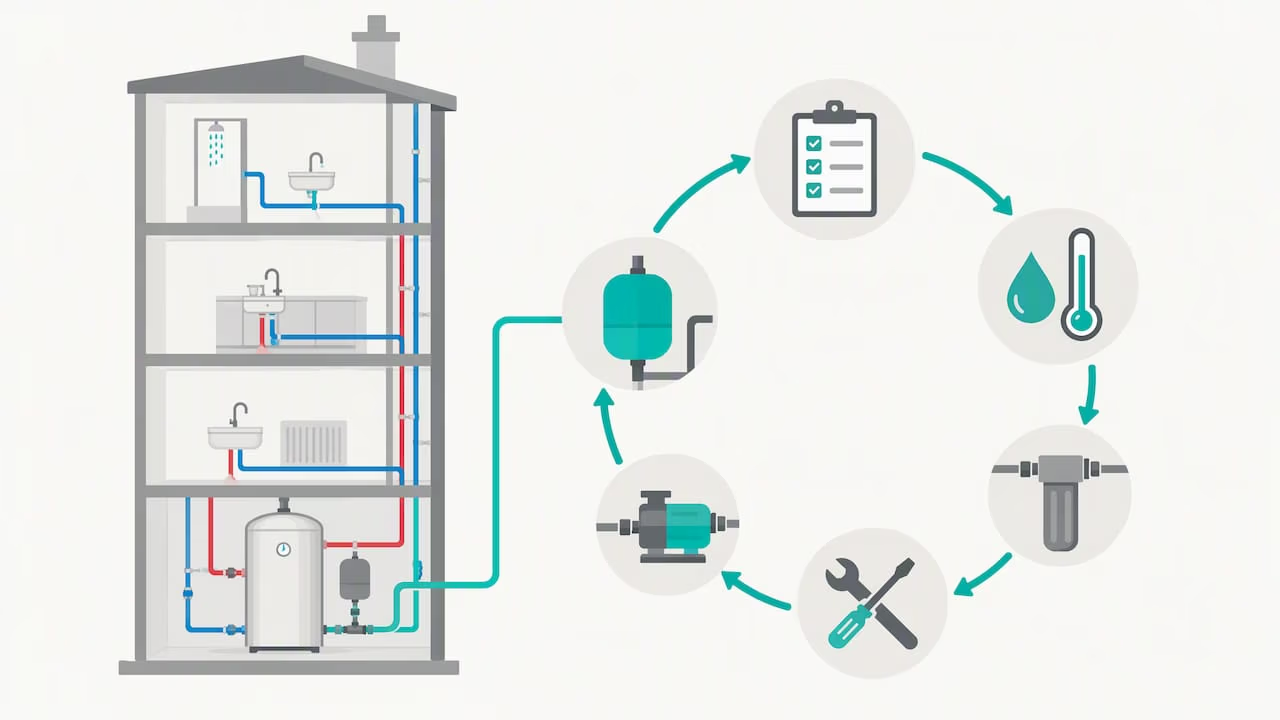
Common gaps to look for include missing schematics, dead legs left behind after a fit-out, and a handover folder that doesn’t match what’s installed. These gaps can make it harder to demonstrate that the system is being managed effectively.
Water hygiene checks fit naturally alongside the rest of a building’s upkeep rather than sitting apart from it. When sentinel checks, flushing and descaling are built into a planned maintenance contract, they get done on schedule instead of being remembered after something goes wrong, which is where the real reduction in downtime and risk comes from.
— Drahim Hasula
How UpKeep UK can help with risk assessments and planned maintenance

We can discuss incorporating water-hygiene checks into planned maintenance, including sentinel checks, flushing and descaling. For hotels and hospitality sites, our hotel and hospitality upkeep service can support property maintenance needs, including those arising when guest rooms sit empty between bookings.
- We can discuss how our team could support the checks and monitoring records you need for inspections.
- We offer property maintenance and repair services for issues identified during checks.
- We can discuss how water-hygiene checks could fit into your maintenance arrangements.
If you’re coordinating works outside normal hours, our painting and decorating partner’s FM checklist for night office work is a useful companion for scheduling around occupied buildings. For support with property maintenance, request a planned maintenance quote.
This article is general information, not a substitute for advice from a qualified lawyer. Consult a qualified legal professional about your own circumstances before acting on anything here.
FAQ
How much does a Legionella risk assessment cost in the UK?
Costs vary by building size, system complexity and whether sampling is needed, and no published figure applies universally. For current prices, see our website.
What does a Legionella risk assessment actually involve?
A proper assessment includes a site survey recording the system description, a schematic, every sentinel outlet and dead leg, and temperature measurements taken on site. It should finish with a written control scheme, a monitoring schedule and a prioritised list of remedial actions, not just a certificate.
How do I check for Legionella risk on my own premises?
Start by confirming hot water is stored at 60°C or higher and reaches 50°C at outlets, with cold water below 20°C, then check that sentinel outlets are tested monthly and little-used outlets flushed weekly. Microbiological sampling is only needed where the risk assessment identifies it as appropriate.
Who can carry out a Legionella risk assessment for a commercial building?
A competent person with relevant experience can carry one out, and HSE guidance for landlords notes that simple domestic systems may be assessed by a competent landlord themselves. Commercial premises, hotels and larger offices generally need a specialist competent person or agency given the complexity of the plant involved.
How often should a Legionella risk assessment be reviewed?
There’s no fixed statutory review interval. You should reassess whenever there’s reason to think the previous assessment no longer holds, such as after a refurbishment, a change of occupancy or an extended vacancy.