


Refurbishing your London commercial property can boost its value by up to 15%, yet many property owners confuse refurbishment with basic maintenance or assume it costs as much as new construction. This comprehensive guide clarifies what commercial property refurbishment truly involves, explores its measurable benefits for value and tenant satisfaction, details London-specific regulations, and provides actionable planning steps to help you execute successful refurbishment projects.
Table of Contents
- Understanding Commercial Property Refurbishment
- Why Refurbish? Key Benefits For Value And Tenants
- London-Specific Regulatory And Compliance Considerations
- Common Misconceptions And Pitfalls In Refurbishment Projects
- Planning And Executing Your Refurbishment Project
- Optimize Your London Property With UpKeep’s Refurbishment Solutions
Key Takeaways
| Point | Details |
|---|---|
| Value and Efficiency | Refurbishment increases property value up to 15% and cuts energy costs by 25%. |
| Cost Advantage | Projects cost 20-60% less than new builds with similar scope. |
| Compliance Critical | London projects must meet fire safety, accessibility, and EPC standards to avoid penalties. |
| Planning Reduces Risk | Experienced contractors cut timeline overruns by 40% through proper project management. |
| Tenant Engagement | Early communication boosts retention rates by approximately 20%. |
Understanding Commercial Property Refurbishment
Commercial property refurbishment involves systematic repair, modernization, and upgrading of existing buildings beyond routine maintenance tasks. Unlike simple repairs that address immediate issues or new construction that starts from scratch, refurbishment transforms existing structures to meet current standards and market demands. Refurbishment projects cost 20-60% less than new construction with similar footprint, making them financially attractive for property owners seeking to maximize asset value.
Three main refurbishment types serve different commercial needs:
- Light refurbishment includes cosmetic updates like painting, flooring replacement, and minor fixture upgrades without structural changes
- Major refurbishment involves structural modifications, MEP system replacements, and comprehensive interior reconfigurations
- Tenant fit-out customizes spaces to specific occupant requirements, balancing landlord standards with tenant operational needs
| Refurbishment Type | Typical Cost Range | Duration | Common Applications |
|---|---|---|---|
| Light | £50-150/sq ft | 1-3 months | Office refreshes, retail updates |
| Major | £150-400/sq ft | 6-12 months | Building modernization, system overhauls |
| Tenant Fit-Out | £75-250/sq ft | 3-6 months | Custom office spaces, specialized retail |
Understanding these distinctions helps you align your refurbishment scope with business objectives and budget constraints. Property maintenance trends in London increasingly favor strategic refurbishment over reactive repairs, reflecting market shifts toward proactive asset management.
Pro Tip: Document your building’s current condition thoroughly before defining scope. Hidden structural issues discovered mid-project account for the majority of budget overruns.
Why Refurbish? Key Benefits for Value and Tenants
Strategic refurbishment delivers measurable financial and operational advantages that extend well beyond aesthetic improvements. Research shows refurbishment can increase property value by up to 15%, reduce energy costs by 25%, and boost tenant retention by 20%. These figures reflect real London market outcomes when projects align with tenant needs and regulatory standards.
-
Property Value Appreciation: Updated buildings command higher rents and sale prices, with modernized MEP systems and contemporary finishes attracting premium tenants willing to pay market-leading rates.
-
Energy Efficiency Gains: Installing efficient HVAC, lighting, and insulation systems cuts operational expenses significantly while improving EPC ratings that affect marketability.
-
Enhanced Tenant Satisfaction: Modern, well-maintained spaces reduce complaints, increase lease renewals, and minimize vacancy periods that erode cash flow.
-
Regulatory Compliance: Proactive upgrades ensure your property meets evolving London standards, avoiding enforcement actions and maintaining insurance coverage.
-
Competitive Market Position: Refurbished properties stand out in crowded London markets, attracting quality tenants faster than outdated competitors.
The benefits of refurbishment compound over time as improved buildings require less reactive maintenance and generate more stable income streams. Forward-thinking owners view refurbishment as strategic investment rather than discretionary spending, particularly when construction expertise ensures quality execution. Integrating property maintenance planning with refurbishment schedules maximizes asset returns.

Pro Tip: Survey your tenants before finalizing refurbishment plans. Their input on pain points like inadequate HVAC or poor lighting ensures your investment addresses real occupant needs.
London-Specific Regulatory and Compliance Considerations
London commercial refurbishment projects operate within a complex regulatory framework that directly impacts scope, cost, and timeline. Non-compliance carries serious consequences including fines, project delays, and potential liability for tenant safety issues. Understanding these requirements before starting work prevents costly mid-project corrections.
Key regulatory areas affecting commercial refurbishment:
-
Fire Safety Regulations: The Fire Safety Act 2021 mandates regular fire risk assessments and compliance with updated guidance on compartmentation, escape routes, and alarm systems. Buildings over 11 meters face additional external wall safety requirements.
-
Equality Act 2010 Compliance: Commercial properties must provide reasonable accessibility features including ramps, accessible toilets, and adequate signage. Refurbishment offers opportunities to improve accessibility beyond minimum standards.
-
Energy Performance Certificates: Since April 2023, commercial properties cannot be let with EPC ratings below E, with future targets moving toward B ratings. Refurbishment provides the ideal time to upgrade insulation, glazing, and mechanical systems.
-
Building Control Approval: Structural alterations, MEP modifications, and changes affecting means of escape require Building Control approval before work begins. Retrospective applications cost significantly more than proper advance planning.
-
Planning Permission: Major facade changes, use class modifications, or Listed Building alterations need planning consent, which can take 8-13 weeks for standard applications.
Staying current with London building regulations protects your investment and maintains tenant safety. Professional contractors familiar with local authority requirements navigate approval processes efficiently, preventing delays that compound costs.
Common Misconceptions and Pitfalls in Refurbishment Projects
Several persistent myths about commercial refurbishment lead property owners into expensive mistakes. Addressing these misconceptions upfront helps you approach projects with realistic expectations and proper preparation.
-
Myth: Refurbishment always costs less than new build. While generally true, typical refurbishment projects underestimate costs by 20-30% when hidden structural issues, asbestos remediation, or outdated services require unexpected work.
-
Myth: Tenants will accept any disruption. Poor communication about refurbishment schedules, noise, and access restrictions damages tenant relationships. Early engagement and clear timelines maintain goodwill during disruptive work phases.
-
Myth: Cosmetic updates suffice for modern standards. Outdated MEP systems, poor insulation, and inadequate accessibility limit your property’s competitiveness regardless of fresh paint and new carpets.
-
Myth: Any contractor can handle commercial refurbishment. Residential-focused builders often lack experience with commercial Building Control requirements, fire safety standards, and occupied building protocols.
“The biggest refurbishment failures I see stem from inadequate initial surveys and unrealistic budgets that don’t account for contingencies. Property owners who invest in thorough condition assessments before finalizing scope avoid most cost overruns.” Commercial Property Surveyor
Avoid common refurbishment mistakes by building 15-20% contingency budgets, conducting invasive surveys to reveal hidden issues, and appointing project managers with commercial expertise. The planning phase determines project success more than any other factor.
Pro Tip: Request case studies and references specific to commercial refurbishment when vetting contractors. Track records in residential work don’t translate directly to commercial project requirements.
Planning and Executing Your Refurbishment Project
Successful refurbishment requires systematic planning that addresses technical, financial, and operational considerations. Experienced contractors reduce timeline overruns by 40% through proper project management, with average commercial refurbishment durations ranging from 3-9 months depending on scope.
-
Conduct Comprehensive Property Assessment: Commission structural surveys, MEP system evaluations, and compliance audits to identify all required work before defining scope. This investment prevents mid-project surprises.
-
Define Clear Scope and Objectives: Determine whether light, major, or fit-out refurbishment best serves your goals. Align scope with budget realities and market positioning strategy.
-
Engage Tenants Early: Hold briefings explaining refurbishment benefits, timelines, and disruption management plans. Incorporate tenant feedback where feasible to maintain positive relationships.
-
Select Experienced Contractors: Prioritize firms with proven London commercial refurbishment portfolios, proper insurance, and Building Control approval track records. Request detailed proposals with milestone schedules.
-
Implement Robust Project Management: Establish weekly progress meetings, maintain contingency budgets, and monitor quality at each phase. Clear communication channels between all stakeholders prevent costly misunderstandings.
| Project Phase | Duration | Key Activities | Common Risks |
|---|---|---|---|
| Planning & Design | 6-12 weeks | Surveys, approvals, contractor selection | Inadequate surveys, unrealistic budgets |
| Enabling Works | 2-4 weeks | Asbestos removal, temporary services | Unexpected contamination discoveries |
| Main Construction | 8-32 weeks | Structural, MEP, finishes | Scope creep, material delays |
| Commissioning & Handover | 2-4 weeks | Testing, snagging, documentation | Incomplete documentation, defects |
Proper refurbishment project planning includes realistic budgeting and timelines that account for London-specific challenges like constrained site access and occupied building protocols. Following project management best practices ensures your investment delivers intended value and tenant satisfaction.
Pro Tip: Schedule noisy or disruptive works during tenant holiday periods or weekends when possible. This consideration maintains productivity and demonstrates respect for occupant operations.
Optimize Your London Property with UpKeep’s Refurbishment Solutions
Transforming your commercial property requires expertise that balances technical excellence with practical project delivery. UpKeep UK specializes in commercial refurbishment and building maintenance services tailored to London’s unique regulatory and market environment. Our experienced team navigates Building Control approvals, coordinates trades efficiently, and delivers projects that enhance property value while minimizing tenant disruption.

We’ve helped property owners across London achieve measurable results through strategic refurbishment planning and execution. Whether you need guidance on renovation versus refurbishment options or want to review commercial refurbishment case studies demonstrating our capabilities, our team provides transparent advice that aligns refurbishment investments with your business objectives.
FAQ
What is the typical cost range for commercial property refurbishment in London?
Light refurbishment typically costs £50-150 per square foot, major refurbishment ranges from £150-400 per square foot, and tenant fit-outs fall between £75-250 per square foot. These figures vary based on building condition, specification levels, and site access constraints. Always include 15-20% contingency for unforeseen issues discovered during work.
How do I ensure compliance with London building regulations during refurbishment?
Engage Building Control early in your planning process to confirm approval requirements for structural, MEP, and fire safety work. Appoint contractors with proven commercial refurbishment experience who understand London property maintenance regulations and maintain proper documentation throughout the project. Request copies of all completion certificates and compliance documentation for your records.
What is the difference between renovation and refurbishment for commercial properties?
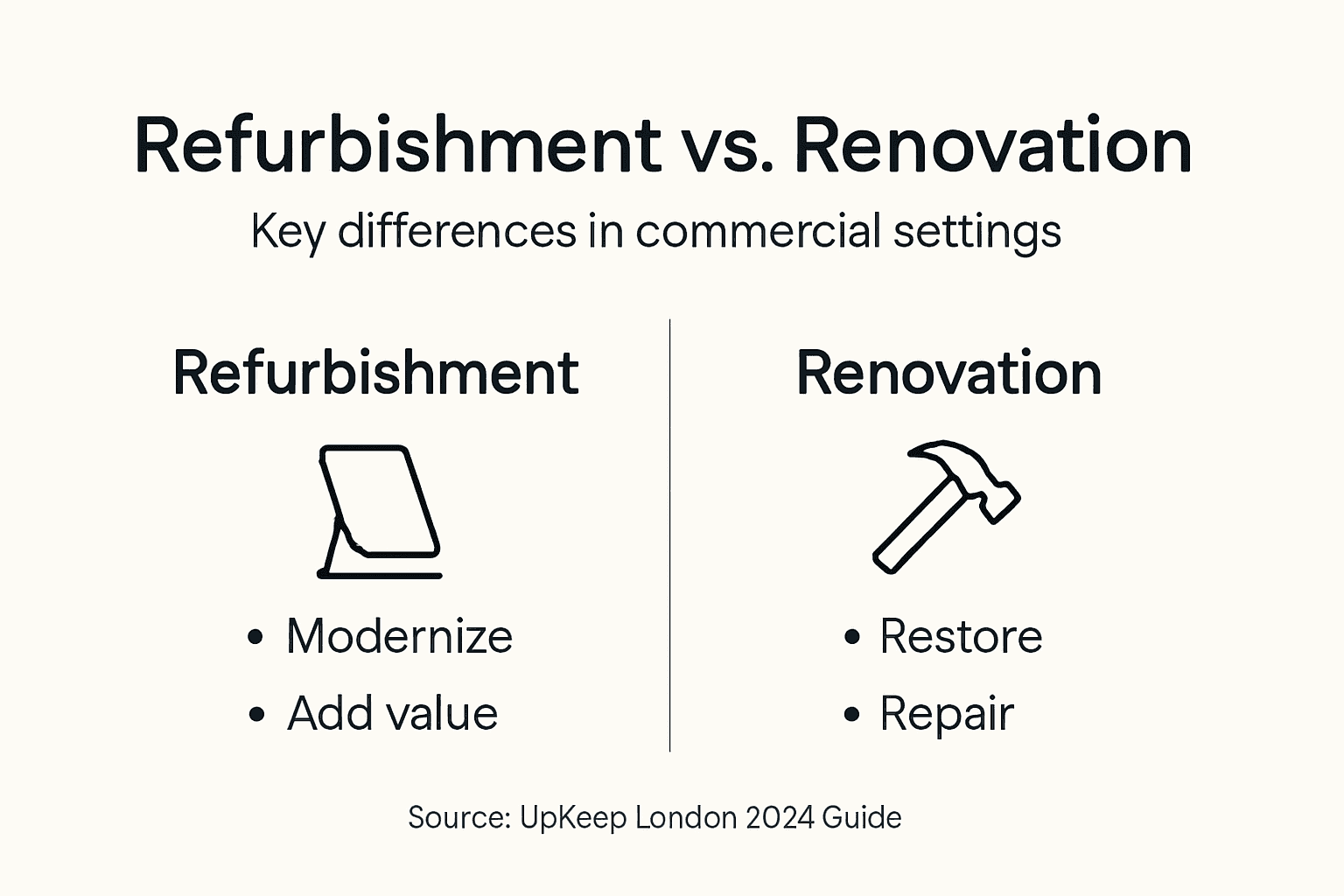
Renovation typically refers to restoring properties to original condition, while refurbishment modernizes buildings to meet current standards and market expectations. Refurbishment is more comprehensive than maintenance but less extensive than reconstruction. The distinction affects planning requirements, costs, and project timelines.
How long does a typical commercial refurbishment project take in London?
Light refurbishment takes 1-3 months, major refurbishment requires 6-12 months, and tenant fit-outs typically complete within 3-6 months. These timelines assume proper planning, timely approvals, and experienced contractors. Add 6-12 weeks for initial planning, surveys, and Building Control approvals before construction starts.
How should I communicate with tenants during refurbishment work?
Hold initial briefings explaining refurbishment scope, benefits, and timelines before work begins. Provide weekly updates on progress and any schedule changes affecting building access or services. Establish clear channels for tenants to report concerns or issues during construction. Early engagement and transparent communication maintain positive relationships and can boost retention rates by approximately 20%.
































