
TL;DR:
- Emergency repairs like burst pipes and gas leaks require immediate action to protect tenant safety and property. Proper preparation, clear communication, and documented procedures are essential for effective and compliant response. Systematic follow-up and professional engagement help prevent recurring issues and safeguard long-term property value.
When an emergency repair hits, make the property safe, contact the tenant, get a qualified professional on site and document everything from the first call to the final invoice. This guide gives UK property owners and managers a step-by-step response plan for emergency repairs such as burst pipes and gas leaks, covering preparation, communication, compliance and follow-up.
Key Takeaways
| Point | Details |
|---|---|
| Recognise urgent risks | Spot genuine emergency repair triggers to protect health, safety, and property value. |
| Prepare key resources | Keep essential contacts, documentation tools, and specialist directories ready for emergencies. |
| Follow proven response steps | Triage, communicate, engage qualified trades, and document actions to ensure a defensible outcome. |
| Stay compliant | Adhere to legal reporting and access rules, especially for health and safety emergencies. |
| Prioritise documentation | Maintain thorough records and written communications for protection in disputes and to meet regulatory standards. |
What qualifies as an emergency repair?
Now that the urgency is clear and legal duties are established, understanding exactly what counts as an emergency will equip you to act decisively when the time comes.
Not every repair is urgent. The difficulty is that under pressure, some property owners treat minor faults as emergencies and delay genuinely critical ones. Getting this distinction right protects tenants from harm and protects you from enforcement action.
According to established emergency repair triggers used across the UK property sector, the following situations require immediate response:
- Major leaks and burst pipes causing structural damage or risk of flooding to lower floors or electrical systems
- Gas leaks or suspected carbon monoxide issues where residents must be evacuated and a Gas Safe registered engineer contacted without delay
- Unsafe electrics or fire risk including exposed wiring, total failure of a consumer unit, or fire damage to wiring infrastructure
- Total loss of power rendering a property unsafe or uninhabitable
- Loss of heating or hot water in winter where vulnerable tenants, children, or elderly occupants are affected
- Security breaches such as broken external door locks, smashed entry points, or compromised window locks on ground-floor units
The Shelter England guidance on landlord and tenant responsibilities is clear: serious hazards must be addressed as soon as reasonably possible. This is not simply best practice. It reflects the Landlord and Tenant Act 1985 and the Housing Health and Safety Rating System (HHSRS), which empowers local councils to act against properties with category 1 hazards if landlords fail to respond appropriately.
| Repair type | Urgency level | Immediate action required |
|---|---|---|
| Burst pipe or major leak | Critical | Isolate water supply, mobilise plumber |
| Gas leak or CO alarm | Critical | Evacuate, contact Gas Safe engineer, call National Gas helpline |
| Exposed or unsafe electrics | Critical | Isolate circuit, contact NICEIC registered electrician |
| Broken external door lock | High | Secure premises, contact locksmith |
| Loss of heating in winter | High | Provide temporary heating, arrange boiler engineer |
| Partial power loss | Moderate | Check consumer unit, contact electrician |
A useful way to frame urgency: if a reasonable person would consider the issue a threat to health, safety, or security, treat it as an emergency. That threshold, applied consistently, will keep you on the right side of your legal obligations and your obligations to tenants.
Familiarising yourself with our detailed emergency repair guide will help you build a thorough understanding of how to categorise and prioritise repairs across your portfolio.
Preparation: What you need before you respond
Identifying emergencies is only the first step. You’ll want to ensure you have everything needed to act fast, accurately, and defensibly before a crisis strikes.
Reactive maintenance, meaning repairs made in response to a fault rather than a planned schedule, is unavoidable in property management. What separates prepared property owners from those who scramble is having the right infrastructure in place before the call comes in.
Here is what you need ready before an emergency occurs:
- Tenant contact details including mobile numbers, secondary contacts, and any notes about vulnerable occupants requiring priority communication
- Property access information covering key safe codes, entry system details, and the location of stopcock valves, fuse boxes, and gas meters
- An emergency trades directory listing a Gas Safe registered engineer, an NICEIC or NAPIT registered electrician, a qualified plumber, a locksmith, and a structural surveyor for edge cases
- Insurance policy details confirming the claims process, emergency helpline number, and any exclusions relevant to your property type
- A documentation template for recording the date and time of the report, the nature of the fault, communications made, and actions taken
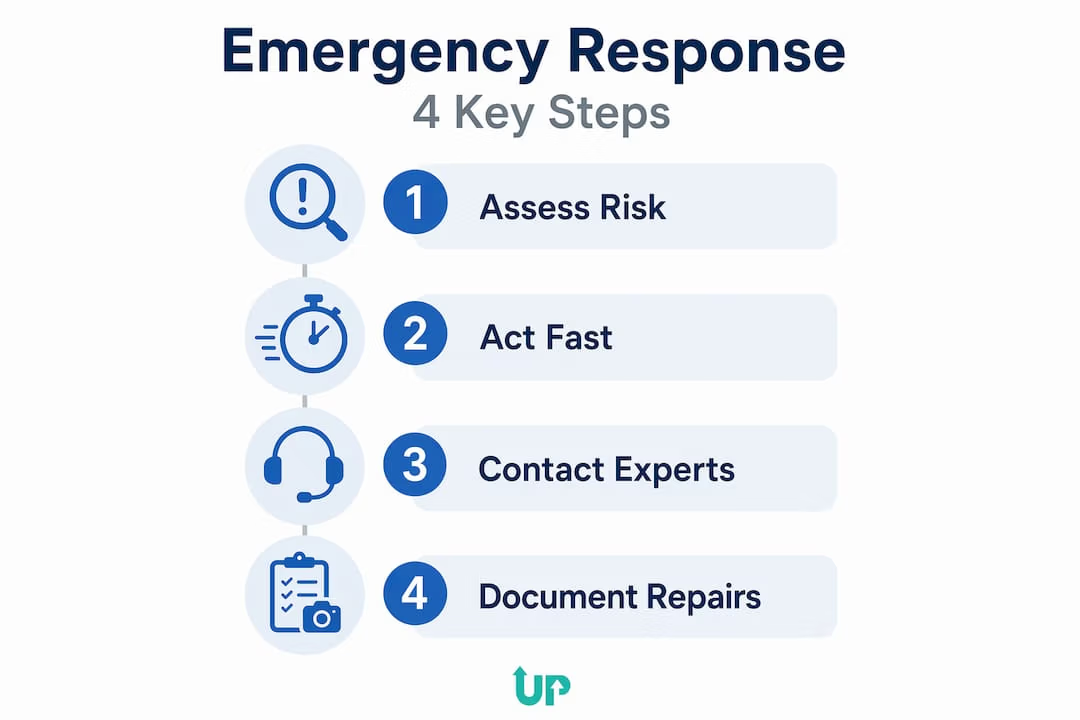
The emergency maintenance response plan methodology endorsed by property professionals uses a four-step sequence: triage and make safe, communicate with tenants, mobilise qualified trades, and maintain an auditable record. Having all of the above items in place means you can execute each of these steps without delay.
| Without preparation | With preparation |
|---|---|
| Scrambling for a plumber at 11pm | Emergency trades directory immediately accessible |
| Uncertain who has property access | Key safe codes and access notes on file |
| Disputes over when fault was reported | Timestamped documentation trail in place |
| Potential enforcement action for delays | Auditable records demonstrate swift response |
Pro Tip: Create a single digital emergency response folder, stored in your phone or cloud storage, containing all of the above. Share it with any co-managers or letting agents responsible for your properties. A crisis at 2am is not the moment to search your inbox for a plumber’s phone number.
Our guide on handling emergency repairs provides a practical template you can adapt for your own portfolio, and our tenant repair management resource covers best practices for structuring tenant communication throughout the process.
Step-by-step emergency repair response
Having the tools and information ready, let’s break down the process into actionable steps you can follow under pressure.
Following a clear sequence during an emergency prevents missed steps, reduces liability, and ensures the welfare of tenants throughout. Here is the process we recommend, drawn from both legal frameworks and real-world experience across UK residential and commercial properties.
- Triage and make safe the area. Your first priority is neutralising immediate danger. For a burst pipe, locate and shut off the water supply at the stopcock. For a gas leak, instruct tenants to leave the property, avoid operating electrical switches, and call the National Gas Emergency Service on 0800 111 999. For unsafe electrics, isolate the affected circuit at the consumer unit if safe to do so. Speed and safety come before repair at this stage.
- Communicate promptly and clearly with your tenant. Contact the occupant immediately, confirm what action is being taken, and set realistic expectations for the next steps. Follow up every phone call or text with a written message, whether by email or SMS. This creates a record and reassures the tenant that their concern is being taken seriously.
- Mobilise the right qualified specialist. Match the fault type to the correct professional. Gas and carbon monoxide issues require a Gas Safe registered engineer. Electrical faults require an electrician registered with NICEIC, NAPIT, or an equivalent competent persons scheme. Plumbing emergencies require a qualified plumber, preferably one familiar with your property type. Using unqualified tradespeople for safety-critical repairs is not simply poor practice; it creates serious legal and insurance risk.
- Document every action in real time. Record the date and time of the initial report, every communication made, the contractor mobilised, arrival times, work completed, and any follow-up required. As property maintenance professionals confirm, maintaining an auditable record is what transforms reactive maintenance from a liability into a demonstration of responsible property management.
- Arrange a follow-up inspection. Once the emergency has been resolved, schedule a follow-up to confirm the repair is holding, that no secondary damage occurred, and that the tenant is satisfied. This is particularly important after water ingress, which can cause mould growth, or after electrical faults, which may have affected other systems.
“Treat gas, exposed electrics, and CO risk as safety-critical: use the correct specialist route and prioritise making the area safe first, then arrange the qualified repair. Do not rely on informal reports; follow up in writing to create a defensible timeline.”: Shelter Cymru guidance
Pro Tip: Always request confirmation of qualifications before a specialist begins safety-critical work. A Gas Safe registration number can be verified online in under two minutes. That verification, logged in your records, demonstrates due diligence if any dispute or enforcement query arises later.
For detailed guidance on effective emergency repairs and practical plumbing maintenance tips that can reduce emergency callouts, these resources expand on the process above.
Reporting and accessing property during emergencies
Once you’ve begun repairs, proper reporting and handling tenant communication ensures legal compliance and builds defensible records. Here is what to do next.
Reporting obligations and access rules are areas where many property owners make avoidable mistakes. Getting these right protects you from disputes and ensures your response is legally sound from start to finish.
Reporting repairs correctly:
- Report faults as soon as they are identified, whether by you or notified by the tenant
- Follow any phone or verbal report with written confirmation, either by email or text, to establish a clear paper trail
- Record the nature of the fault, the date reported, and the action taken in response
- If instructing a contractor, confirm this in writing to both the tenant and the contractor
Accessing the property:
- Shelter Cymru advises that landlords should give at least 24 hours’ written notice before entering a property, except in genuine emergencies where health or safety is at risk
- In true emergencies, immediate access is permitted, but you should still document the reasons for entering without notice, the time of entry, and the actions taken
- Do not access the property without reasonable grounds even in urgent situations, as this can undermine your legal position if a dispute arises later
“There is no single universal statutory emergency repair within a fixed number of hours for all private landlords across the UK. Timing expectations vary by jurisdiction and by whether the hazard is treated as an emergency by the relevant framework.”: Hiscox landlords repair obligations
This matters enormously for managing tenant expectations. Some tenants assume that any fault must be fixed within 24 hours. In practice, response time obligations differ between social housing, council properties, and private rentals. For private landlords, the legal standard is acting “as soon as reasonably possible” for serious hazards, without a fixed statutory clock. Being transparent about timelines, while demonstrating clear and prompt action, is the most effective way to maintain trust and compliance simultaneously.
Keeping thorough records also protects you against property maintenance red flags identified by letting agencies, particularly in circumstances where ongoing maintenance issues have been overlooked over time.
The uncomfortable truth: Why ‘quick fixes’ rarely solve long-term property risks
Beyond the step-by-step workflow, it is worth considering deeper patterns and pitfalls in emergency repair response. Here is a candid perspective from the field.
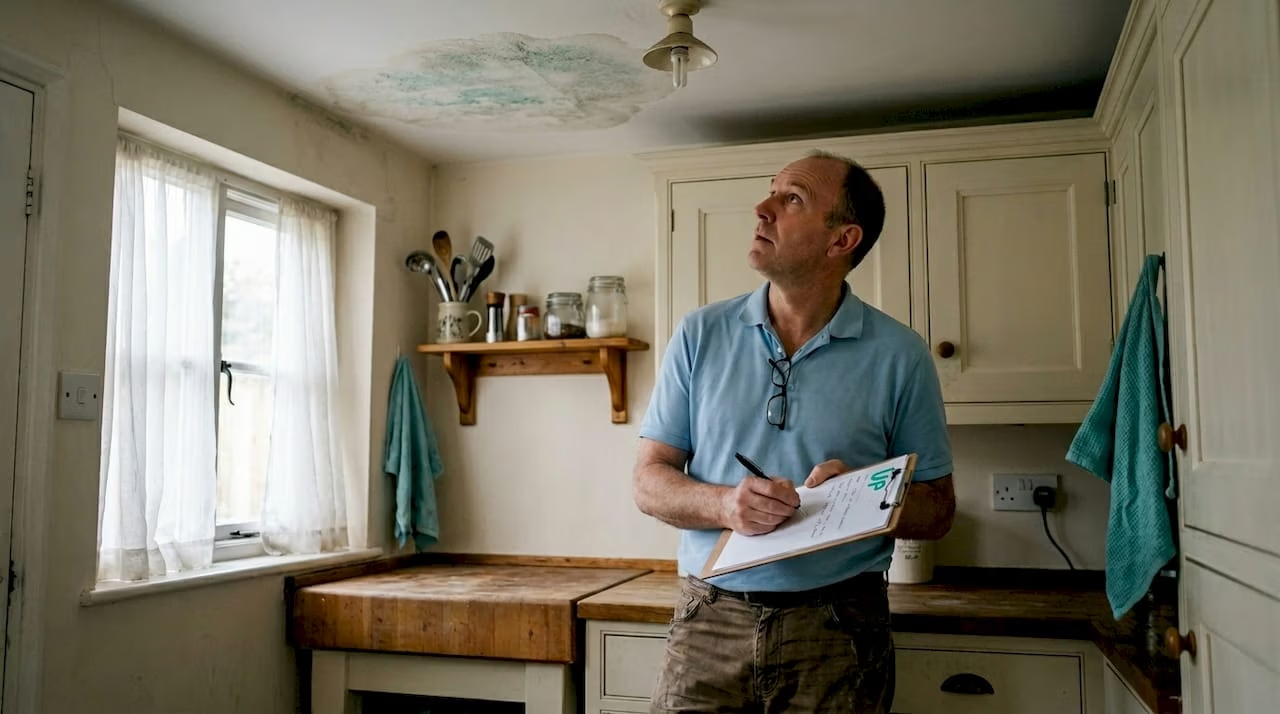
In our experience, the most costly emergency situations are rarely caused by a single unexpected event. They are caused by a pattern of short-term repairs that addressed the symptom but ignored the underlying issue. A landlord who patches a small leak three times without investigating the source is not saving money. They are accumulating liability, and eventually the damage becomes structural.
Quick fixes tend to feel satisfying in the moment. The immediate crisis passes, the tenant stops chasing, and the repair cost seems minimal compared with a full investigation. But those savings are often an illusion. Mould developing behind a plastered wall after repeated water ingress. An electrical fault that recurs because the root cause in the consumer unit was never properly assessed. A boiler that keeps breaking down because it has never been replaced within its service life. These are not hypothetical scenarios. They are the most common patterns we see across residential portfolios managed without a systematic approach.
The documentation habit matters for exactly this reason. When you maintain a proper record of every repair, a pattern of recurring faults becomes visible. That visibility gives you the evidence to justify a capital expenditure to a landlord client, or to take action before a minor issue becomes an enforcement notice from the local council.
There is also the question of specialist engagement. Using unqualified or poorly matched tradespeople to reduce callout costs might appear to control expenditure in the short term. In practice, it increases the risk of repeat callouts, failed inspections, and insurance disputes. Every time we are called in after a previous contractor has left a job incomplete or non-compliant, the eventual remediation cost far exceeds what a qualified specialist would have charged originally.
The difference between managing property maintenance compliance proactively and responding to enforcement is not luck. It is the accumulation of correct decisions made at each emergency repair event. Systematic follow-up, verified specialists, and thorough documentation are not administrative burdens. They are the foundation of a resilient property portfolio.
Connect with trusted emergency repair experts
If you’re ready to take the next step toward professional, compliant property maintenance, here is where to start.
Handling an emergency repair under pressure is stressful enough without worrying about whether your contractor is qualified, your records are defensible, or your response time meets your legal obligations. That is the challenge UpKeep UK was built to solve.

Our team includes qualified electricians, Gas Safe registered engineers, experienced plumbers, roofers, and security specialists, all ready to respond to urgent callouts across London and the wider UK. Whether you manage a single residential property or a commercial portfolio, we provide transparent pricing, insured work, and documented outcomes at every stage. Explore our guidance on letting agency property risks and learn how our approach to emergency repairs for UK properties keeps property owners confident and compliant.
Frequently asked questions
What is a true emergency repair situation for UK landlords?
Genuine emergency repairs include serious leaks, burst pipes, gas or carbon monoxide risks, fire hazards, total loss of power or heating in winter, and security breaches such as broken external door locks that leave the property insecure.
How quickly must landlords act on emergency repairs?
Landlords should begin assessing and making the situation safe within 24 to 48 hours for critical hazards, but there is no single statutory fixed-hour requirement for all private landlords across the UK, as obligations vary by jurisdiction and housing type.
What documentation is needed during emergency repair response?
You should record all fault reports, actions taken, tenant communications, contractor instructions, and access notices. The recommended methodology includes maintaining a full auditable record to support your legal position if any dispute arises.
Can landlords enter the property immediately during an emergency?
In a genuine emergency involving health or safety risk, immediate entry is permitted, but Shelter Cymru’s guidance confirms that at least 24 hours’ written notice must otherwise be given before entering a tenant’s home.