


Think mixing up preventive and corrective maintenance is a minor mistake? It costs UK landlords an average of £3,000 annually through mismanaged repairs and emergency callouts. Understanding property maintenance terminology isn’t just about using the right words—it’s about protecting your investment, ensuring compliance, and communicating effectively with contractors. This guide demystifies essential terms every property owner and manager needs to master in 2026.
Table of Contents
- Introduction To Property Maintenance Terminology
- Types Of Property Maintenance Explained
- Legal And Compliance Terminology In UK Property Maintenance
- Key Building And Maintenance Terms Every Manager Should Know
- Common Misconceptions About Property Maintenance Terms
- Applying Terminology For Better Property Management
- Get Professional Help For Property Maintenance In The UK
- Frequently Asked Questions
Key takeaways
| Point | Details |
|---|---|
| Four maintenance categories | Preventive, corrective, routine, and emergency maintenance each serve distinct roles in property care. |
| Legal terms matter | Gas Safety Certificates, EPC ratings, and HMO licensing are mandatory for UK landlord compliance. |
| Clear communication saves money | Using correct terminology improves repair accuracy by 30% and reduces emergency costs. |
| Terminology prevents errors | Precise language with contractors avoids costly misunderstandings and project delays. |
| Proactive approach wins | Understanding terms helps prioritise preventive work that reduces expensive reactive repairs. |
Introduction to property maintenance terminology
Mastering property maintenance terminology transforms how you manage buildings and work with service providers. When you speak the same language as your contractors, projects run smoother, quotes become more accurate, and compliance issues decrease dramatically. Misunderstanding property maintenance terms leads to costly errors and compliance risks that compound over time.
Property maintenance terminology falls into several key categories:
- Operational terms: Daily tasks and routine upkeep activities
- Technical language: Building components, systems, and materials
- Legal requirements: Certificates, ratings, and regulatory obligations
- Service types: Different maintenance approaches and when to apply them
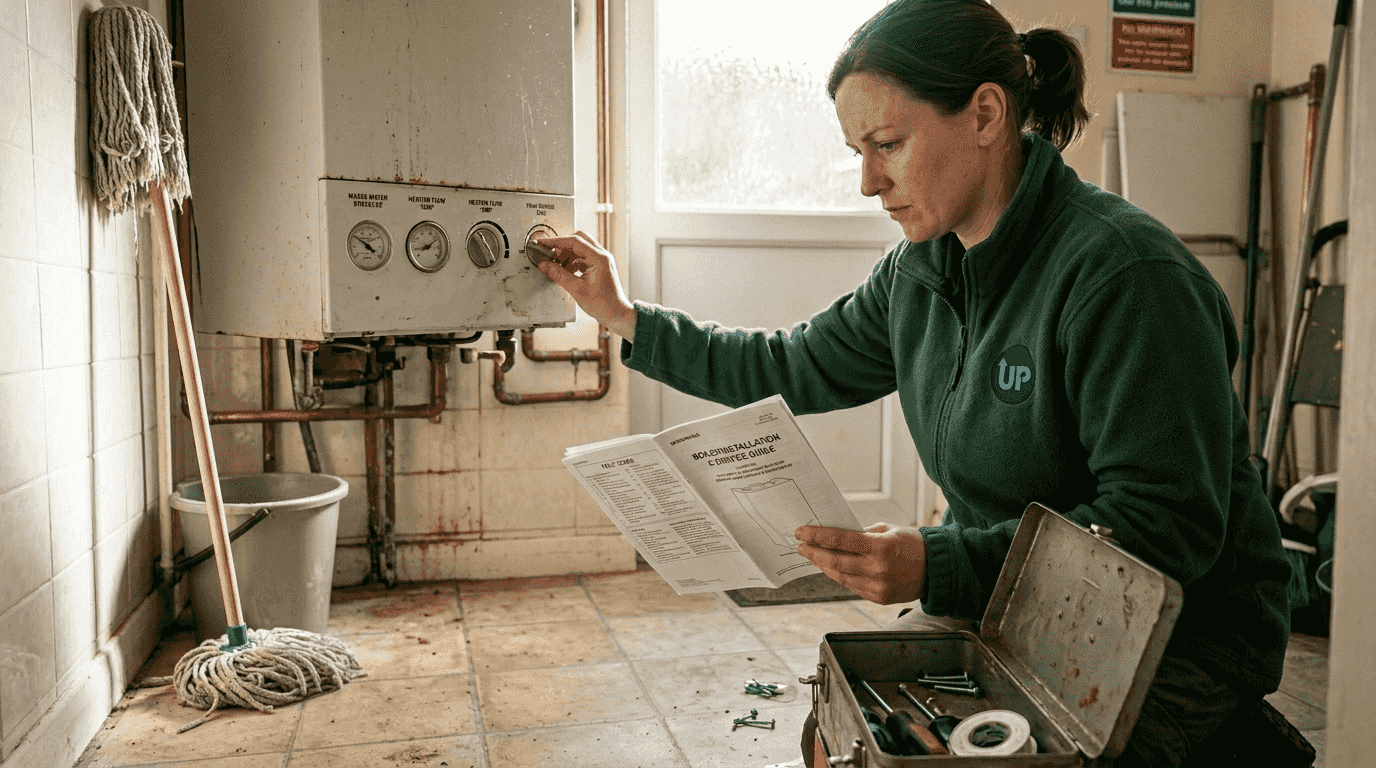
The financial stakes are significant. A property manager who confuses preventive with corrective maintenance might delay boiler servicing, thinking it’s optional. This seemingly small error can lead to a winter breakdown, leaving tenants without heating and facing emergency repair bills three times higher than routine service costs. Similarly, failing to understand EPC requirements before renovations can result in non-compliant work that needs redoing.
Beyond finances, terminology confusion affects tenant relationships and legal standing. When you can’t articulate specific maintenance needs to contractors, work takes longer and costs more. You might spot red flags in property maintenance earlier when you understand what signs indicate serious problems versus normal wear. Understanding heating issues landlords face requires knowing the difference between a radiator balance issue and a boiler fault.
Pro tip: Create a maintenance glossary specific to your properties. Document terms contractors use frequently and their meanings to ensure consistent communication across your team.
Types of property maintenance explained
Property maintenance divides into four distinct categories, each serving different purposes and requiring unique approaches. Understanding these categories helps you budget accurately and prevent small issues escalating into major repairs.
Preventive maintenance involves scheduled, proactive work designed to stop problems before they start. This includes annual boiler servicing, gutter cleaning, electrical inspections, and roof surveys. Preventive work typically costs 30-40% less than waiting for failures and conducting corrective repairs. Smart landlords schedule preventive tasks during low-occupancy periods to minimise tenant disruption.
Corrective maintenance responds to faults after they occur. When a tenant reports a dripping tap or a broken door handle, you’re performing corrective work. While necessary, excessive corrective maintenance signals missed preventive opportunities. Tracking corrective work patterns reveals which systems need more proactive attention. For example, frequent plumbing maintenance issues might indicate ageing pipes requiring replacement rather than repeated patches.
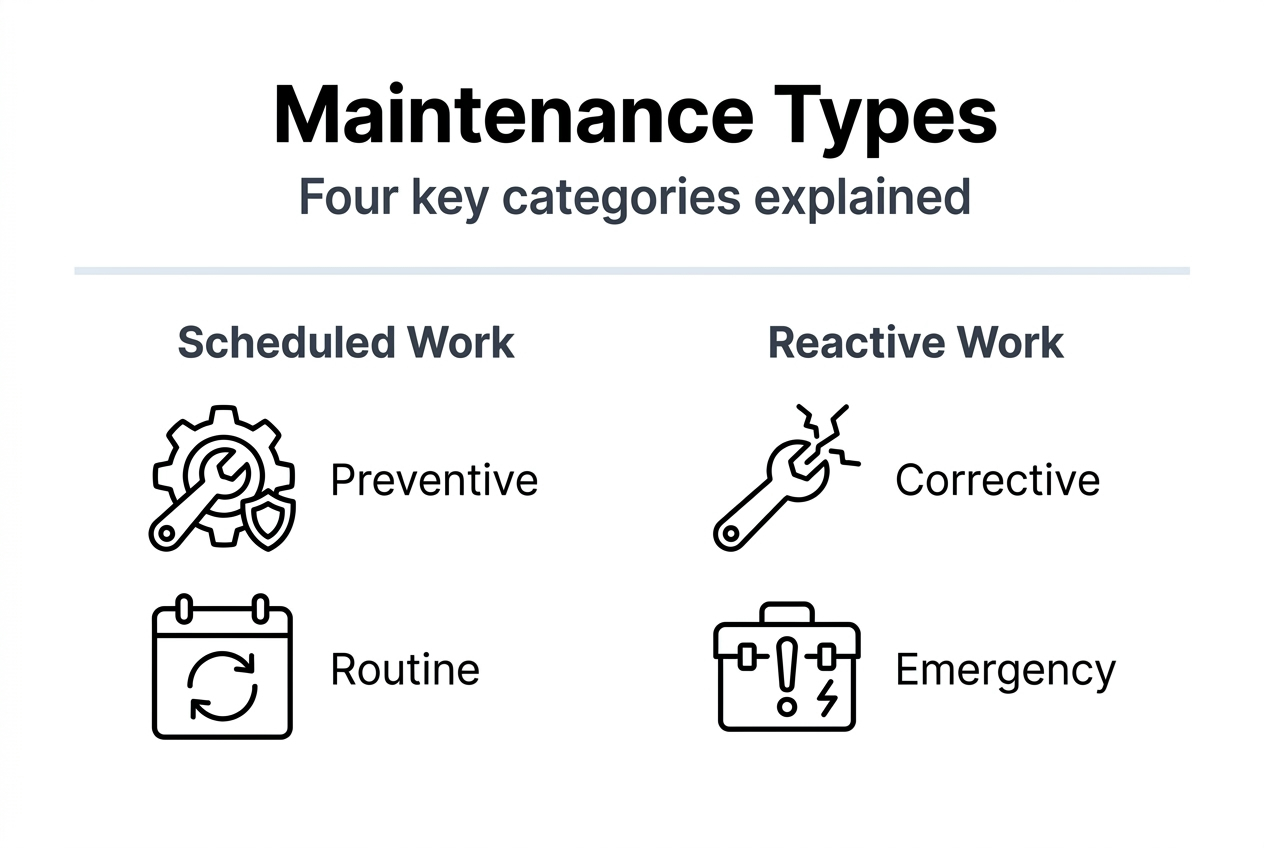
Routine maintenance encompasses regular upkeep tasks that maintain property standards and tenant satisfaction. Routine maintenance includes cleaning, filter changes, and grounds upkeep vital for hygiene and tenant satisfaction. These tasks happen weekly, monthly, or quarterly based on property type and usage. Common gardens require weekly care, whilst corridor painting might be annual.
Emergency maintenance addresses urgent failures threatening safety or habitability. Burst pipes, gas leaks, electrical faults, and heating failures in winter all qualify as emergencies. Response times matter legally and practically—tenants expect 24-hour emergency coverage, and delays can breach tenancy agreements.
| Maintenance Type | Timing | Cost Impact | Example |
|---|---|---|---|
| Preventive | Scheduled | Lowest long-term | Annual boiler service |
| Routine | Regular intervals | Moderate, predictable | Monthly grounds care |
| Corrective | As needed | Higher than preventive | Fixing broken fixtures |
| Emergency | Immediate | Highest, unpredictable | Burst pipe repair |
Balancing these categories optimises your maintenance budget. Properties with robust preventive programmes report 60% fewer emergencies than reactive-only approaches. Following building maintenance London best practices helps establish the right balance for urban properties facing higher wear rates.
Pro tip: Allocate 70% of your maintenance budget to preventive and routine work, leaving 30% for corrective and emergency needs. This ratio minimises surprises whilst maintaining property standards.
Legal and compliance terminology in UK property maintenance
UK landlords must navigate complex legal obligations, each with specific terminology that affects how you maintain properties. Getting these terms wrong risks fines, legal action, and endangering tenants.
Gas Safety Certificate (CP12) confirms a qualified Gas Safe engineer has inspected all gas appliances, fittings, and flues annually. You must provide copies to tenants within 28 days of installation or when new tenancies start. This isn’t optional—landlords face unlimited fines and up to five years imprisonment for neglecting gas safety. The certificate specifies work conducted, defects identified, and remedial actions taken.
Energy Performance Certificate (EPC) rates property energy efficiency from A (most efficient) to G (least efficient). Since 2020, rental properties must achieve minimum E ratings under the Minimum Energy Efficiency Standards (MEES). Properties below this threshold cannot be let legally unless exemptions apply. EPC certificates last ten years but must be updated after significant energy-related improvements.
Electrical Installation Condition Report (EICR) documents electrical system safety, required every five years for rental properties in England since 2020. Qualified electricians assess wiring, consumer units, earthing, and bonding. Reports categorise issues from C1 (dangerous, immediate action) to C3 (improvement recommended). C1 and C2 findings require fixing before reletting.
Houses in Multiple Occupation (HMO) licensing applies when three or more unrelated tenants form two or more households and share facilities. HMO properties face stricter safety requirements including fire doors, detection systems, and emergency lighting. Mandatory licensing covers HMOs with five or more occupants across three or more storeys. Some councils extend licensing to smaller HMOs.
Understanding these requirements helps you spot potential property red flags during inspections:
- Missing or expired safety certificates indicating compliance gaps
- Properties marketed without valid EPC ratings
- Electrical work without Part P certification or EICR updates
- HMO properties lacking proper fire safety equipment
Legionnaires’ Disease Risk Assessment evaluates water system risks in properties with storage tanks, complex plumbing, or vulnerable tenants. Landlords must identify and control legionella risks through temperature monitoring, tank cleaning, and system flushing.
Compliance terminology extends beyond certificates. Terms like “reasonable repair timescales” and “fit for human habitation” carry legal weight under the Homes (Fitness for Human Habitation) Act 2018. Properties must remain free from serious hazards as defined by the Housing Health and Safety Rating System (HHSRS).
Key building and maintenance terms every manager should know
Technical building terminology helps you understand contractor quotes, identify problems accurately, and make informed maintenance decisions. These terms appear repeatedly in maintenance conversations and documentation.
Cavity walls feature two masonry layers separated by a gap (cavity) that provides insulation and moisture protection. Many UK properties built after 1920 have cavity walls, whilst older buildings typically have solid walls. Understanding this distinction matters when addressing damp issues—cavity wall problems require different solutions than solid wall damp.
Damp Proof Course (DPC) is a waterproof layer installed in walls near ground level to prevent rising damp. Older properties might have physical DPCs (slate or bitumen) or chemical injection DPCs. When ground levels rise above the DPC through landscaping or paving, damp bypasses this protection and enters walls.
Cladding refers to external covering applied to building exteriors for weatherproofing and aesthetics. Following Grenfell, cladding safety became critical—aluminium composite material (ACM) cladding on residential buildings over 18 metres requires assessment and potential removal. Understanding cladding types helps evaluate fire safety and maintenance obligations.
Pointing describes mortar between bricks or stones. Repointing renews deteriorated mortar joints to maintain structural integrity and weatherproofing. Older properties need lime mortar repointing rather than modern cement, which traps moisture and damages historic masonry.
Building Management System (BMS) electronically controls and monitors building services including heating, ventilation, and lighting. Commercial properties and larger residential blocks increasingly use BMS technology to optimise energy use and maintenance scheduling. Remote monitoring alerts managers to system faults before tenants notice problems.
Making good means restoring surfaces to their previous condition after maintenance work. When contractors cut into walls for rewiring or replastering, making good includes filling, smoothing, and redecorating affected areas. Always clarify whether quotes include making good to avoid surprise costs.
Additional essential terms include:
- Snagging: Identifying minor defects in new or refurbished properties requiring contractor correction
- Party wall: Shared walls between properties requiring Party Wall Act procedures before structural work
- Soffit and fascia: Boards protecting roof edges from weather, frequently requiring maintenance
- Airbricks: Ventilation openings in walls that must remain unblocked for underfloor ventilation
Familiarity with these terms improves conversations with tradespeople and helps you assess whether proposed work addresses root causes. Following building maintenance London guidance provides region-specific context for urban properties. Understanding terminology also reinforces the importance of regular property maintenance by helping you recognise early warning signs.
Common misconceptions about property maintenance terms
Several persistent misconceptions about maintenance terminology lead property managers astray, resulting in budget overruns, compliance failures, and tenant dissatisfaction.
Misconception 1: Preventive and corrective maintenance are interchangeable. Many managers treat these categories as similar, believing they can delay preventive work without consequences. Confusing preventive and corrective maintenance reduces budgeting accuracy and increases unexpected costs. Preventive work happens on your schedule at planned costs. Corrective work happens on the property’s schedule, usually at premium rates and inconvenient times.
Misconception 2: Routine maintenance is optional cosmetic work. Some landlords view routine tasks like gutter cleaning or grounds maintenance as nice-to-have rather than essential. Neglected gutters cause damp penetration and structural damage costing thousands. Overgrown grounds create security concerns and pest problems. Routine maintenance prevents these cascading failures.
Misconception 3: Emergency maintenance means “whenever tenants call”. Not every tenant request qualifies as an emergency. True emergencies threaten immediate safety or habitability—no heating in winter qualifies, whilst a dripping tap doesn’t. Misclassifying repairs inflates costs through unnecessary callout fees and sets unrealistic tenant expectations.
Misconception 4: Compliance certificates are one-off requirements. Gas Safety Certificates, EICRs, and EPCs all require periodic renewal. Treating them as box-ticking exercises during property purchase rather than ongoing obligations creates compliance gaps. Mark renewal dates in your calendar immediately after receiving certificates.
Terminology confusion doesn’t just cost money—it increases property downtime, damages tenant relationships, and creates legal vulnerability. Precision in language translates directly to precision in property management outcomes.
Misconception 5: “Making good” is always included in repair quotes. Many landlords assume quotes cover full restoration, only discovering additional costs when contractors finish core work but leave unpainted patches or exposed pipes. Always confirm whether making good is included and to what standard.
Understanding property maintenance basics helps dispel these misconceptions by clarifying what different maintenance types actually entail. When you grasp terminology properly, you can challenge contractors who misuse terms to justify unnecessary work or landlords who underinvest by misunderstanding requirements.
The financial impact of terminology confusion extends beyond immediate repair costs. Insurance claims may be denied if insurers determine neglected preventive maintenance caused failures. Properties gain poor reputations when terminology misunderstandings lead to slow repairs. Most significantly, serious safety incidents resulting from misunderstood compliance requirements carry criminal liability.
Applying terminology for better property management
Understanding terminology means nothing without practical application. Here’s how to leverage your knowledge for tangible improvements in property management efficiency and outcomes.
Step 1: Audit your current maintenance programme. Review past invoices and categorise each job as preventive, corrective, routine, or emergency. Calculate what percentage of spending falls into each category. Properties spending over 50% on corrective and emergency work need rebalancing toward preventive approaches.
Step 2: Create standardised maintenance request forms. Design forms using proper terminology that help tenants describe issues accurately. Instead of “broken heating,” forms should prompt specific details: “No hot water,” “Radiators cold,” “Boiler showing error code.” Correct terminology use improves repair accuracy by over 30%, leading to clearer cost estimates and faster fixes.
Step 3: Build a maintenance schedule using category-specific timing. List all property components and assign maintenance types:
- Annual boiler service (preventive)
- Quarterly gutter inspection and cleaning (routine)
- Five-year EICR renewal (legal preventive)
- Monthly communal area cleaning (routine)
- As-needed appliance repairs (corrective)
Scheduling preventive and routine work during low-demand periods reduces tenant disruption and often secures better contractor rates.
Step 4: Establish clear emergency criteria with contractors. Define what constitutes an emergency callout versus next-day service versus routine appointment. Document this in contractor agreements so everyone shares the same understanding. This prevents expensive emergency callouts for non-urgent issues.
Step 5: Use precise terminology in contractor communications. Replace vague requests like “fix the damp” with specific descriptions: “Inspect cavity wall ties for failure causing penetrating damp on north-facing wall.” Precision reduces site visits, misdiagnosis, and wasted time.
Step 6: Document everything using consistent terminology. Maintenance logs, tenant communications, and contractor instructions should all use the same terms. This consistency helps when reviewing patterns, preparing for inspections, or handling disputes. If your team calls the same issue “leak,” “seepage,” and “penetrating damp” interchangeably, pattern recognition becomes impossible.
Practical application extends to financial management. Understanding reactive maintenance challenges helps you budget reserves appropriately. Staying current with property maintenance changes in 2026 ensures your terminology and practices remain compliant. Many landlords find outsourced maintenance benefits multiply when providers speak the same technical language, eliminating communication friction.
Pro tip: Record terminology discussions with contractors during site visits. When a contractor explains why specific terms matter for your property’s unique features, capture this knowledge for future reference and team training.
Measure improvement by tracking key metrics: emergency callout frequency, average repair completion time, budget variance between estimated and actual costs, and tenant satisfaction scores. Properties where managers master maintenance terminology typically see 25-30% improvement across these metrics within the first year.
Get professional help for property maintenance in the UK
Mastering property maintenance terminology provides a solid foundation, but applying that knowledge requires experienced partners who speak the same language. Professional maintenance providers bridge the gap between understanding terms and executing efficient property care programmes.
UpKeep UK specialises in translating technical maintenance requirements into practical, cost-effective solutions for London properties and beyond. Whether you’re implementing a preventive maintenance schedule, addressing compliance requirements, or managing emergency repairs, working with specialists who understand both the terminology and the practical realities makes the difference between reactive crisis management and proactive property stewardship.
Our team helps property owners and managers navigate the complexities outlined in this building maintenance London guide, from routine upkeep to major refurbishments. We’ve seen how terminology confusion creates costly mistakes, so we prioritise clear communication and detailed documentation on every project. When you understand maintenance language and work with providers who share that precision, you avoid the red flags in property maintenance that indicate bigger problems ahead.
Ready to put your maintenance terminology knowledge into practice? Contact UpKeep UK to discuss how professional maintenance management protects your property investment whilst ensuring full compliance with 2026 requirements.
Frequently asked questions
What is preventive maintenance in property management?
Preventive maintenance involves scheduled, proactive work conducted before failures occur. Examples include annual boiler servicing, routine gutter cleaning, and periodic electrical inspections. This approach costs significantly less than waiting for breakdowns and reduces emergency repairs.
Why is a Gas Safety Certificate important for landlords?
Gas Safety Certificates confirm that qualified engineers have inspected gas appliances and deemed them safe within the past 12 months. UK law mandates annual gas safety checks for rental properties. Landlords without valid certificates face unlimited fines and potential imprisonment for endangering tenants.
How does routine maintenance differ from corrective maintenance?
Routine maintenance covers regular upkeep tasks like cleaning, grounds care, and filter changes performed on scheduled intervals. Corrective maintenance responds to specific faults or breakdowns after they occur. Routine work prevents problems, whilst corrective work fixes them.
Can understanding maintenance terminology reduce costs?
Absolutely. Precise terminology improves communication with contractors, leading to more accurate quotes and faster repairs. Property managers who use correct terms experience 30% better repair accuracy and significantly fewer misunderstandings that cause cost overruns.
What does making good mean in property maintenance?
Making good refers to restoring surfaces and finishes to their original condition after maintenance work. When contractors cut into walls or ceilings for repairs, making good includes patching, smoothing, and redecorating affected areas. Always verify whether quotes include making good to avoid unexpected costs.
































