


Managing a property refurbishment in the UK often feels overwhelming. Between navigating building regulations, coordinating tradespeople, and controlling budgets, landlords and property owners face constant challenges. This guide provides a clear, practical framework to plan and execute refurbishments confidently, avoiding the delays and cost overruns that plague poorly managed projects.
Table of Contents
- Introduction To Property Refurbishment In The UK
- Pre-refurbishment Planning And Prerequisites
- Choosing And Managing Contractors And Tradespeople
- Step-by-step Refurbishment Execution
- Common Failure Points And Troubleshooting
- Safety And Legal Compliance Considerations
- Expected Timelines, Costs, And Outcomes
- Alternative Approaches And Tradeoffs
- Summary And Next Steps
- How UpKeep UK Supports Your Refurbishment Project
- Frequently Asked Questions
Key takeaways
| Point | Details |
|---|---|
| Detailed planning reduces overruns | Proper upfront planning cuts budget overruns by over 30%, saving thousands on typical projects. |
| UK compliance is non-negotiable | Building regulations and planning permissions must be secured before work begins to avoid legal penalties. |
| Stepwise execution ensures quality | Following a structured sequence from demolition through finishing maintains quality and prevents rework. |
| Contractor selection impacts outcomes | Choosing experienced, insured tradespeople with fixed-price contracts prevents disputes and budget surprises. |
| Refurbishment increases property value | Strategic upgrades improve living standards, tenant satisfaction, and market appeal significantly. |
Introduction to property refurbishment in the UK
Property refurbishment involves upgrading existing buildings to enhance value, functionality, or living conditions. Unlike basic renovations that focus on cosmetic updates, refurbishment often includes structural modifications, system replacements, and compliance upgrades. The UK property market increasingly favours refurbishment projects as demand for housing continues to rise, making well-executed upgrades a smart investment.
Many property owners mistakenly view refurbishment as simply painting walls or replacing carpets. True refurbishment addresses fundamental issues like outdated electrical systems, inadequate insulation, or structural weaknesses. This comprehensive approach delivers measurable benefits including higher rental yields, improved energy efficiency ratings, and enhanced market competitiveness.
The regulatory environment in the UK demands strict compliance with building regulations, planning permissions, and safety standards. Non-compliance can result in enforcement notices, project delays, and substantial fines. Understanding these requirements upfront prevents costly mistakes and ensures your refurbishment proceeds smoothly.
Key benefits of professional refurbishment include:
- Increased property valuations by 15-25% depending on scope
- Improved energy performance certificates attracting quality tenants
- Enhanced living or working conditions meeting modern standards
- Reduced maintenance costs through updated systems and materials
- Stronger market position in competitive rental or sales markets
Pre-refurbishment planning and prerequisites
Successful refurbishment begins months before the first hammer swings. Detailed planning including scope definitions and scheduling reduces overruns by over 30%, making the investment in preparation time worthwhile. Start by defining precise project objectives: are you maximising rental income, preparing for sale, or improving occupant comfort?
Planning permissions vary by project scope and location. Minor internal alterations typically require only building regulation approval, whilst external changes or structural modifications may need full planning permission from your local authority. Submit applications early, as approval processes can take 8-12 weeks. Consult planning officers before finalising designs to identify potential obstacles.
Budgeting realistically prevents mid-project crises. Include contingency funds of 15-20% for unexpected issues like hidden structural damage or material price fluctuations. Break costs into categories: materials, labour, permits, professional fees, and temporary accommodation if needed. Consider whether renovating versus refurbishing better suits your property and budget.
Preliminary surveys identify hidden problems before work begins. Structural engineers assess load-bearing walls, whilst electricians evaluate wiring safety and capacity. These assessments inform accurate quotes and prevent dangerous shortcuts. Review completed refurbishment projects to understand typical timelines and outcomes for properties similar to yours.

Pro Tip: Create a detailed project specification document listing every task, material standard, and completion criterion. Share this with all contractors during the quoting process to ensure comparable, accurate bids.
Essential planning steps include:
- Securing all necessary permissions and approvals before starting
- Engaging structural and specialist surveyors for thorough assessments
- Establishing realistic timelines with buffer periods for delays
- Identifying qualified tradespeople through verified references
- Understanding the role project managers play in coordinating complex refurbishments
Choosing and managing contractors and tradespeople
Your contractor selection directly impacts project success. Experienced, insured tradespeople deliver quality work on schedule, whilst poor choices lead to disputes, delays, and substandard results. Begin by requesting detailed quotes from at least three contractors, ensuring each includes identical scope specifications for fair comparison.
Fixed-price contracts protect you from unexpected cost escalations. Avoid day-rate arrangements unless absolutely necessary, as they incentivise slow work and create budget uncertainty. Well-written contracts specify materials, timelines, payment schedules, and dispute resolution procedures. Never pay more than 25% upfront, and tie remaining payments to completed milestones.
Reference checking separates reliable professionals from chancers. Contact previous clients directly, asking specific questions about punctuality, communication, problem-solving, and final quality. Visit completed projects if possible to assess workmanship standards. Verify insurance coverage including public liability and employer’s liability to protect against accidents.
Communication protocols prevent misunderstandings. Establish weekly progress meetings, require written confirmation of any scope changes, and maintain a shared project log documenting decisions and issues. Clear communication reduces the property maintenance red flags that signal contractor problems.
Key contractor management practices:
- Prioritise tradespeople with demonstrable refurbishment experience
- Verify all certifications and professional body memberships
- Establish clear payment terms tied to measurable milestones
- Document everything in writing to prevent disputes
- Use professional property maintenance services for ongoing support
Step-by-step refurbishment execution
Executing refurbishment work follows a logical sequence that minimises rework and maximises efficiency. Deviating from this order often creates problems requiring costly corrections.
-
Site preparation and demolition: Strip out old fittings, remove damaged materials, and establish waste disposal systems. Protect areas not being refurbished with dust barriers and floor coverings. Ensure utilities are safely isolated before demolition begins.
-
Structural repairs and modifications: Address foundation issues, repair or replace damaged joists, and complete any wall removals or additions. This phase requires building control inspections at key stages. Never proceed to subsequent phases without approval.
-
First fix installations: Install new electrical wiring, plumbing pipes, and heating systems before covering walls. This includes socket positions, lighting circuits, radiator pipework, and waste drainage. Coordinate trades carefully to prevent conflicts and delays.
-
Insulation and boarding: Fit insulation to meet current building regulations, then install plasterboard or other wall coverings. Proper insulation dramatically improves energy efficiency and comfort whilst meeting legal requirements for thermal performance.
-
Second fix and finishing: Complete plastering, install electrical fittings, hang doors, fit kitchens and bathrooms, and apply final decorations. Quality finishing work makes the difference between acceptable and exceptional results.
-
Final inspections and snagging: Conduct thorough inspections identifying defects or incomplete work. Create a snagging list and ensure contractors remedy all items before final payment. Obtain all necessary building control completion certificates.
Pro Tip: Photograph every stage of work, especially before covering pipes, wiring, or structural elements. These records prove invaluable for future maintenance or renovations.
Maintaining proper plumbing throughout refurbishment prevents water damage and ensures system longevity.
Common failure points and troubleshooting
Even well-planned refurbishments encounter challenges. Recognising common pitfalls helps you respond quickly and minimise impact.
Scope underestimation causes most budget overruns. Hidden problems like rot, asbestos, or outdated wiring emerge once work begins. Your contingency fund addresses these surprises, but severe cases may require scope adjustments. Prioritise safety-critical repairs over cosmetic upgrades if budget constraints arise.
Regulatory non-compliance creates legal and financial risks. Working without proper permissions can result in enforcement action requiring work removal at your expense. Always verify permission requirements with your local authority before starting, even for seemingly minor changes. Building control inspections at designated stages ensure compliance and protect your investment.
Poor communication breeds disputes. Contractors may interpret vague instructions differently than intended, or fail to report emerging problems promptly. Daily site visits during critical phases and weekly formal meetings keep everyone aligned. Document all decisions and changes in writing to prevent memory disagreements later.
Ignoring health and safety protocols increases accident risk and liability exposure. Ensure contractors provide risk assessments, use appropriate protective equipment, and maintain tidy sites. Poor site management often indicates broader quality issues, so recognise these maintenance red flags early.
Common challenges include:
- Discovering structural issues requiring immediate attention and budget reallocation
- Material delivery delays disrupting carefully planned schedules
- Contractor availability conflicts causing work stoppages
- Weather-related delays for external work phases
Safety and legal compliance considerations
UK construction regulations prioritise worker and occupant safety throughout refurbishment projects. Compliance with health and safety standards reduces onsite accidents by up to 40%, protecting people and your finances from compensation claims.
The Health and Safety Executive mandates specific requirements for construction work. Projects involving multiple contractors require written health and safety plans. Even single-contractor jobs must include risk assessments addressing hazards like working at height, electrical systems, and structural instability. Contractors must provide method statements explaining how they’ll complete dangerous tasks safely.
Regular safety inspections identify developing hazards before accidents occur. Qualified supervisors should conduct daily site checks, documenting findings and corrective actions. Pay particular attention to scaffolding stability, electrical safety, and proper storage of hazardous materials. Enforce strict rules about protective equipment including hard hats, safety boots, and high-visibility clothing.
Insurance coverage protects against financial catastrophe. Verify contractors carry current public liability insurance covering property damage and injury to third parties. Employer’s liability insurance protects workers injured on site. Your own buildings insurance may require notification of major refurbishment work, so inform insurers before starting to maintain coverage.
“Proper safety management isn’t just about legal compliance—it creates efficient sites where workers focus on quality rather than dodging hazards. Safe sites finish faster and produce better results.”
Legal consequences of non-compliance extend beyond fines. Serious safety breaches can result in prosecution, unlimited fines, and even imprisonment for responsible parties. Projects causing neighbour disturbance may face noise abatement notices requiring work stoppages. Professional construction services ensure full compliance from planning through completion.
Consult HSE construction guidance for comprehensive safety requirements.
Expected timelines, costs, and outcomes
Realistic expectations about refurbishment duration and investment prevent frustration and enable proper planning. Timeline and cost variations depend on property size, scope complexity, and site-specific challenges.
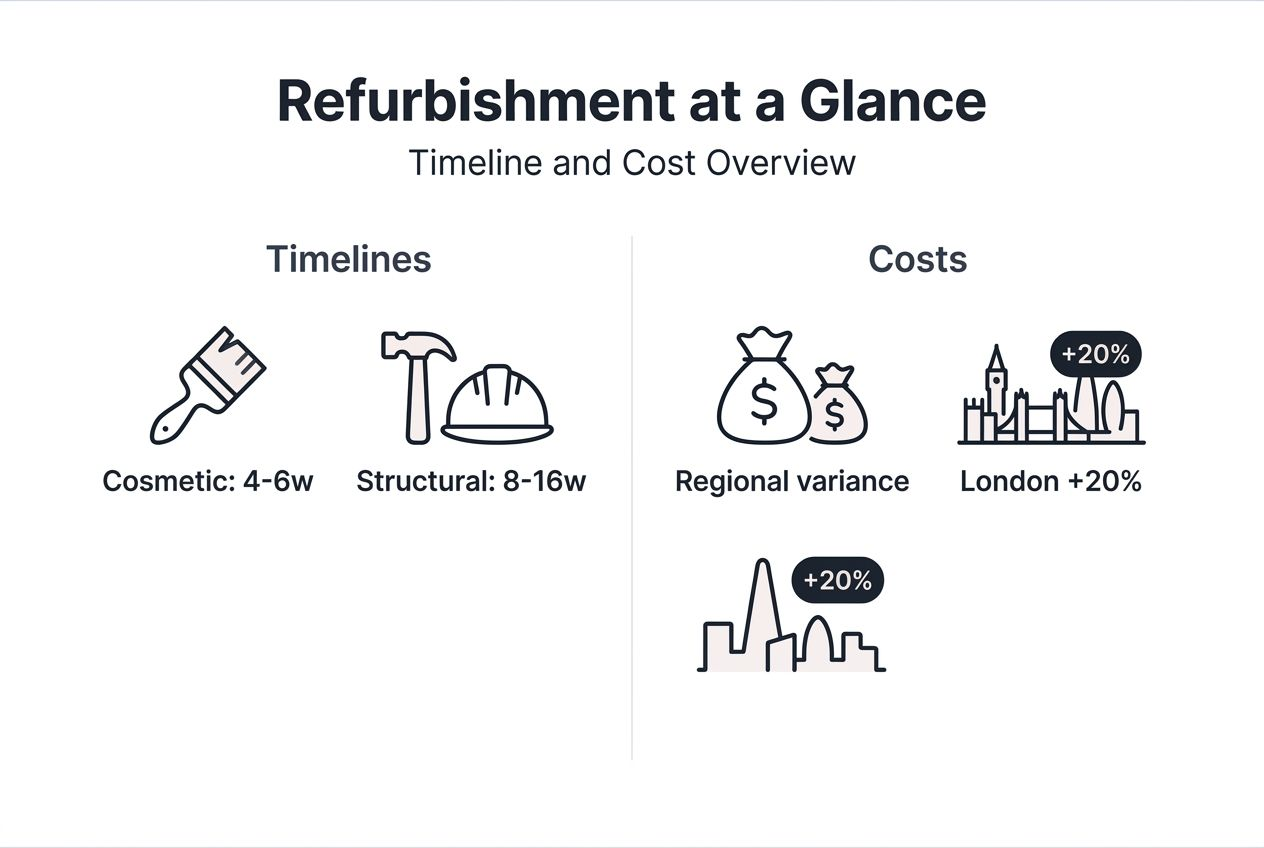
Typical UK refurbishment projects require 8-16 weeks for completion. Simple cosmetic updates finish in 4-6 weeks, whilst comprehensive refurbishments involving structural work and multiple trades extend to 16-20 weeks. Factor in additional time for planning approvals, contractor availability, and potential weather delays on external work.
| Project scope | Typical duration | Estimated cost range |
|---|---|---|
| Cosmetic refresh | 4-6 weeks | £5,000-£15,000 |
| Standard refurbishment | 8-12 weeks | £15,000-£35,000 |
| Comprehensive upgrade | 12-20 weeks | £35,000-£75,000+ |
Cost planning should account for regional variations. London and South East projects typically cost 20-30% more than similar work in Northern England or Scotland. Material quality choices significantly impact budgets, with premium fittings and finishes doubling costs compared to mid-range alternatives.
Refurbishment delivers measurable returns. Property values typically increase 15-25% following comprehensive refurbishment, depending on initial condition and local market dynamics. Energy efficiency improvements reduce utility bills whilst attracting environmentally conscious tenants willing to pay premium rents.
Post-refurbishment benefits include:
- Enhanced Energy Performance Certificate ratings improving marketability
- Reduced void periods through increased tenant appeal
- Lower maintenance costs from updated systems and materials
- Compliance with current regulations avoiding future enforcement
Alternative approaches and tradeoffs
Refurbishment strategies vary based on property occupancy, budget constraints, and operational priorities. Each approach involves distinct advantages and compromises.
| Approach | Advantages | Disadvantages | Best for |
|---|---|---|---|
| Full vacancy refurbishment | Faster completion, no occupant disruption, easier contractor access | Lost rental income, tenant relocation costs, higher upfront vacancy risk | Properties between tenancies, significant structural work |
| Phased refurbishment | Maintains partial rental income, spreads costs over time, minimal tenant displacement | Extended timelines, higher total costs, ongoing occupant inconvenience | Occupied multi-unit buildings, budget-constrained owners |
| Occupied refurbishment | No rental income loss, maintains tenant relationships | Severe schedule constraints, noise complaints, slower progress, limited work hours | Single occupied properties, minor upgrades |
Full vacancy approaches suit properties between tenancies or requiring extensive structural modifications. Contractors work efficiently without occupant constraints, completing projects 30-40% faster than occupied alternatives. However, vacancy periods eliminate rental income, creating cash flow pressure for landlords relying on that revenue.
Phased refurbishment splits work into manageable segments completed sequentially. This maintains some rental income whilst spreading costs across multiple periods. Total project costs typically run 15-20% higher due to repeated mobilisation and coordination complexity. Choose this approach when capital constraints prevent full upfront investment or multi-unit buildings allow partial occupation.
Occupied refurbishment requires exceptional coordination and tenant cooperation. Work proceeds during limited hours to minimise disruption, extending timelines significantly. This approach suits minor upgrades or situations where tenant retention outweighs efficiency concerns. Maintain excellent communication to preserve tenant relationships throughout the process.
Summary and next steps
Successful property refurbishment requires meticulous planning, regulatory compliance, and professional project management. The key success factors are detailed upfront preparation, selecting qualified tradespeople, maintaining strict quality control, and ensuring full legal compliance throughout.
Before starting your refurbishment project, complete this essential checklist:
- Define clear project objectives and success criteria
- Secure all necessary planning permissions and building regulation approvals
- Establish realistic budgets with adequate contingency funds
- Select experienced, insured contractors through rigorous vetting
- Create detailed contracts specifying scope, timelines, and payment terms
- Implement robust safety and quality management protocols
- Plan for regular inspections and progress monitoring
Professional support transforms refurbishment from stressful gamble to managed investment. Experienced project managers coordinate trades, monitor quality, ensure compliance, and resolve issues before they escalate. For property owners and landlords seeking reliable refurbishment outcomes, partnering with established specialists delivers peace of mind and superior results.
Ready to start your refurbishment journey? Contact UpKeep UK to discuss your project requirements and receive expert guidance tailored to your property’s specific needs.
How UpKeep UK supports your refurbishment project
Navigating complex refurbishment projects demands expertise across planning, compliance, and execution. UpKeep UK delivers comprehensive refurbishment management for residential and commercial properties throughout London and the wider UK, handling everything from initial surveys through final inspections.

Our experienced project managers coordinate all trades, ensure regulatory compliance, and maintain quality standards throughout your refurbishment. We help landlords and estate agents avoid the common property maintenance pitfalls that derail projects and inflate costs. From comprehensive building maintenance to full-scale refurbishments, we deliver reliable results on schedule and within budget. Get in touch today to discuss how we can transform your property investment.
Frequently asked questions
How long does a typical UK property refurbishment take?
Most standard refurbishment projects require 8-16 weeks depending on scope and complexity. Simple cosmetic updates finish in 4-6 weeks, whilst comprehensive refurbishments involving structural modifications extend to 20 weeks or more.
What permissions are needed before starting a refurbishment in the UK?
Planning permission and building regulation approvals are commonly required, though requirements vary by project scope and location. Minor internal alterations typically need only building regulation approval, whilst structural changes or external modifications require full planning permission. Consult your local authority planning department early in the process.
How can I avoid disputes with contractors during refurbishment?
Use fixed-price contracts with clear scope specifications and payment milestones tied to completed work. Check contractor references thoroughly, maintain regular communication throughout the project, and document all decisions in writing. Recognise warning signs of contractor problems early to address issues before they escalate.
What are the safety considerations to keep in mind during refurbishment?
Adhere strictly to UK construction health and safety regulations including risk assessments and method statements for hazardous tasks. Ensure regular site inspections, verify contractor insurance coverage, and maintain proper protective equipment requirements. Professional construction services handle all safety compliance systematically, protecting both workers and property owners from liability.
































