


A leaking tap today becomes a collapsed ceiling tomorrow. That simple truth costs UK property owners thousands each year when minor defects spiral into major structural failures. Timely refurbishments aren’t just about maintaining appearances; they’re strategic investments that protect asset values while ensuring legal compliance. Property managers who act promptly avoid the triple penalty of escalating repair costs, extended void periods, and potential regulatory fines. This guide reveals how proactive refurbishment decisions deliver measurable financial returns and safeguard your property portfolio against preventable risks.
Table of Contents
- Key takeaways
- The costs of delaying property refurbishments
- Understanding legal compliance and Awaab’s Law requirements
- How timely refurbishments increase property value and rental returns
- Planning and executing refurbishments efficiently for maximum benefit
- Explore expert refurbishment and maintenance solutions
- Frequently asked questions
Key Takeaways
| Point | Details |
|---|---|
| Timely repairs save money | Acting promptly on minor faults stops them escalating into costly damage and disruption for tenants. |
| Awaab’s Law compliance | Awaab’s Law imposes strict timeframes to address health hazards, with emergency investigations within 24 hours and swift repairs. |
| Structured refurbishment reduces risk | Structured refurbishment phases help manage costs and complexity across projects. |
| Preventive maintenance cuts voids | Regular inspections and planned maintenance reduce emergency calls and minimise void periods. |
| EPC upgrades yield rental premiums | Improving EPC ratings can attract higher rents and ensure regulatory compliance. |
The costs of delaying property refurbishments
Ignoring minor maintenance issues creates a cascade of financial consequences that far exceed the original repair costs. A small roof leak that could be fixed for £200 today might cause £15,000 worth of water damage, mould remediation, and structural repairs within months. Small issues ignored develop into major problems requiring expensive emergency interventions that disrupt tenants and drain reserves.
Void periods multiply these costs exponentially. Every week a property sits empty whilst awaiting repairs represents lost rental income that never returns. A landlord earning £1,500 monthly loses £6,000 during a four-week void period, on top of the actual repair expenses. Council tax, insurance, and mortgage payments continue regardless, creating carrying costs that erode profit margins.
Proactive maintenance inspections identify problems before they escalate. Quarterly property assessments catch deteriorating seals, minor cracks, and early signs of damp that cost pennies to address immediately. Waiting until these issues become visible to tenants means the damage has already progressed to expensive stages requiring specialist contractors and extended timelines.
Consider a typical scenario: a property manager notices slight discolouration around a bathroom ceiling during a routine inspection. Addressing the underlying plumbing issue costs £350 and takes two hours. Ignoring it leads to a ceiling collapse six months later, requiring emergency plumber callout (£180), ceiling replacement (£800), bathroom refitting (£2,400), and tenant relocation costs (£1,200). The total damage exceeds £4,500, thirteen times the preventive cost.
“Emergency repairs cost 3-5 times more than planned maintenance because they require immediate contractor availability, premium rates, and often reveal secondary damage that wouldn’t exist if caught early.”
The London building refurbishment process guide emphasises systematic approaches that prevent these escalations. Key preventive strategies include:
- Scheduling biannual inspections of roofs, gutters, and external drainage systems
- Monitoring heating systems before winter to avoid mid-season breakdowns
- Testing electrical installations every five years as regulations require
- Checking window seals and weatherproofing annually to prevent water ingress
- Documenting all maintenance activities to track deterioration patterns
Property owners who implement structured maintenance schedules report 60-70% fewer emergency callouts compared to reactive-only approaches. This predictability allows better budget forecasting and prevents the financial shocks that destabilise property portfolios.
Understanding legal compliance and Awaab’s Law requirements
UK property legislation has fundamentally shifted towards tenant protection, with Awaab’s Law setting strict timeframes that demand immediate action on health hazards. Social landlords must investigate emergency hazards within 24 hours and commence repairs without delay. Significant hazards require investigation within 10 working days, with repair timelines determined by severity but never exceeding reasonable periods.
Emergency hazards include situations posing immediate risk to health or safety: complete heating failures in winter, major water leaks causing flooding, electrical faults creating fire risks, or structural damage threatening collapse. These situations trigger same-day investigation requirements regardless of property type or tenancy agreement terms. Landlords who fail to respond face enforcement action, unlimited fines, and potential criminal prosecution under the Housing and Planning Act.
Significant hazards encompass issues like persistent damp and mould, faulty ventilation systems, inadequate heating provision, or security vulnerabilities. Whilst not immediately life-threatening, these conditions seriously impact tenant wellbeing and must be addressed within defined timeframes. The 10-day investigation window means property managers need systems enabling rapid contractor deployment and assessment completion.
Compliance protects both parties in the landlord-tenant relationship. Tenants receive safe, habitable accommodation meeting minimum standards. Landlords avoid legal penalties, reputational damage, and the higher costs associated with court-ordered emergency works. Properties maintained to compliance standards also command better rental rates and experience lower turnover, improving long-term yields.
Pro Tip: Establish relationships with multiple contractors across different trades before emergencies arise. Pre-negotiated rates and guaranteed response times ensure you can meet Awaab’s Law deadlines without paying crisis premiums or scrambling for available tradespeople during urgent situations.
Practical compliance strategies include:
- Creating digital inspection checklists covering all hazard categories
- Implementing 24-hour emergency response protocols with clear escalation paths
- Training property managers to recognise and categorise hazard severity accurately
- Maintaining contractor databases with verified availability and specialisms
- Documenting every investigation and repair with timestamped photographic evidence
The emergency repairs guidance provides detailed workflows for managing urgent situations whilst maintaining compliance. Regular compliance audits identify systemic issues before they trigger regulatory intervention, protecting your operating licence and reputation.
How timely refurbishments increase property value and rental returns
Strategic refurbishments deliver measurable financial returns that justify upfront investment costs. Kitchen renovations add 10% value, whilst loft conversions can increase property worth by up to 21%, particularly in space-constrained urban markets. General renovations typically yield 3-5% appreciation, but targeting high-impact areas maximises returns per pound spent.
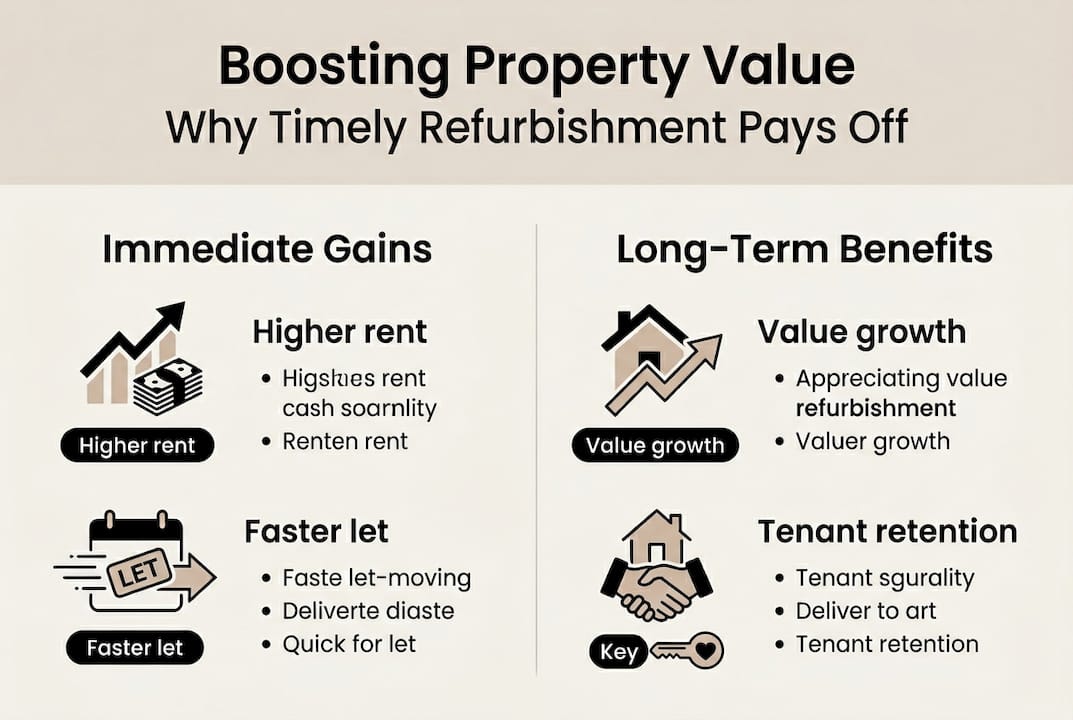
Energy Performance Certificate improvements generate ongoing income benefits alongside capital appreciation. Properties achieving A or B EPC ratings command 10.9% rental premiums compared to lower-rated equivalents. With average UK rents at £1,250 monthly, this premium translates to £136 additional monthly income or £1,632 annually, creating substantial long-term value from efficiency upgrades.
| Refurbishment Type | Typical Cost | Value Increase | ROI Percentage |
|---|---|---|---|
| Kitchen renovation | £8,000-£15,000 | £12,000-£20,000 | 10-15% |
| Loft conversion | £25,000-£40,000 | £40,000-£60,000 | 15-21% |
| Bathroom upgrade | £5,000-£8,000 | £6,000-£10,000 | 8-12% |
| EPC improvement (C to B) | £3,000-£6,000 | £8,000 + rental premium | 10-15% plus ongoing income |
| General cosmetic refresh | £4,000-£7,000 | £5,000-£9,000 | 3-5% |
Modern, well-maintained properties reduce void periods by attracting tenants faster and retaining them longer. A freshly refurbished flat in good decorative order lets within 7-10 days on average, compared to 21-28 days for tired properties requiring tenant compromises. This velocity difference represents three weeks of saved void costs and faster income generation.
Tenant retention improves dramatically in refurbished properties. Occupants in modernised homes renew tenancies at rates 40% higher than those in dated accommodation, reducing turnover costs including marketing, viewings, referencing, and void periods. Long-term tenancies also decrease wear and tear from move-in/move-out cycles.
Pro Tip: Prioritise refurbishments offering dual benefits of capital appreciation and ongoing income enhancement. EPC upgrades, modern heating systems, and quality kitchen/bathroom installations all improve both sale value and rental competitiveness, maximising total returns on your refurbishment investment.
The examples of refurbishment projects showcase real-world transformations demonstrating these principles. Case studies reveal how targeted interventions in high-value areas outperform blanket refurbishments spreading budgets too thinly. Focus creates impact.
Market positioning matters significantly. Properties refurbished to contemporary standards compete in higher rental brackets, accessing tenant demographics with stronger payment histories and longer tenancy expectations. A £2,000 kitchen upgrade might elevate a property from the £900 monthly market segment to £1,050, generating £1,800 additional annual income that recovers the investment within 13 months.
The property refurbishment guide details how to calculate break-even points and prioritise projects based on your specific property portfolio goals, whether focused on capital growth, income maximisation, or balanced appreciation.
Planning and executing refurbishments efficiently for maximum benefit
Successful refurbishments follow systematic phases that minimise disruption whilst controlling costs. Professional projects work outside-in, addressing structural and weatherproofing elements before interior finishes. This sequence prevents new internal work being damaged by unresolved external issues like roof leaks or damp penetration.
Standard refurbishment stages proceed in this order:
- Structural assessment and repairs including foundations, walls, and roof integrity
- External envelope works covering weatherproofing, windows, and drainage systems
- First-fix services installing new plumbing, electrical, and heating infrastructure
- Insulation and energy efficiency improvements meeting current building regulations
- Plastering, flooring, and preparation for decorative finishes
- Second-fix services completing kitchens, bathrooms, and electrical fittings
- Decorative finishes including painting, tiling, and final touches
- Snagging inspection identifying and rectifying any defects before handover
Full house refurbishments take 8-16 weeks depending on scope and complexity. Light refurbishments focusing on cosmetic improvements complete faster, typically within 4-6 weeks. Heavy refurbishments involving structural alterations, extensions, or complete system replacements require longer timelines and staged funding approaches.
Financing heavy works requires careful planning. Projects exceeding 15% of property value typically need drawdown finance released in stages as work progresses. This protects both lender and borrower by ensuring funds match completion milestones. Stage payments also incentivise contractors to maintain schedules and quality standards.
| Refurbishment Category | Scope | Typical Duration | Finance Approach |
|---|---|---|---|
| Light cosmetic | Decoration, minor repairs, updates | 4-6 weeks | Cash or short-term credit |
| Medium upgrade | Kitchen/bathroom replacement, flooring | 6-10 weeks | Bridging or development finance |
| Heavy structural | Extensions, conversions, full system replacement | 12-16 weeks | Staged drawdown finance |
| Complete renovation | Gut and rebuild to modern standards | 16-24 weeks | Development finance with quantity surveyor oversight |
The refurbishment process guide provides detailed timelines and contractor coordination strategies. Successful project management requires clear communication channels, regular site inspections, and documented progress tracking against agreed milestones.
Planning permission and building regulation approval add 8-12 weeks to project timelines when required. Always verify requirements before commencing work to avoid costly retrospective corrections or enforcement action. Structural alterations, extensions, and changes to listed buildings typically need formal consent.
Cost control depends on detailed specifications agreed before work begins. Vague scopes invite disputes and variations that inflate budgets. Specify materials, finishes, and quality standards explicitly in contractor agreements. Include contingency allowances of 10-15% for unforeseen issues common in older properties.
The renovating vs refurbishing options comparison helps determine appropriate intervention levels. Sometimes targeted refurbishment delivers better returns than complete renovation, particularly when core structure and services remain sound. Strategic assessment prevents over-investment in areas yielding minimal value increase.
Explore expert refurbishment and maintenance solutions
Navigating refurbishment projects whilst managing existing properties demands specialist expertise and reliable contractor networks. Property owners face constant tension between maximising returns and controlling costs, particularly when legal compliance deadlines compress decision timeframes. Professional guidance transforms these challenges into opportunities for value creation.
UpKeep UK delivers comprehensive refurbishment and maintenance solutions tailored to property portfolios across London and the wider UK. Our integrated approach combines strategic planning, experienced tradespeople, and project management expertise that keeps refurbishments on schedule and within budget. Whether addressing red flags in property maintenance or executing complex construction services, our team ensures your properties meet compliance standards whilst maximising investment returns. From routine maintenance preventing costly emergencies to complete refurbishments enhancing asset values, we provide the support property managers need to protect and grow their portfolios. Explore our emergency repairs services to discover how proactive partnerships deliver peace of mind alongside financial performance.
Frequently asked questions
How quickly should urgent repairs be investigated under Awaab’s Law?
Emergency hazards posing immediate health or safety risks must be investigated within 24 hours under Awaab’s Law requirements. Repairs should commence immediately following investigation to comply with regulations. Significant hazards require investigation within 10 working days, with repair timelines determined by severity but never exceeding reasonable periods that protect tenant wellbeing.
What refurbishment projects provide the best return on investment?
Kitchen renovations and loft conversions deliver the strongest ROI, with loft conversions achieving up to 21% value increases in space-constrained markets. Kitchen upgrades typically add 10-15% to property values whilst also improving rental competitiveness. EPC improvements offer dual benefits of capital appreciation and ongoing rental premiums, with A/B ratings commanding 10.9% higher rents than lower-rated properties.
How long does a full property refurbishment usually take?
Complete property refurbishments typically require 8-16 weeks depending on project scope and complexity. Light cosmetic refurbishments finish within 4-6 weeks, whilst heavy structural works involving extensions or complete system replacements may extend to 16-24 weeks. Staged funding and phased delivery help manage timelines and budgets, particularly for projects exceeding 15% of property value.
Do refurbishments reduce void periods for rental properties?
Modernised properties let significantly faster than tired accommodation, typically within 7-10 days compared to 21-28 days for dated units. This three-week difference saves substantial void costs whilst generating income sooner. Refurbished properties also retain tenants at 40% higher rates, reducing turnover expenses and maintaining consistent rental income streams.
What planning permissions do property refurbishments require?
Structural alterations, extensions, and changes to listed buildings typically require planning permission and building regulation approval, adding 8-12 weeks to project timelines. Internal cosmetic refurbishments rarely need formal consent, but always verify requirements with local planning authorities before commencing work. Retrospective corrections for unauthorised works prove far more expensive than obtaining proper approvals initially.
































