


Section 20 consultation applies whenever qualifying works will cost any single leaseholder more than the statutory threshold, or a long-term agreement will cost them more than the relevant annual limit, and skipping it means you usually cannot recover the excess from leaseholders at all. This is the trigger point that catches out landlords, freeholders, and managing agents every year, often on projects that seemed too routine to warrant the paperwork. Get the threshold wrong and the financial consequences land squarely with the property owner, not the contractor.
The rule sits in the Landlord and Tenant Act 1985, section 20, which sets those two monetary limits: £250 per leaseholder for qualifying works, £100 per leaseholder per year for qualifying long-term agreements.
- Miss the threshold check and you risk capping your own recoverable service charge.
- Both limits apply per leaseholder, not per building, which surprises landlords with large or unevenly split blocks.
- The cap applies automatically unless a tribunal grants dispensation.
Key Takeaways
Section 20 consultation is triggered by cost thresholds, not project size, and non-compliance caps what landlords can recover from leaseholders.
| Point | Details |
|---|---|
| Know your thresholds | £250 per leaseholder for qualifying works, £100 per year for long-term agreements, checked per leaseholder not per block. |
| Follow all three stages | Notice of Intention, Statement of Estimates, and Notice of Award each carry statutory timing and content rules. |
| Notice of Reasons is the weak point | Tie contractor selection to pre-agreed scoring criteria to avoid the most common tribunal challenge. |
| Non-compliance has real costs | Failing to consult usually caps recovery at £250 per leaseholder, and dispensation is discretionary, not guaranteed. |
| Get professional support early | Upkeep UK helps landlords prepare compliant tender packs and manage contractors through Section 20 projects. |
This article is general information, not a substitute for advice from a qualified lawyer. Consult a qualified legal professional about your own circumstances before acting on anything here.
Table of Contents
- What Section 20 property consultancy maintenance actually means
- When does a Section 20 consultation get triggered?
- How does the three-stage consultation procedure work?
- What happens if you don’t follow Section 20 correctly?
- What should landlords and leaseholders do now?
- Where do most Section 20 consultations go wrong?
- How we help with Section 20 property consultancy maintenance
- Sources
What Section 20 property consultancy maintenance actually means
Section 20 exists to stop leaseholders being landed with large, unexplained bills for major works or long-term contracts they had no say in. Parliament built consultation into the Landlord and Tenant Act 1985, section 20 precisely because service charges had, for decades, been a one-way conversation. The Service Charges (Consultation Requirements) (England) Regulations 2003 fill in the practical detail: what each notice must say, who receives it, and how long leaseholders get to respond.
“Landlord” here covers more than the person who owns the freehold. Resident management companies, right-to-manage companies, and managing agents acting on a landlord’s behalf all carry the same consultation duty when they arrange qualifying works or agreements.
The consultation regime was never designed to slow landlords down for its own sake. It exists because leaseholders pay the bill for decisions they don’t make, and the law gives them a structured voice before the invoice arrives.
When does a Section 20 consultation get triggered?
Two thresholds decide whether you need to consult, and both are calculated per leaseholder rather than per block.
- Qualifying works: triggered once the cost to any one leaseholder exceeds £250, including VAT and consultants’ fees, as confirmed under the Landlord and Tenant Act 1985.
- Qualifying long-term agreements: triggered where a contract running more than twelve months costs any leaseholder over £100 in a service charge year.
- The “any one leaseholder” rule: in blocks with unequal apportionment, one flat’s larger share can trigger consultation even when the average cost per unit looks modest.
A roof replacement costing £40,000 across a ten-flat block, split unevenly so one penthouse pays £4,500, clears the qualifying works threshold easily. A five-year lift maintenance contract at £1,200 a year, again split unevenly, can trip the qualifying long-term agreement threshold even though the annual figure sounds small. Checking leases at the planning stage, before instructing contractors, avoids nasty surprises later.
How does the three-stage consultation procedure work?
The statutory process runs in three stages, each with its own notice, its own deadline, and its own set of leaseholder rights. LEASE sets these out clearly, and the 2003 Regulations govern exactly what each notice must contain.
| Stage | What it requires | Timing | Leaseholder rights |
|---|---|---|---|
| Notice of Intention | Describes the works or agreement and the reasons for it | 30-day response window | Nominate a contractor within the window |
| Statement of Estimates | At least two estimates, one from a contractor unconnected to the landlord | 30-day response window | Inspect estimates, submit written observations |
| Notice of Award (Reasons) | Explains why the chosen contractor was picked, if not the lowest tender or a nominated contractor | Within 21 days of contract award | Receive a written explanation of the decision |
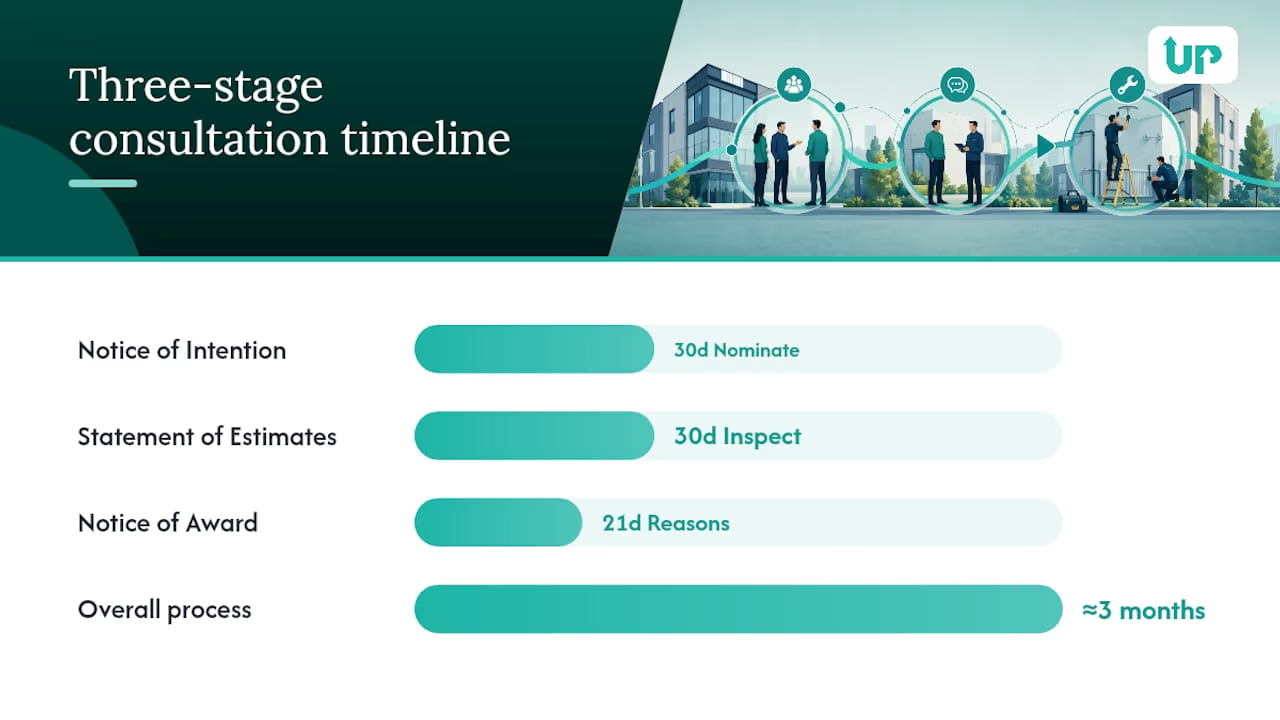
A workable timeline allows roughly three months from first notice to signed contract, once you factor in postal delays, nomination responses, and the time needed to actually evaluate estimates properly. Rushing stage two to save a fortnight is where most disputes start.
Keep proof of service for every notice (recorded delivery slips or dated emails), copies of every estimate received, and a written log of every observation and how you responded to it. Southampton City Council’s own consultation procedure guidance gives a useful template for wording these notices in plain language.
A Notice of Intention might read: “We intend to carry out roof repairs to [address]. The works are estimated to cost [contribution] per leaseholder. You may nominate a contractor for consideration within 30 days of this notice.” A Notice of Reasons should state plainly why the winning tender was chosen over cheaper alternatives, referencing specific scoring criteria rather than a vague reference to “overall value.”
Pro Tip: Build your scoring criteria into the tender pack before you send out the Notice of Intention. That way, when you write the Notice of Reasons, you’re reporting against a framework leaseholders have already seen, not inventing justification after the fact.
What happens if you don’t follow Section 20 correctly?
Get the process wrong and the consequences are financial, not just procedural. The core penalty is a recoverability cap: advice on the consequences of poor consultation confirms landlords who fail to consult properly are usually restricted to recovering no more than £250 per leaseholder for the works in question, regardless of what the project actually cost.
- The First-tier Tribunal (or Leasehold Valuation Tribunal in some jurisdictions) has the power to confirm or challenge this cap.
- Section 20ZA allows the tribunal to grant dispensation from consultation requirements where it considers this reasonable, but this is discretionary, not automatic.
- Outcomes vary: some landlords secure retrospective dispensation after an emergency repair, others are refused and left absorbing costs above the cap themselves, and tribunal costs can be awarded against a landlord who applied for dispensation as a shortcut rather than a genuine emergency response.
What should landlords and leaseholders do now?
Compliance is mostly about discipline, not complexity. Landlords benefit from treating every notice as a document that might one day sit in front of a tribunal.
For landlords:
- Confirm the threshold applies to every leaseholder’s share, not just the block average, before serving anything.
- Serve notices by recorded delivery or a dated, trackable method and keep proof.
- Allow genuine inspection of estimates rather than a rushed viewing window.
- Write your Notice of Reasons against pre-agreed scoring criteria, not after the fact.
For leaseholders:
- Request the estimates in writing if they aren’t offered promptly, and check the response deadline stated on the notice.
- Nominate a contractor within the 30-day window if you have one in mind.
- Submit observations in writing and keep a copy for your own records.
Recordkeeping for both sides: hold onto postage receipts, inspection logs, and email correspondence for at least six years, matching the usual limitation period for service charge disputes.
Pro Tip: The Notice of Reasons is where most compliance failures happen. A standardised template tied directly to your tender scoring criteria removes the guesswork and gives you a defensible paper trail if a leaseholder challenges the decision at tribunal.
Where do most Section 20 consultations go wrong?
Industry experience consistently points to the Notice of Reasons as the weakest link in the process. Landlords often explain a contractor choice in vague terms rather than tying it to specific evaluation criteria, and tribunals scrutinise this stage precisely because it’s where subjective judgement replaces the lowest tender.

Treating dispensation under section 20ZA as a routine fallback is a costly habit. Tribunals assess reasonableness strictly, and a landlord who could have consulted properly but didn’t often faces a harder hearing than one dealing with a genuine emergency.
Realistic scheduling matters. Between the two mandatory 30-day response windows and the 21-day award stage, a compliant consultation rarely completes in under ten to twelve weeks. Planning major works around this minimum timeline, rather than against it, is usually far cheaper than a tribunal application after the fact.

A publisher’s note on getting this right
We plan major works with the paper trail in mind from day one: scoring criteria fixed before tenders go out, notices served with proof, estimates logged and inspectable. Getting Section 20 right protects everyone’s budget, not just the landlord’s. If you’re weighing up a project that might trigger consultation, it’s worth talking it through with us before you serve a single notice.
How we help with Section 20 property consultancy maintenance
Running a compliant consultation alongside the actual building work is where most in-house teams run short on time, not expertise. Upkeep UK administers tender packs, manages contractor procurement, and keeps the documentary trail that tribunals expect to see, so the works and the paperwork move in step rather than one racing ahead of the other.

That practical support covers three areas landlords repeatedly struggle with on their own:
- Preparing compliant tender and estimate packs that meet the 2003 Regulations notice content requirements.
- Managing contractors on site once the consultation closes, keeping the project moving without cutting corners on the process.
- Building the document pack, proof of service, estimates, observations, and reasons, that stands up if a leaseholder challenges the decision.
If you’re planning major works or a long-term maintenance agreement that might trigger consultation, our property maintenance services for landlords are a sensible starting point. Get in touch for a compliance review before you serve your first notice, not after.
Sources
- Landlord and Tenant Act 1985, section 20
- Leasehold Advisory Service (LEASE) — Section 20 consultation process for major works
- Building Trust — Section 20 consultation: triggers, what to send and outcomes
- Section 20 consultation procedure — Southampton City Council
































