


Call a 24/7 emergency maintenance partner the moment a critical fault threatens guest safety or shuts down core services, and expect that provider to stabilise the site and begin repairs quickly. With a retained provider such as UpKeep UK, hotels can expect a 1 to 3 hour response window for critical call-outs, which keeps disruption to guests and operations to a minimum while statutory obligations are met.
Key Takeaways
Effective hotel emergency maintenance relies on rapid response, proper trades identification, detailed documentation, and proactive preparation to minimize guest disruption and ensure safety.
| Point | Details |
|---|---|
| Fast response times | Retained providers like UpKeep UK promise a response within one to three hours for critical faults. |
| Proper trade response | Identifying the correct trade immediately ensures prompt and effective repairs specific to the emergency category. |
| Thorough documentation | Keeping detailed records and photos during repairs supports compliance, insurance, and future maintenance planning. |
| Pre-incident preparation | Pre-agree response terms, label isolation points, and develop clear communication protocols to reduce chaos during emergencies. |
| Upkeep UK approach | Upkeep UK offers insured, accredited emergency repairs with photo reports, ensuring fast, accountable, and traceable service. |
Which emergency maintenance services hotels need and which trades respond
Hotels face a narrower, higher-stakes set of emergencies than most commercial buildings, because a single fault can affect dozens of occupied rooms at once. Recognising the category quickly means the right trade arrives first, rather than a generalist who then has to call for backup.
Most incidents fall into a handful of groups, each with its own responding trade and urgency level.
- Power failures: electricians handle distribution board faults, tripped circuits and total outages affecting lifts, lighting or life-safety systems.
- Water escapes and leaks: plumbers isolate the supply, trace the source and fit temporary stops before permanent pipework repairs.
- Gas faults or smells: only a Gas Safe registered engineer should attend, isolate the supply and make the installation safe.
- Sewage backups and blocked drains: drainage specialists clear blockages and address contamination risks in guest and kitchen areas.
- Life-safety system failures: fire alarm faults, emergency lighting failures or sprinkler issues need competent fire-safety engineers, often working alongside electricians.
- Glazing, roofing and structural instability: glaziers, roofers or structural tradespeople secure the building envelope and prevent water ingress or further movement.
- HVAC and refrigeration failures: specialist refrigeration engineers are often needed separately from general HVAC technicians, particularly where kitchen cold storage is affected and food service is at risk.
Several of these categories overlap. A burst pipe near a distribution board, for example, needs both a plumber and an electrician working in sequence, with the electrics isolated before any water work begins.
What counts as an emergency in a hotel and immediate guest-safety priorities
A hotel incident qualifies as an emergency when it creates immediate danger to life or health, or when it removes a core service that guests need to operate safely, such as power, water, heating or fire detection. Anything short of that is urgent but schedulable, which matters because it determines whether you call 999, your local authority, or a maintenance provider first.
Food safety has its own clock. Refrigerated food typically stays safe for only around 4 hours during a power outage, while a full freezer can hold temperature for up to 48 hours (24 hours if it’s only half full). Once those windows close, food service decisions need to follow, not guesswork.
Practical first actions matter as much as the call itself.
- Call 999 immediately for fire, gas leaks with a strong smell, or any direct threat to life, and evacuate the affected area.
- Contact your retained maintenance provider for loss of power, water, heating or structural concerns that don’t require emergency services.
- Record the discovery time, the steps taken and who was briefed, since this record matters for both compliance and insurance later.
- Brief front-of-house and housekeeping staff immediately so guest-facing teams give consistent information.
What happens at an emergency call-out: safe triage, temporary measures and repair timeline
When you call, be ready to give the engineer a clear picture before they arrive. The information you provide shapes how fast the right person turns up with the right equipment.
- Location and scale: which floor, room or plant area, and whether one room or multiple areas are affected.
- Guest risk: whether guests are in the affected rooms and whether evacuation or relocation is already underway.
- Access: whether areas are locked, who holds keys, and whether contractors need an escort.
- Utilities status: whether you’ve already isolated water, gas or electrics, and where the isolation points are.
- On-site contact: a named person the engineer can reach directly on arrival.
On site, engineers typically triage the fault first: proving electrics dead before touching them, shutting off gas at the meter, or isolating a water supply before opening anything up. Temporary stabilisation, such as a cordon, a makeshift seal or a bypass, usually takes hours. A permanent fix, particularly anything involving ordered parts or structural work, can take days or longer. Keep photographs and a written job report from every visit: they form the handover record between temporary and permanent work, and they matter if an insurer later asks what happened and when.
Pro Tip: Keep a single incident log per emergency rather than separate notes from different staff, so the full timeline is in one place when a contractor or insurer asks for it.
Statutory competence and compliance: who can do what and what to check at short notice
Emergency conditions are exactly when corners get cut, which is also when the rules matter most. Gas work in particular has no grey area.
- Gas work must be carried out only by a Gas Safe registered engineer, and asking for registration details before work begins is reasonable, even mid-emergency.
- Electrical and life-safety work should be handled by a competent, certificated engineer, in line with HSE guidance on electrical safety at work.
- Keep maintenance history, service certificates and statutory inspection records accessible, since they demonstrate due diligence and help an engineer diagnose a recurring fault faster.
- If a hazard can’t be made safe immediately, close or restrict the affected area rather than reopening it on a hope.
Maintenance, inspection and testing of electrical systems are essential, and only competent people should carry out or supervise this work.
Where a kitchen or food area can’t maintain safe conditions, hotels should follow local authority food-business emergency guidance, which can include voluntary closure to avoid a formal Hygiene Emergency Prohibition Notice later.
How to prepare ahead and reduce guest disruption when emergencies happen
The hotels that handle emergencies smoothly are the ones that did the preparation months earlier, not the ones that react fastest in the moment.
- Pre-agree call-out terms with a trusted maintenance contractor so pricing and response expectations are settled before you need them.
- Build guest-communication templates covering delayed check-in, room moves and refund language, so front desk staff aren’t improvising.
- Label isolation points for water, gas and electrics clearly, and keep building schematics and spare keys somewhere contractors can access out of hours.
- Review every incident afterwards and feed findings into your planned maintenance schedule so the same fault doesn’t recur.
Pro Tip: Store your isolation point map and 24/7 contact list in a laminated folder at the duty manager’s desk, not just in a digital system that fails with the power.
A hospitality-tailored maintenance arrangement built around these habits tends to shorten the gap between fault and fix, because the contractor already knows the building layout and isolation points before they arrive.
Coordination with hotel management and communication protocols during emergencies
An emergency call-out succeeds or fails on communication as much as on trade skill. The duty manager should own the incident from first report to resolution, acting as the single point of contact for the attending engineer, rather than leaving multiple staff members giving conflicting instructions.
Front-of-house, housekeeping and maintenance teams need a shared understanding of who tells guests what, and when. A guest standing in a corridor during a power outage shouldn’t hear three different explanations from three different staff members. A short, factual holding statement, agreed in advance, covers this: what’s happened, what’s being done, and when an update will follow.
Engineers attending the site need a named contact who can grant access, confirm isolation points and make decisions on the spot, such as whether to relocate guests from an affected floor. Without that person, engineers waste time finding someone who can authorise next steps, which eats directly into the response window.
Larger hotels benefit from a short briefing at shift handover during any ongoing incident, so the next team on duty isn’t starting from zero. Smaller properties can achieve the same result with a single incident log that every relevant staff member can see. Either way, the principle is the same: one source of truth, one point of contact, and a communication plan that’s been agreed before the emergency, not during it.
Post-emergency follow-up procedures including documentation and permanent repairs
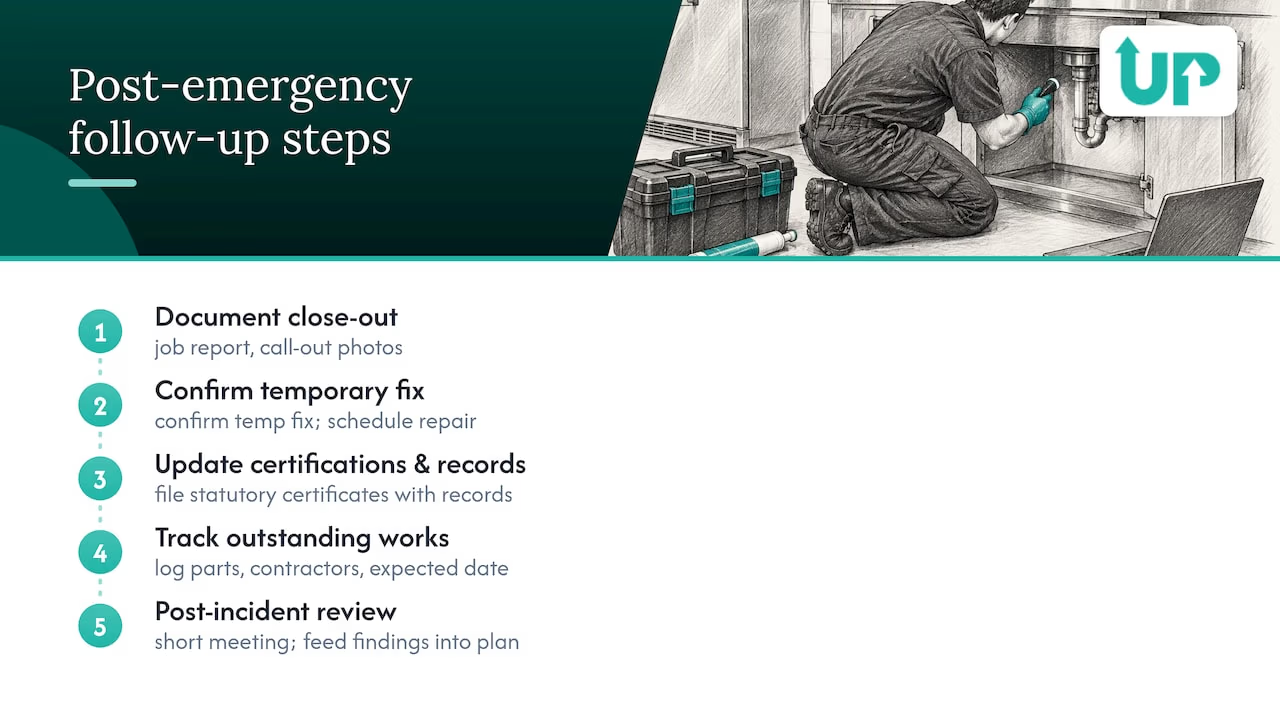
Once the immediate danger has passed and temporary measures are in place, the work isn’t finished, even if the guest-facing disruption has eased. Every emergency needs a documented close-out before it’s considered resolved.
That close-out should include the original job report, photographs from the call-out, confirmation of any temporary fix and a scheduled date for the permanent repair. Where statutory systems were involved, such as fire alarms, gas or electrics, the relevant certification needs updating and filed alongside your existing maintenance records.
Permanent repairs sometimes need parts ordered or specialist contractors booked separately from the emergency engineer, which means a gap between stabilisation and full resolution. Track that gap explicitly: a temporary seal on a roof leak or a bypassed electrical fault left unmanaged for weeks becomes its own hazard.
A short post-incident review, even ten minutes with the relevant managers, catches what the moment-to-moment response missed: whether the right trade was called first, whether guest communication worked, and whether the fault points to a wider maintenance gap. Feeding that review into your ongoing maintenance planning is what turns one emergency into fewer future ones, rather than a repeat of the same fault six months later.
Impact of emergency maintenance on hotel operations and strategies to minimize disruption
A single unmanaged emergency can affect far more than the room where it started. A water leak on one floor often means isolating supply to several rooms, a kitchen refrigeration failure can halt food service for an entire property, and a fire alarm fault may require evacuating guests who then need rebooking elsewhere.
The operational cost isn’t just the repair bill. Lost room revenue, comped stays, refunds and staff time spent managing guest relations typically outweigh the maintenance invoice itself. Reputational damage from a poorly handled incident, visible in guest reviews, often outlasts the physical repair by months.
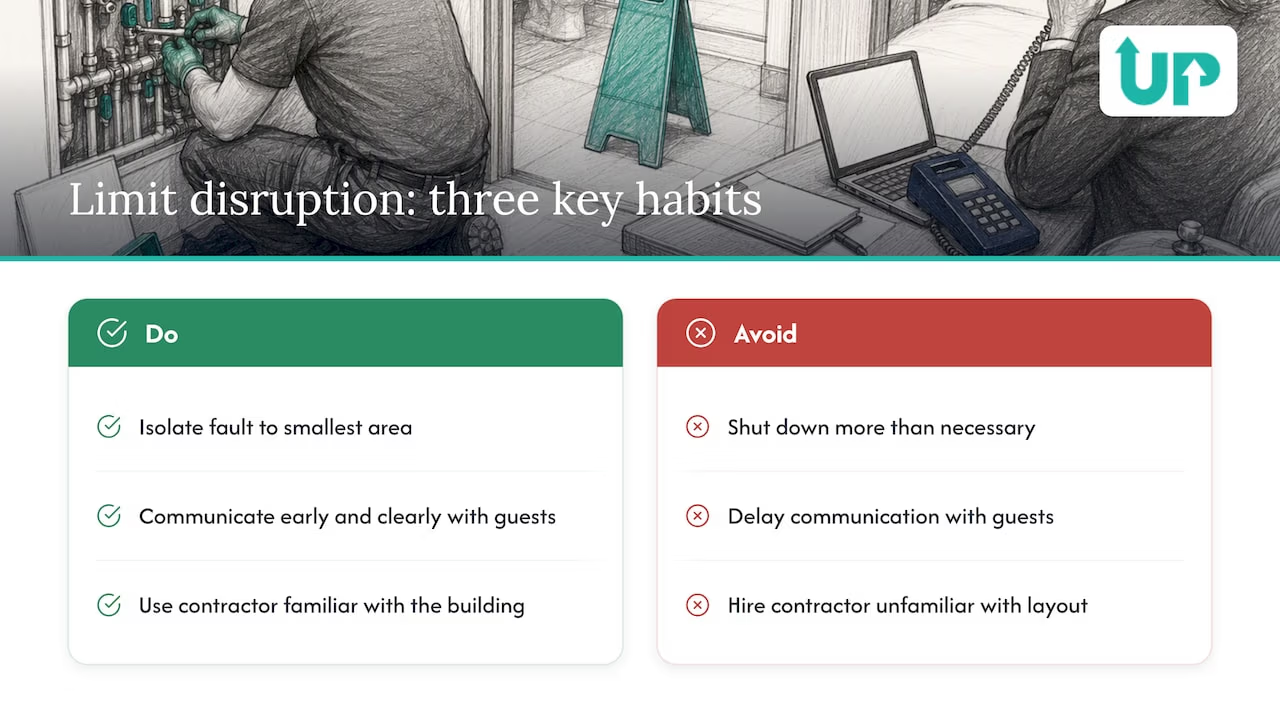
Minimising that disruption comes down to a few repeatable habits: isolating the fault to the smallest possible area rather than shutting down more than necessary, communicating clearly and early with affected guests, and having a contractor who already understands the building rather than one learning the layout on arrival. Hotels using a retained reactive maintenance arrangement tend to contain incidents faster, simply because the relationship and the access arrangements already exist before the fault happens.
Plumbing failures are a common and preventable source of this kind of disruption. Rental and commercial property plumbing failures often trace back to ageing pipework or poor isolation points, both of which are cheaper to address during planned maintenance than during an emergency call-out at 2am.
Legal liabilities and insurance considerations related to emergency repairs
Hotels carry a duty of care to guests that doesn’t pause during an emergency, and how an incident is handled can matter as much to liability as the incident itself. A fault that’s reported late, poorly documented or left unaddressed after a temporary fix creates a stronger liability case than one handled promptly and recorded thoroughly.
Insurance claims for emergency repairs typically depend on the quality of your records: when the fault was discovered, what action was taken, which engineer attended and whether they held the relevant certification. A claim involving gas or electrical work without evidence that a competent, registered engineer carried it out is far harder to support.
Maintaining current certificates for fire safety, emergency lighting and electrical systems isn’t just a compliance checkbox: it’s the evidence base that protects the business if a guest is injured or a claim is disputed. Insurers and enforcement bodies both look at the same question after an incident, whether the hotel could show it took reasonable, documented steps before and during the emergency.
A maintenance partner’s perspective on what good emergency response looks like
From where we sit, the hotels that cope best with emergencies aren’t the ones with the most elaborate plans on paper, they’re the ones with a partner who turns up fast, carries insurance, and leaves a photo report behind every visit. Speed matters, but so does a written record that an account manager actually reviews. Hotels that treat each incident as something to learn from, not just fix, see noticeably fewer repeat emergencies over time.
— Drahim Hasula
How UpKeep UK can help: emergency repairs, contact routes and what to expect when you call
For urgent property care and fast repairs in London hotels, a professional maintenance provider can offer emergency response times between one and three hours. We cover the trades that matter most during a hotel emergency and coordinate around your operation, not against it.

Emergency Hotel Maintenance Services:
- Core response time: 1 to 3 hours for critical call-outs.
- Key trades covered: plumbing, electrical, roofing, and structural stabilisation.
- Hospitality focus: services tailored to minimise guest disruption and meet statutory safety obligations.
- Contact and coordination: property managers can coordinate 24/7 with us directly.
We work with fixed pricing where possible, insured and accredited engineers, and photo progress reports on every job, so you have a clear record for guests, management and insurers alike. Get in touch through our emergency property repairs page to set up a response arrangement before you need one.
FAQ
What counts as emergency repairs in a hotel?
An emergency repair is any fault that creates immediate danger to guests or staff, or removes a core service such as power, water, heating or gas needed for safe operation. Anything less urgent, even if inconvenient, is typically scheduled as routine or reactive maintenance rather than treated as an emergency.
What would be considered a maintenance emergency?
A maintenance emergency is a fault that can’t wait for a scheduled visit without risking safety, legal compliance or significant guest disruption, such as a gas leak, total power loss, major water escape or a life-safety system failure. Gas work always needs a Gas Safe registered engineer, regardless of how urgent the situation feels.
What is the role of maintenance in a hotel?
Maintenance keeps a hotel’s building systems, from electrics and plumbing to fire safety and HVAC, operating safely and reliably for guests and staff. It spans planned, preventative work that reduces the chance of failure and reactive or emergency repairs when something does go wrong.
How quickly should an emergency maintenance provider respond?
A critical call-out should see a response within an emergency window of between one and three hours where a hotel has a retained provider such as UpKeep UK in place. Response speed depends heavily on having pre-agreed call-out terms rather than sourcing a contractor for the first time during the emergency itself.
How do I request emergency maintenance assistance?
Contact your retained maintenance provider’s 24/7 line with the location, scale and nature of the fault, along with any guest risk and the status of utilities. Having a named on-site contact ready to brief the attending engineer speeds up triage considerably once they arrive.
Sources
- HSE – Gas safety for landlords and property managers
- Gov
- Bath and North East Somerset Council – In a food business emergency
































