Double glazing is the right choice for most UK homes, while triple glazing only earns its higher price in specific situations. The Energy Saving Trust estimates that A-rated double glazing saves a typical household around £85 a year compared with single glazing, and Approved Document L sets the standard every replacement window must meet.
Key Takeaways
Double glazing offers the best balance of cost and performance for most UK homes, while triple glazing is justified only in specific situations like noise reduction or high thermal performance needs.
| Point | Details |
|---|---|
| Double glazing saves money | Replacing single glazing with A-rated double glazing can save a typical semi-detached house around 85 pounds annually. |
| Triple glazing benefits certain houses | Triple glazing is most effective in north-facing rooms, high-efficiency builds, and homes near noise sources. |
| Consider existing frames | Check for rot and weight limits in current frames before opting for heavier triple-glazed units. |
| Request proper U-values | Always ask suppliers for whole-unit U-values calculated to BR 443 for accurate compliance and performance measurement. |
| Upkeep UK offers comprehensive solutions | Upkeep UK provides site surveys, fixed-price plans, and property maintenance services to support glazing projects. |
How double and triple glazing work
The difference between the two comes down to how many layers of glass stand between your room and the outside air, and what fills the gaps between them. A double-glazed unit has two panes separated by a spacer bar, with the cavity typically filled with argon gas to slow heat transfer. Triple glazing adds a third pane and a second gas-filled gap, so heat has to cross two insulating barriers instead of one.
Low-E (low-emissivity) coatings on the internal glass surfaces reflect heat back into the room, and most modern units, double or triple, now include them. The extra pane and gap in a triple unit reduce the rate at which heat escapes, which lowers the whole-unit U-value (a measure of heat loss, where lower is better) compared with the centre-pane figure that manufacturers sometimes quote in isolation.
That extra layer of glass also affects how much solar heat gain a window allows in, measured as the solar heat gain coefficient, and it adds noticeable weight.
- Double glazing: two panes, one gas-filled gap, lighter frames, higher solar gain.
- Triple glazing: three panes, two gas-filled gaps, heavier frames, lower solar gain and lower heat loss.
- Both can use argon or krypton gas fills and low-E coatings to boost performance.
The weight difference matters in practice: heavier triple-glazed sashes sometimes need reinforced frames or hinges, particularly in older timber or uPVC installations, which is worth checking before you commit to a specification.
The case for double glazing
For the vast majority of English homes, double glazing still delivers the best return for the money spent. Modern A-rated double glazing achieves whole-unit U-values that comfortably meet current standards, and the jump in comfort from single glazing is dramatic: draughts drop, cold spots near windows disappear, and condensation on the inside of the glass becomes far less common.
The Energy Saving Trust estimates that replacing single glazing with A-rated double glazing saves a typical gas-heated semi-detached home around £85 a year in Great Britain. That figure reflects a standard semi, so a larger detached property with more glass could see higher savings, and a flat with fewer windows correspondingly less.
Double glazing’s advantages go beyond the headline saving:
- Lower material and installation cost than triple glazing for the equivalent window size.
- Lighter units place less strain on existing frames, which suits most retrofit projects.
- Better solar gain means south-facing rooms stay warmer for free in winter.
- Wide availability means faster lead times and more competitive quotes from local installers.
The one caveat: not every double-glazed unit on the market meets the current whole-unit U-value threshold out of the box. Always ask the supplier for proof of the whole-unit figure, not just the centre-pane glass specification, before you sign off on a quote.
The case for triple glazing
Triple glazing earns its keep when the building, the room or the budget calls for it. The extra pane typically pushes the whole-unit U-value down further than double glazing achieves, which translates into warmer internal glass surfaces, fewer cold spots near the window, and less external condensation on cold mornings.
Certain situations make the additional spend worthwhile:
- North-facing rooms that get little passive solar warmth benefit most from the extra insulation.
- Highly efficient new builds or deep retrofits, where every element of the fabric is pushed towards the same standard.
- Homes switching to a heat pump, since lower-temperature heating systems reward a building that loses heat more slowly.
- Rooms near busy roads or flight paths, where the extra pane and gap also improve sound insulation.
The drawbacks are real too. Triple-glazed units cost more to buy and fit, weigh considerably more, and can reduce passive solar gain on south-facing elevations, meaning you lose some of that free winter warmth in exchange for lower heat loss overall. Heavier sashes sometimes require stronger frames, and in conservation areas the thicker sightlines can clash with planning requirements on appearance.
Pro Tip: If noise is your main concern rather than heat loss, ask installers about the specific glass thicknesses used, since uneven pane thickness in a triple unit often cuts noise more effectively than simply adding a third identical pane.
Costs, savings and building regulations in England
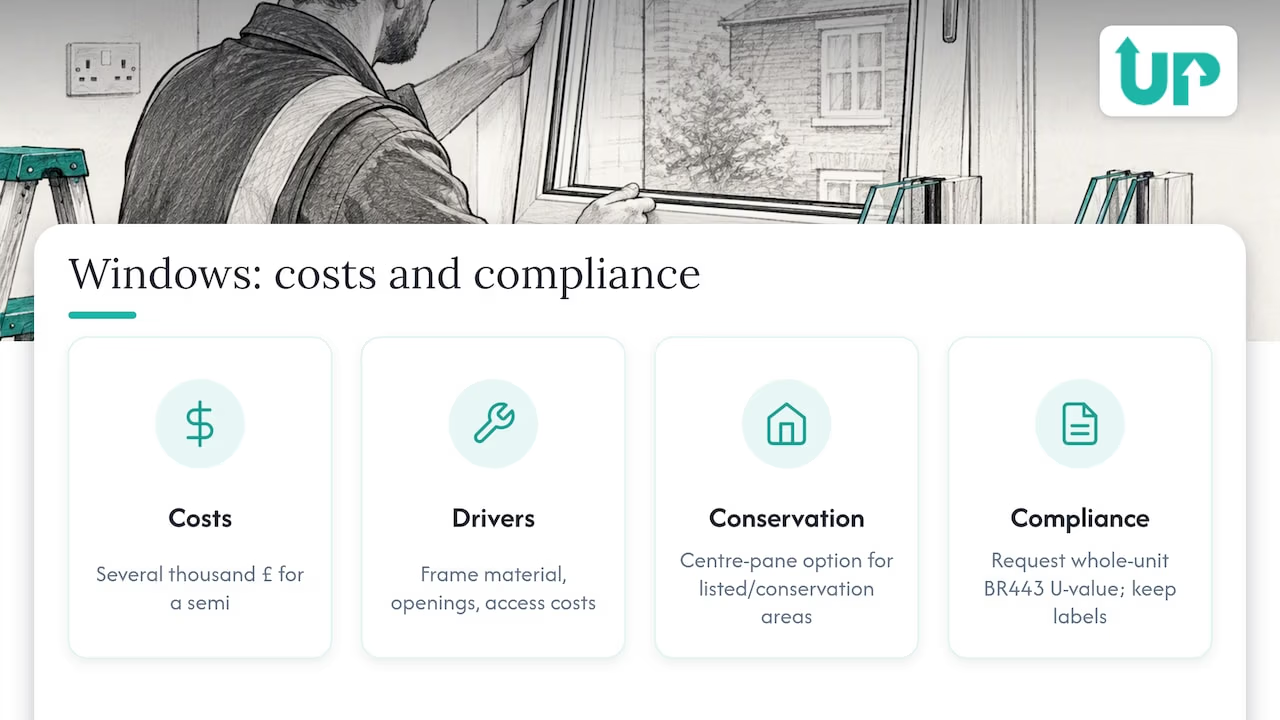
Budgeting for new windows means weighing the purchase price against ongoing savings and checking what the regulations actually demand. A full set of A-rated windows for a typical semi-detached house tends to cost in the region of several thousand pounds, with the final figure shaped by frame material (timber costs more than uPVC, aluminium sits in between), the number and size of openings, and access requirements such as scaffolding on upper floors.
Approved Document L sets out the statutory guidance that replacement windows must follow, and local building control guidance from Tameside summarises the practical thresholds clearly:
The centre-pane alternative exists for cases where a property’s appearance, such as a listed building or a conservation area frontage, must be preserved and a standard modern frame profile is not acceptable. In those cases, a lower centre-pane U-value compensates for a slimmer, more traditional-looking frame.
Whichever route you take, ask your supplier for the whole-unit U-value calculated to BR 443, not just the glass specification, and keep the manufacturer’s compliance labels on the units until Building Control has signed off the work. The guide to building regulations in 2026 covers the wider Part L changes landlords and property managers need to plan around this year.
How to decide and cheaper alternatives worth considering
Working through a short checklist before you commission any glazing work saves money and avoids disputes with Building Control later.
- Assess each room’s orientation, use and current insulation level before specifying glazing.
- Factor in any planned heating upgrades, since a future heat pump favours lower U-values now.
- Check conservation area or listed building status, which may require centre-pane solutions.
- Request whole-unit U-value and WER documentation from every supplier you quote.
- Inspect existing frames for rot or weight limits before assuming they can take heavier triple units.
- Gather at least two independent quotes and compare like-for-like specifications.
Not every window needs full replacement straight away. Professional draught-proofing, which the Energy Saving Trust notes can cost around £250 for a whole house, often delivers a faster return than new glazing alone, and secondary glazing can be a sensible interim step for sash windows in conservation areas where full replacement is restricted.
Pro Tip: Keep every compliance certificate and U-value calculation in a single folder. You will need it for Building Control sign-off now and for any buyer’s solicitor if you sell the property later.
Verdict: what most English homeowners should do
Double glazing remains the sensible default for most retrofit projects, delivering strong performance at a manageable cost. Triple glazing is worth the premium for north-facing rooms, heat pump conversions, or noise-sensitive locations. Start with a professional survey, request WER and U-value paperwork, consider draught-proofing first, and gather at least two comparable quotes before committing.
What we see on real window replacement projects
Glazing decisions rarely happen in isolation. On most properties we survey, rotten frames or failed seals need addressing before a glazing choice even matters, because new units fitted into a poor frame waste their performance gains. We also see claimed U-values quoted from glass-only data rather than a proper BR 443 whole-unit calculation, which causes problems at Building Control stage. A straightforward window replacement across a typical house usually takes a few days per elevation, with dust and noise the main disruption for occupied homes or tenanted properties.
Chris, Site Manager, UpKeep UK
Planning a glazing upgrade or wider refurbishment
When a survey reveals frame rot, draught issues or a wider refurbishment need alongside your glazing decision, this kind of project often requires a comprehensive approach rather than treating windows as an isolated job. Professional engineers can be insured, pricing can be fixed before work starts, and projects sometimes include photo progress reports so landlords and estate agents can track work remotely.

Services relevant to a glazing project include:
- Property surveys and planned maintenance agreements that catch frame issues early.
- Reactive maintenance for urgent rot repairs or failed seals ahead of a glazing quote.
- Property refurbishment services where window replacement forms part of a larger project.
If you are weighing up double versus triple glazing for a property you manage or own, request a site survey through our property maintenance team and we will give you a clear, fixed-price plan before any work begins.
FAQ
Is triple glazing worth it in the UK?
Triple glazing is worth it for north-facing rooms, highly efficient new builds, homes converting to a heat pump, or properties near heavy noise sources. For a typical south-facing or well-insulated retrofit, double glazing usually gives a better balance of cost and performance.
What is the 25% glazing rule?
This term is not a recognised standard in current Building Regulations guidance, and definitions circulating online vary. For accurate replacement-window requirements, refer to the WER Band C or whole-unit U-value thresholds set out in Approved Document L and local building control guidance.
Is double glazing better now than 20 years ago?
Yes, modern double glazing uses low-E coatings and argon-filled gaps that older units lacked, giving significantly lower whole-unit U-values. The Energy Saving Trust notes that upgrading from single glazing to current A-rated double glazing can save around £85 a year in Great Britain, a gain that reflects decades of improvement in coatings and gas fills.
What are the disadvantages of triple glazing?
Triple glazing costs more upfront, weighs considerably more, and can reduce passive solar gain on south-facing windows, meaning rooms gain less free warmth in winter. Heavier units sometimes need reinforced frames, and thicker sightlines can conflict with appearance requirements in conservation areas.
Sources
- Energy efficient windows and doors: Energy Saving Trust
- Approved Document L: Energy and greenhouse gas emissions, Vol 1: Dwellings
- Replacing windows: Tameside Metropolitan Borough Council