


TL;DR:
- A successful restaurant refurbishment hinges on clear objectives, realistic budgeting, and expert project management.
- Planning for minimal disruption and incorporating sustainable features enhances long-term operational performance and value.
Transforming your restaurant through refurbishment is one of the most significant investments you will make as a UK operator. The pressure to balance design ambitions, tight budgets, and the unavoidable disruption to daily service can feel overwhelming. Get it right, and you attract new guests, energise your team, and build a stronger brand. Get it wrong, and costs spiral while your customers drift elsewhere. This guide gives you proven, expert strategies to plan and execute your restaurant refurbishment with confidence, minimal waste, and maximum return on investment.
Key Takeaways
| Point | Details |
|---|---|
| Set clear refurbishment goals | Start every project by aligning your redevelopment with business strategy and customer needs. |
| Budget smartly and build the right team | A well-structured budget and experienced specialists keep projects on track and stress-free. |
| Minimise disruption during works | Plan timelines and workflows to limit business downtime while keeping clients and teams informed. |
| Prioritise sustainability and flexibility | Choose environmentally friendly materials and layouts that are future-proof and cost-efficient. |
| Learn from real-world examples | Case studies reveal valuable lessons and proven results from others in the UK hospitality industry. |
Establish clear objectives for your refurbishment
With the stakes clear, let’s start with the foundation of any successful project: well-defined objectives. Before a single wall comes down or a tile is chosen, you need to know precisely what you are trying to achieve. Vague goals lead to scope creep, budget overruns, and a finished result that satisfies nobody. Concrete objectives, written down and shared with your key people, keep every decision grounded throughout the project.
Proper planning sets the stage for successful restaurant renovation outcomes, and that planning starts with asking the right questions. What problem does this refurbishment actually solve? Is it a dated interior driving customers away? Poor table flow reducing covers and revenue? Inaccessible facilities putting you on the wrong side of compliance? Each answer shapes the scope and the budget in a very different way.
Your objectives should cover several distinct areas:
- Business goals: Increased covers, higher average spend per head, improved table turnover, or access to a new customer demographic.
- Brand alignment: Does the new look and feel match where your brand is heading over the next five years, not just where it sits today?
- Guest experience: Consider acoustics, lighting levels, seating comfort, accessibility, and the overall journey from entrance to exit.
- Operational efficiency: Kitchen workflow, service station positioning, and staff movement all affect speed of service and staff satisfaction.
- Compliance and safety: Fire exits, disability access, and food hygiene requirements must be factored in from the outset, not bolted on later.
Involve your senior front-of-house and kitchen managers early. They carry on-the-ground knowledge about daily friction points that no designer or contractor will spot from an initial site visit. Their buy-in also makes the disruption period far easier to manage, because they understand and support the purpose behind the works.
“A refurbishment without documented objectives is simply an expensive redecoration. It may look different, but it rarely performs better.”
Pro Tip: Write a one-page brief summarising your top three refurbishment goals and share it with every contractor and designer at the first meeting. This single document prevents an enormous amount of miscommunication down the line.
Build a realistic budget and secure the right team
Once goals are clarified, it’s time to translate them into a workable budget and assemble the best possible team for the job. This is where many restaurant owners encounter their first serious difficulty. Initial quotes rarely reflect the final cost, and unexpected expenses have a habit of appearing once walls are opened and floors are lifted.
An accurate budget should allow for contingency and prioritise spending for maximum impact. A sensible approach to budgeting follows these steps:
- Itemise the full scope of works, from structural alterations and M&E (mechanical and electrical) through to furniture, finishes, and signage.
- Obtain a minimum of three quotes from reputable contractors and compare them line by line, not just as headline figures.
- Add a 10 to 15% contingency on top of your agreed contract sum to absorb unexpected discoveries such as asbestos, outdated wiring, or structural issues.
- Account for hidden costs that are frequently overlooked, including planning fees, building regulation sign-off, temporary refrigeration or equipment hire, and staff overtime.
- Allocate a marketing budget to promote the reopening and recoup lost trade during any closure period.
When vetting contractors, check references from hospitality projects specifically. A builder experienced in residential work may underestimate the complexity of commercial kitchen fit-outs or the speed required to meet a reopening deadline. Working with best restaurant contractors who have demonstrable hospitality experience dramatically reduces costly rework.
| Budget category | Typical share of total cost | Notes |
|---|---|---|
| Structural and building works | 30 to 40% | Walls, flooring, ceilings, roofing |
| Mechanical and electrical | 20 to 25% | Wiring, plumbing, ventilation, HVAC |
| Fixtures, furniture, and finishes | 20 to 30% | Seating, lighting, decor, bar fit-out |
| Compliance and certification | 5 to 10% | Fire safety, accessibility, planning |
| Contingency | 10 to 15% | Non-negotiable buffer |
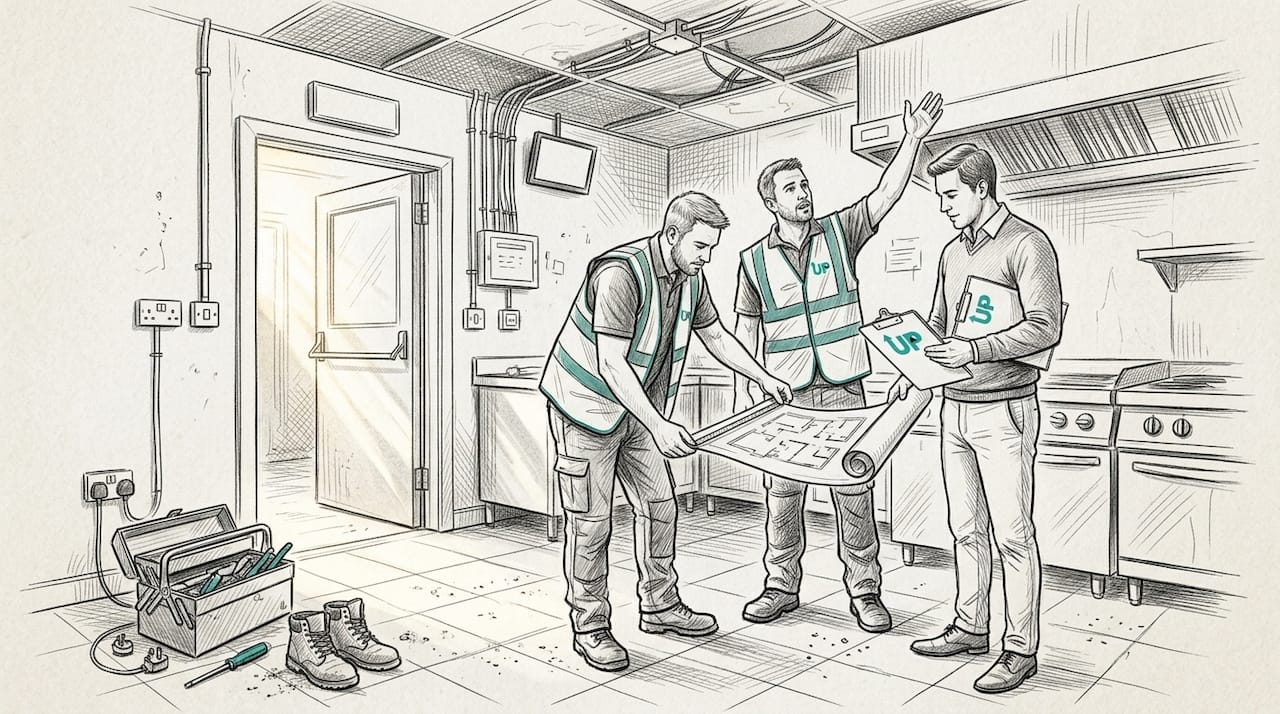
The importance of project managers cannot be overstated. A skilled project manager coordinates trades, manages the programme, enforces quality standards, and resolves problems before they escalate. For restaurant owners, who already have a business to run, this oversight is the difference between a project that finishes on time and one that drags on for months.
Pro Tip: Ask every contractor for a breakdown of their payment schedule before signing. Front-loading payments in favour of a contractor is a warning sign. A phased schedule tied to completed milestones protects your cash flow and keeps momentum on site.
Plan for minimal disruption and efficient timelines
With budget and team in place, ensuring minimal business interruption is the next best practice. Every day your restaurant is fully closed costs you revenue, so a carefully structured programme of works can make a significant financial difference.
Managing workflows and timelines is vital to keep operations smooth during a refurbishment, and effective project management is the mechanism that makes this possible. Consider the following practical strategies:
- Schedule noisy or dusty works during off-peak hours, overnight, or across closed days to protect the dining experience for guests in unaffected areas.
- Use phased refurbishment to section the restaurant into zones, refurbishing one area at a time while trading from the rest.
- Notify customers proactively through email, social media, and in-restaurant signage well in advance of any works or temporary changes to service.
- Brief your entire team on what is happening, when, and why. Uncertainty breeds rumour, and rumour damages morale at the worst possible time.
- Agree on daily communication protocols with your contractor, such as a morning site meeting or end-of-day written update, so that problems surface quickly.
A phased approach is not always the right choice, however. Here is a clear comparison to help you decide:
| Approach | Pros | Cons | Best suited for |
|---|---|---|---|
| Phased refurbishment | Maintains some revenue; less financial pressure | Longer overall timeline; more disruption spread over weeks | Busy venues with limited closure flexibility |
| Full closure | Faster overall completion; lower total cost; cleaner finish | Complete revenue loss during works; staff redeployment needed | Off-peak periods; venues undergoing full rebranding |
Your project manager’s responsibilities include producing a realistic timeline with clear milestones, coordinating multiple trades to avoid costly idle time on site, and flagging delays early enough to adjust without crisis. A well-run project timeline prevents the single most common cause of overspend: trades waiting on other trades while the clock and your budget tick.
Pro Tip: Book your reopening event before works begin. A fixed date creates accountability for the entire project team and gives you a marketing peg to generate anticipation among your customer base.
Embrace sustainable and future-proof refurbishments
Beyond logistics, it’s increasingly important to future-proof your restaurant with sustainable choices. The UK hospitality sector faces tightening energy regulations and a growing expectation from guests that businesses take environmental responsibility seriously. Incorporating sustainability into your refurbishment is not only the right thing to do, it also reduces your operating costs year on year.
Incorporating sustainable practices and materials increases long-term value, and the upfront investment typically pays back within a few years through reduced energy bills. Practical options include:
- LED lighting throughout: LED systems use up to 75% less energy than traditional halogen or fluorescent alternatives and last significantly longer.
- High-efficiency HVAC systems: Modern ventilation and climate control systems can cut energy use in kitchens and dining areas by 30 to 40% compared to older equipment.
- Responsibly sourced materials: Reclaimed timber, recycled steel, and low-VOC (volatile organic compound) paints and finishes reduce environmental impact and often create more characterful interiors.
- Flexible spatial planning: Design tables, partitions, and service areas to be reconfigured easily, so the space can adapt to private dining, events, or changing covers demand without a full refit in three years.
- Smart controls: Programmable thermostats, occupancy sensors for lighting, and sub-metering for utilities give you real-time data to reduce waste and spot inefficiencies quickly.
| Sustainable feature | Estimated energy saving | Typical payback period |
|---|---|---|
| LED lighting upgrade | 60 to 75% on lighting costs | 2 to 3 years |
| High-efficiency HVAC | 30 to 40% on heating and cooling | 4 to 6 years |
| Smart building controls | 15 to 25% on overall energy use | 3 to 5 years |
| Insulation improvements | 20 to 35% on heating costs | 5 to 8 years |
Look into BREEAM (Building Research Establishment Environmental Assessment Method) certification for your project. While not mandatory, achieving a BREEAM rating can strengthen your marketing credentials, satisfy increasingly environmentally conscious guests, and provide a benchmark for quality that holds its value when you come to sell or let the premises. You can find energy-efficient refurbishments tailored to commercial and hospitality settings that illustrate what this looks like in practice.
Learn from successful refurbishment case studies
To ground these best practices in reality, let’s examine how they play out in actual restaurant refurbishments. Theory is valuable, but seeing the principles applied to real projects clarifies precisely how decisions translate into outcomes.
Case studies provide insight into the results and lessons learned from previous refurbishments, and reviewing them before you begin your own project is time genuinely well spent. The patterns that emerge from successful projects are remarkably consistent:
- Clear objectives produced measurable results. One London brasserie that documented specific cover-increase targets and traffic flow improvements before commencing works saw a 22% uplift in weekly covers within six months of reopening.
- Phased delivery protected revenue. A regional UK pub-restaurant used a four-phase approach over twelve weeks, trading throughout at reduced capacity, and finished with zero days of full closure. The additional revenue offset a significant portion of the refurbishment cost.
- Sustainability delivered commercial returns. A mid-market restaurant group that replaced HVAC systems and installed smart lighting across three sites reported combined annual energy savings of over £40,000 within the first year of operation.
- Communication prevented reputational damage. One operator who kept customers fully informed throughout a noisy six-week kitchen refit actually saw positive online reviews mentioning the investment, turning potential disruption into a brand asset.
- Poor contractor vetting led to rework. Where projects struggled, the most common cause was appointing contractors based on lowest price rather than sector experience. Rework, delays, and disputes added an average of 18% to final project costs.
“The most successful refurbishments we have seen are not necessarily the most expensive. They are the best planned, with the clearest goals and the most consistent communication from start to finish.”
Review refurbishment tips that address both value enhancement and operational appeal to understand how these principles apply across different hospitality settings. The lessons transfer directly to your project, regardless of scale.
The truth most UK owners miss about restaurant refurbishment
Having seen proven practices in action, let’s close with an honest, experience-driven reflection on what sets truly successful refurbishments apart from those that disappoint.
Most restaurant owners approach a refurbishment as a design and build project. They focus on materials, finishes, layout drawings, and budget spreadsheets. Those things matter enormously. But the projects that consistently deliver strong outcomes treat the refurbishment as a people and culture project first, and a construction project second.
Staff who are not involved in the process become passive bystanders at best and resistant at worst. Their daily experience of the space is invaluable. A server who knows that the wait station is always congested on Saturday nights, or a chef who understands that the delivery entrance creates a safety risk, holds knowledge that no architect’s site visit will reveal. Ignoring these voices does not save time. It costs time, because problems they could have flagged in week one appear as expensive surprises in week eight.
Guest communication is similarly undervalued. Many operators treat it as a minor marketing task. It is actually a trust-building exercise. Customers who feel informed about why their favourite restaurant is temporarily changing feel invested in the outcome. They return on reopening day. Customers who feel ignored drift to competitors and do not always come back.
There is also a maintenance blind spot that catches even experienced operators. Holistic planning advice consistently recommends building a maintenance plan at the design stage, not after handover. New flooring, lighting, kitchen equipment, and HVAC all require scheduled servicing. If that is not costed and planned before the refurbishment completes, the shiny new interior degrades faster than it should, and unexpected repair bills erode the return on your investment.
The truth is that restaurant value is built by blending creative vision with operational realism. A beautiful restaurant that creates problems for staff and lacks a maintenance strategy will underperform a modest one that works effortlessly every single service. Design impresses on opening night. Operational intelligence is what keeps guests coming back two years later.
Get professional support for your next refurbishment
Ready to achieve your refurbishment goals? Here’s how to get the support you need.
Working with experienced professionals removes the guesswork and protects your investment from the outset. A specialist team brings structured processes, sector knowledge, and the accountability that comes from having managed dozens of similar projects for UK hospitality operators.

At UpKeep UK, we work alongside restaurant owners to plan, manage, and deliver refurbishments that meet objectives, stay within budget, and minimise business disruption. Whether you need to find a project manager to oversee the full works, or you want to review our restaurant refurbishment portfolio to understand the quality and range of projects we deliver, we are ready to help. Get in touch today for a tailored consultation and project quote, and let’s make your refurbishment a genuine investment in your restaurant’s future.
Frequently asked questions
How long does a restaurant refurbishment typically take in the UK?
Most refurbishments take between 4 to 12 weeks, depending on the scale and complexity of the project. A phased approach can extend the overall timeline but allows you to keep trading throughout.
What common mistakes should I avoid during refurbishment?
Avoid unclear objectives, underestimating costs, and failing to communicate with staff or customers about changes. As planning restaurant renovation guidance makes clear, proper preparation prevents the majority of costly errors.
Is it possible to keep my restaurant open during refurbishment?
Yes, many owners use phased approaches or schedule work in off-hours to minimise closure time. Managing workflows and timelines carefully is the key to making this work without compromising quality or safety.
What are sustainable refurbishment options for restaurants?
Consider eco-friendly building materials, LED lighting, high-efficiency HVAC systems, and energy-saving kitchen equipment. Sustainable refurbishment examples show that these choices increase long-term value and reduce operating costs significantly.
Do I need a project manager for a small refurbishment?
A project manager is valuable for any size project, as they ensure timelines, budgets, and quality standards are met. Even modest projects benefit from coordinated oversight, particularly where multiple trades are involved.
































