TL;DR:
- Proactive property maintenance in London is essential to protect investments, ensure tenant satisfaction, and prevent costly repairs. Regular inspections, timely repairs, exterior upkeep, sustainable improvements, and well-organized records form the foundation of effective management. Embracing prevention over reactive responses preserves property value and builds a strong reputation with tenants and authorities alike.
Staying ahead of property maintenance in London is not just good practice — it is essential for protecting your investment, keeping tenants satisfied, and avoiding the kind of costly emergency repairs that erode profit margins and cause unnecessary stress. London’s dense urban housing stock, combined with its damp climate and ageing building fabric, creates a unique set of challenges for landlords, homeowners, and property managers. Damp and mould issues in London properties are frequently caused by leaks, poor ventilation, and failing roofs or gutters — all of which are preventable with the right approach. This guide shares practical, targeted tips to help you manage your property confidently in 2026.
Key Takeaways
| Point | Details |
|---|---|
| Address moisture risks first | Tackle leaks and ensure proper ventilation to prevent costly damp and mould problems in London homes. |
| Inspect and maintain systems | Regular checks of plumbing, heating, roofs, and gutters avoid emergencies and prolong property life. |
| Document and automate | Keep detailed records and set reminders to stay on top of all required property maintenance tasks. |
| Invest in sustainability | Upgrading to energy-efficient fixtures reduces bills and adds long-term value to London properties. |
Focus on moisture management: tackling damp and mould
With property upkeep established as essential, it is crucial to start with the issue that causes the most hidden damage and complaints — damp and mould. In London, older terraced houses, basement flats, and poorly ventilated Victorian conversions are especially vulnerable. Moisture problems do not always announce themselves dramatically. They creep in through hairline cracks, condensation on poorly insulated walls, and blocked gutters that let water pool against the building fabric.
Effective moisture management begins with a thorough inspection routine. Here are the key areas to address:
- Inspect for leaks around rooflines, window frames, and internal pipework at least twice a year
- Check ventilation in kitchens, bathrooms, and utility rooms — extractor fans must be functional and adequate
- Clear gutters and downpipes every autumn before heavy rainfall, and again in spring after winter debris accumulation
- Look for signs of rising damp near ground floor skirting boards and internal wall bases, particularly in older stock
- Examine loft spaces for signs of condensation, water staining, or damaged felt beneath the roof covering
Landlords must address leaks, poor ventilation, and faulty gutters and conduct post-repair checks to ensure damp or mould does not return. This is not optional — it is a legal obligation under the Homes (Fitness for Human Habitation) Act 2018 and the Decent Homes Standard.
“After any repair, always revisit the affected area six weeks later. Damp and mould can return if the root cause has not been fully resolved — a visual check after six weeks is often the first confirmation that the fix has worked.”
Good landlord maintenance planning builds these post-repair checks directly into the schedule, so they never get missed during busy letting periods.
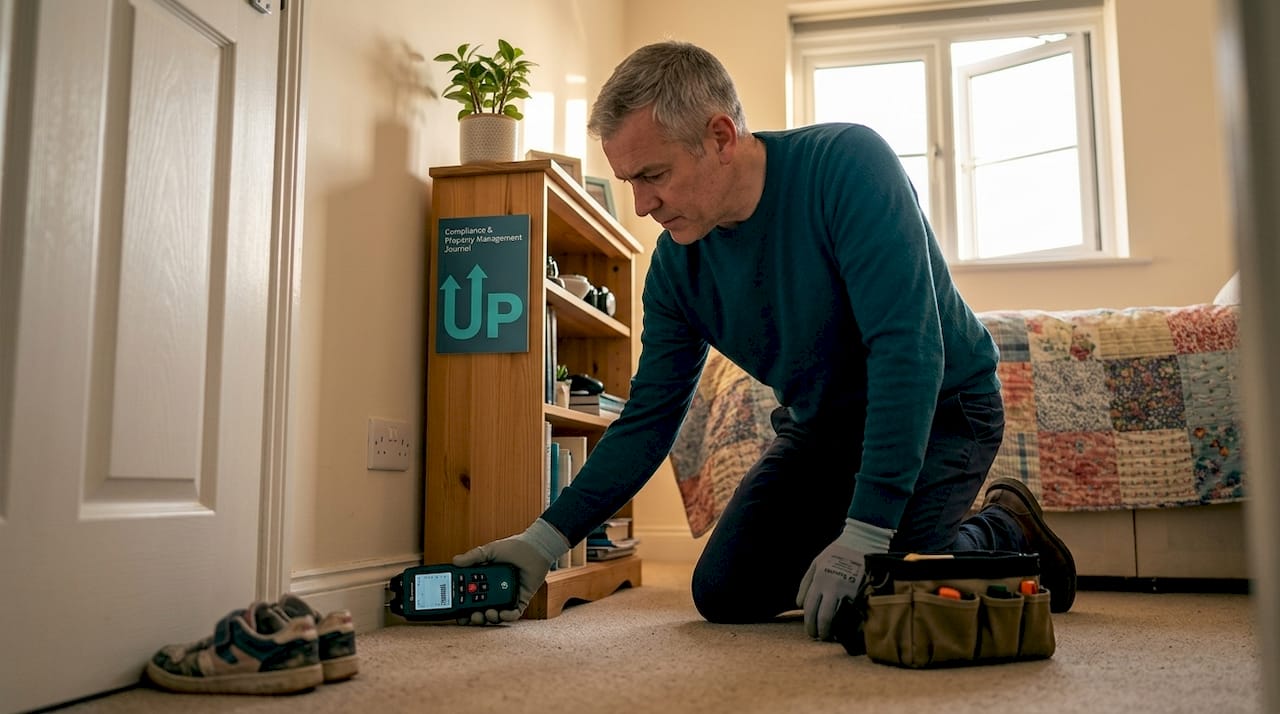
Pro Tip: Install humidity sensors in high-risk rooms such as bathrooms and basement bedrooms. These inexpensive devices alert you when moisture levels are consistently high, giving you time to act before mould becomes visible.
Schedule regular plumbing and heating system checks
After tackling moisture, staying ahead of plumbing and heating issues keeps properties functional year-round and minimises disruptive emergencies. A burst pipe or a boiler failure in January is not just inconvenient — it can cause thousands of pounds of water damage, trigger tenant complaints, and potentially breach your legal obligations to provide habitable accommodation.
Leaking internal pipes and faulty boilers are priority issues that must be addressed proactively, not reactively. The following numbered checklist gives you a structured approach to keeping plumbing and heating systems in good order throughout the year:
- Annual boiler service — Book a Gas Safe registered engineer every year, ideally in late summer before heating demand peaks
- Check radiator pressure and bleed if needed — Cold spots and uneven heating are early signs of trapped air or sludge build-up
- Inspect all visible pipework for signs of corrosion, joint weeping, or lagging damage, particularly in loft spaces and under sinks
- Test stopcocks and shut-off valves to ensure they operate correctly — seized valves in an emergency are a serious problem
- Check water pressure at taps — low or inconsistent pressure can signal a developing issue in the supply or internal system
- Flush and inspect water tanks in properties with older plumbing systems that still use a cold water storage tank
- Before each winter — check external tap covers, inspect pipe lagging in unheated spaces, and test the boiler before the first cold snap
For a more detailed breakdown of seasonal system care, the plumbing maintenance tips guide covers preventative strategies in depth.
Pro Tip: Align plumbing and heating checks with tenancy changeovers. The void period between tenancies is the ideal window to inspect systems thoroughly without disturbing residents. It also means any issues are resolved before a new tenant moves in, reducing the risk of early complaints.
Don’t overlook exterior upkeep: roofs, gutters and structure
Good interior maintenance is not enough. London’s exteriors also demand regular attention to stay weatherproof and compliant. The city’s urban environment brings its own challenges — pollution deposits that accelerate material degradation, overhanging trees that deposit debris on flat roofs, and shared drainage systems that can become blocked without warning.
Landlords must repair cracked walls, rotten window frames, leaking roofs, and faulty guttering to prevent damp entering London properties. Catching these defects early is far more cost-effective than allowing them to develop into structural problems.
Key exterior red flags to watch for include:
- Missing, slipped, or cracked roof tiles
- Moss or vegetation growth on roofing surfaces
- Gutters that overflow or show visible cracks and joint separations
- Crumbling mortar in brick pointing or chimney stacks
- Window frames showing paint failure, rot, or gaps around the sealed edge
- Cracks appearing around lintels or above ground floor window openings
Maintaining a photographic log of your property’s exterior condition is one of the most undervalued habits in property management. Taking dated photographs of all elevations, gutters, and roof areas twice a year provides an invaluable comparison tool. You can quickly identify whether a crack has widened or a section of pointing has deteriorated. Refer to construction inspection checklists as a starting framework for what to document on each visit.
| Inspection type | Benefits | Limitations |
|---|---|---|
| Professional external inspection | Identifies hidden defects, produces formal report, legally defensible, includes roof access | Higher cost, requires scheduling |
| In-house visual check | Low cost, done frequently, builds familiarity with the property | May miss non-visible issues, no access to roof without equipment |
| Drone survey | Covers inaccessible areas, provides photographic record | Requires specialist hire, weather-dependent |
For flat roofs and asphalt surfaces, understanding the signs of surface degradation is particularly important. Reviewing guidance on roof and surface maintenance can help you assess when professional intervention is needed before a minor blister becomes a leak. Good exterior upkeep is one of the clearest routes to maintaining property value over the long term.
Embrace sustainability for long-term savings
Beyond basic maintenance, forward-thinking owners in 2026 are making lasting investments by incorporating sustainability into every routine. What was once considered optional is increasingly expected by tenants, and in some cases mandated by regulation. Minimum Energy Efficiency Standards (MEES) already require rental properties in England to achieve an EPC rating of E or above, with further tightening expected in coming years.
The good news is that many sustainable improvements also reduce your maintenance burden and operational costs.
| Improvement | Approximate cost | Estimated annual saving | Payback period |
|---|---|---|---|
| LED lighting throughout | £150 to £400 | £80 to £150 | 2 to 3 years |
| Draught-proofing doors and windows | £100 to £300 | £60 to £100 | 2 to 4 years |
| Low-flow taps and showerheads | £80 to £200 | £50 to £90 | 1 to 3 years |
| Loft insulation top-up | £300 to £600 | £150 to £250 | 2 to 4 years |
| Double glazing upgrade | £3,000 to £8,000 | £200 to £400 | 10 to 15 years |
Beyond cost savings, sustainable upkeep positions your property competitively in a rental market where energy-efficient homes attract and retain tenants more reliably.
Practical incentives and support currently available to London landlords and owners include:
- The Great British Insulation Scheme — Government-backed support for cavity wall and loft insulation
- Mayor of London’s Warmer Homes scheme — Free energy efficiency upgrades for eligible low-income households in rented properties
- Energy Company Obligation (ECO4) — Funding available through energy suppliers for insulation and heating upgrades
- Enhanced Capital Allowances — Tax incentives for commercial property owners investing in energy-efficient plant and equipment
Integrating sustainable upkeep into your regular maintenance cycle does not require a complete overhaul. Start with the quick wins — LED lighting, draught-proofing, and low-flow fittings — and build towards more significant investments as budgets allow.
Stay organised with documentation and recurring reminders
Executing these tips requires structure. Good organisation ensures nothing falls through the cracks, and in a compliance-heavy sector like property management, missed tasks carry real risk. Disorganised records are one of the most common reasons landlords face difficulty when disputes arise with tenants or local councils.
The following numbered approach creates a reliable, repeatable system for staying on top of your obligations:
- Maintain a digital maintenance log for every property — record the date, nature, and outcome of every repair or inspection
- Store receipts and contractor invoices in a secure, searchable format, organised by property and year
- Set monthly reminders to check smoke and carbon monoxide alarms, inspect visible pipework, and clear any drainage issues
- Set quarterly reminders for gutter checks, ventilation system inspections, and external visual assessments
- Set annual reminders for boiler service, electrical inspection updates, EPC reviews, and full interior and exterior condition surveys
- Photograph all completed repairs immediately after the work is done — before and after images are invaluable for records and dispute resolution
- Share relevant records with tenants at the start of a tenancy to set clear expectations and demonstrate your commitment to the property’s condition
Becoming familiar with standard property maintenance terminology helps when communicating with contractors, insurers, and local authority inspectors. Clear language reduces misunderstandings and speeds up approvals.
Pro Tip: Use a shared online platform such as Google Workspace or a property management app to store your records and share inspection updates with your maintenance team or managing agent. Real-time access to records prevents duplication, reduces response times, and creates a transparent audit trail.
Our take: why prevention is more powerful than repair in London property
We work across London’s property sector every day, and the pattern we see most consistently is this: the most expensive jobs we are called in to fix are almost always the most preventable ones. A roof that needed a £300 patch three years ago has become a £4,000 structural repair. A slow leak that was reported but not actioned has caused mould to colonise an entire party wall. These are not edge cases — they are routine.
The practical tips in this article make the task manageable. But the real difference between good landlords and great ones comes down to mindset. The best property managers we work with treat their buildings as living assets that require consistent, scheduled attention — not just reactive responses when something breaks. They use proactive planning advice to structure their year, and they genuinely understand the difference between a manageable maintenance schedule and an overwhelming backlog.
Detailed condition records are also more valuable than most owners realise. When a dispute arises — whether with a tenant, an insurer, or a local authority — a well-maintained log of inspections, repairs, and photographic evidence is often the difference between a quick resolution and a protracted problem. Recognising key maintenance warning signs early, and having the records to prove you acted on them, puts you in a far stronger position.
Shifting from a compliance mindset to a proactive one is not just about avoiding cost. It builds the kind of reputation that attracts reliable tenants, reduces void periods, and protects long-term value. That is the real return on investment.
How UpKeep UK can help with London property maintenance
If you are ready to get ahead of your maintenance obligations rather than constantly catching up, UpKeep UK provides the reliable, London-based support that makes that possible. We work with landlords, property managers, and homeowners across the capital on everything from routine inspections to urgent reactive repairs — always with fixed pricing, insured workmanship, and experienced tradespeople who understand the demands of London’s housing stock.
Whether you need help identifying maintenance warning signs before they become serious problems, or require rapid response through our emergency repair services, our team is structured to respond quickly and communicate clearly at every stage. From a single boiler service to a planned exterior refurbishment, we are set up to take the pressure off so you can manage your portfolio with confidence. Contact UpKeep UK today to request a quote or arrange an initial assessment.
Frequently asked questions
What are the landlord responsibilities for damp and mould in London homes?
Landlords must fix the root causes of damp and mould, including leaks, poor ventilation, and structural faults, then revisit the property after six weeks to confirm the problem has not returned.
How often should London properties be inspected for maintenance issues?
Major systems such as boilers, plumbing, and electrics should be checked seasonally and after severe weather, with full interior and exterior condition surveys carried out at least once a year.
What are the top sustainable upgrades for London property upkeep in 2026?
The most cost-effective improvements are LED lighting, low-flow water fittings, draught-proofing around doors and windows, and loft insulation upgrades, all of which deliver measurable savings within a few years.
How can property managers stay organised with upkeep tasks?
Maintain a digital maintenance log for each property, store all invoices and inspection reports securely, and set automated reminders for monthly, quarterly, and annual tasks so nothing gets missed.
What should I do if I spot a leaking roof or signs of mould?
Act immediately by stopping the source of the leak where possible, documenting the issue with photographs, arranging prompt professional repairs, and then rechecking after several weeks to confirm the problem has been fully resolved.