An emergency property repair is any fault that puts people at immediate risk or will cause serious damage if left, such as a burst pipe, a gas leak, a total loss of heating or power, a serious roof leak or a door that will not lock. This guide gives London landlords and commercial owners a clear framework for recognising, reporting and resolving emergencies quickly and compliantly, with UpKeep UK’s emergency repairs team aiming to attend within 1 to 3 hours.
Table of Contents
- What is emergency property repair?
- Typical emergency scenarios in London properties
- Legal responsibilities and compliance for emergencies
- How the emergency repair process works
- The costs and consequences of emergency property repair
- Prevention and best practice: staying ahead of emergencies
- Get reliable emergency property repairs with UpKeep UK
- Frequently asked questions
Key Takeaways
| Point | Details |
|---|---|
| True emergencies demand speed | Only immediate threats to health, safety, or major property damage should trigger an emergency response. |
| Know your legal duties | Landlords must act within 24 hours for emergencies or face legal and financial consequences. |
| Typical costs add up quickly | Emergency call-out costs vary with the time of day and the job; confirm them in writing before work starts. |
| Prevention saves money and stress | Proactive checks and documented plans cut risks and costs for both residential and commercial properties. |
| Have trusted help ready | Build relationships with vetted emergency contractors for reliable, compliant response. |
What is emergency property repair?
Not every fault at your property is an emergency. Getting this distinction right is the difference between chaos and control, and it has real financial and legal consequences.
An emergency property repair definition covers urgent fixes that address an immediate risk to health, safety, security, or significant property damage, requiring a response within 24 hours or sooner. This is distinct from urgent repairs, which can wait a few days, and routine maintenance, which is scheduled weeks in advance.
Here is a quick comparison to make the distinction clear:
| Category | Definition | Typical response time |
|---|---|---|
| Emergency | Immediate risk to life, safety, or major damage | Within 4 to 24 hours |
| Urgent | Significant inconvenience or worsening issue | 2 to 5 days |
| Routine | Planned maintenance or minor defects | 1 to 4 weeks |
Common emergencies include:
- Burst pipes or major water leaks
- Gas leaks or carbon monoxide alerts
- Complete loss of heating in winter
- Electrical faults posing a fire or shock risk
- Structural failures such as a collapsing ceiling
- Sewage backups or flooding
“Emergency property repair addresses immediate risks to health, safety, security, or significant property damage, requiring response within 24 hours or sooner, distinguishing it from urgent and routine maintenance.”
What makes this especially important is the scale of unpreparedness. 73% of UK landlords lack a formal emergency plan, meaning most reactive situations are handled in panic mode rather than with a structured response. For commercial properties, the stakes are even higher, as downtime directly affects revenue and business continuity.
Typical emergency scenarios in London properties
London’s property stock presents specific challenges. Dense flat blocks, ageing Victorian pipework, and high-occupancy buildings mean that a single fault can affect multiple households or tenants simultaneously.
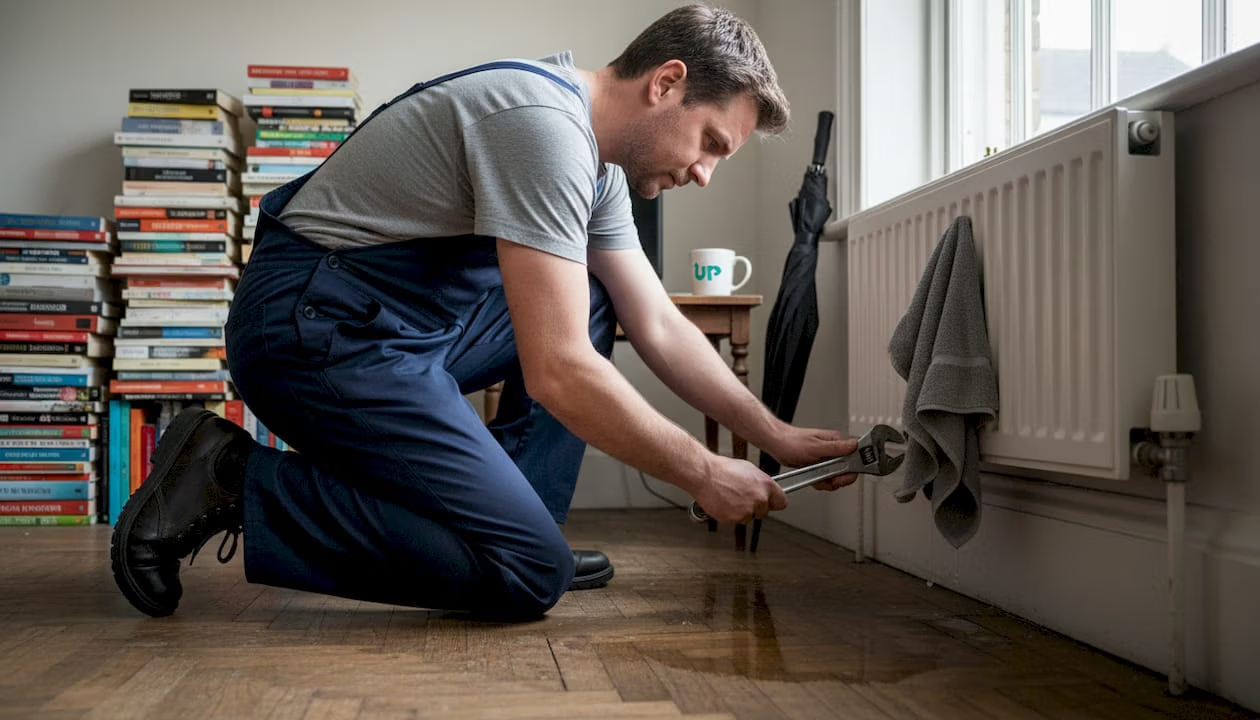
Common emergencies include burst pipes, gas leaks, electrical faults posing shock or fire risk, heating and hot water failure especially in winter, broken locks or doors, sewage backups, and structural damage such as collapsing ceilings. Here is how these compare to non-emergency issues:
| Emergency | Non-emergency equivalent |
|---|---|
| Burst pipe flooding a room | Dripping tap |
| Total boiler failure in January | Radiator not heating evenly |
| Broken front door lock | Stiff door handle |
| Sewage backup into living space | Slow-draining sink |
| Electrical sparking from socket | Flickering light bulb |
For London flat blocks in particular, a burst pipe on an upper floor can cascade damage through multiple units within hours. Security breaches, such as a broken communal entrance door, create immediate risk for all residents. Speed of classification matters enormously.
Tips for preventing plumbing emergencies and managing heating emergencies before they escalate are covered in our dedicated guides.
Pro Tip: Misclassifying a non-emergency as an emergency means paying emergency call-out rates for routine work. Misclassifying a genuine emergency as routine can void your insurance and expose you to legal action. When in doubt, treat it as an emergency and let a professional triage it.
Legal responsibilities and compliance for emergencies
Once you recognise an emergency, the legal clock starts ticking. Understanding your obligations protects you from costly disputes and regulatory penalties.
The core legal framework for landlords in England is built around Section 11 Landlord and Tenant Act 1985, which mandates that landlords repair the structure, exterior, and key installations including gas, electrical, water, and heating systems. Repairs must be completed within a “reasonable time” based on severity, and courts interpret emergencies as requiring immediate or same-day action.
The 2026 Housing Standards Act has tightened these obligations further, now mandating 24 to 48 hour responses for urgent repairs and immediate responses for genuine emergencies. The Homes (Fitness for Human Habitation) Act 2018 gives tenants the right to take legal action if a property is rendered unfit.
“Landlords must repair structure, exterior, and essential installations within a reasonable time. For emergencies, courts expect immediate or same-day action.”
Ignoring your emergency repair responsibilities can result in:
- Compensation claims from tenants or occupants
- Rent reduction orders or rent repayment orders
- Local authority enforcement notices
- Voided landlord insurance policies
- Prosecution under health and safety legislation
For commercial property owners, the obligations are equally serious, with health and safety law requiring that workplaces remain safe and fit for purpose at all times.
How the emergency repair process works
Knowing the process means you can act quickly and set realistic expectations in a crisis. A well-run emergency response follows these steps:
- Report the issue via a 24/7 channel, providing location, nature of fault, and any immediate safety actions taken.
- Triage the request using a decision tree: Is there an immediate health or safety risk? Is the property uninhabitable? Is damage worsening by the hour?
- Deploy a vetted contractor with the right skills and materials for the specific fault.
- Apply a temporary fix to stop harm or damage from escalating while a permanent solution is arranged.
- Complete the permanent repair and document all work carried out.
- Post-repair verification to confirm the issue is fully resolved and no secondary damage has occurred.
For 24/7 property maintenance in London, response benchmarks are tighter than the national average. Here is what you should expect:
| Emergency type | Target response time |
|---|---|
| Life safety (gas leak, fire risk) | Immediate to 4 hours |
| Security breach (broken entry door) | Same day, within 4 hours |
| Flooding or burst pipe | Within 4 to 8 hours |
| Heating failure (winter) | Within 24 hours |
| Essential services loss | Within 48 hours |
London-based services typically aim for a 1-hour response for the most critical incidents. Nationally, the benchmark is 4 hours for life-safety emergencies. Robust emergency fire response protocols should also be in place for commercial premises.
Pro Tip: When reporting an emergency, note the exact time you discovered the fault, any actions already taken, whether the property is occupied, and the contact details of anyone on site. This information speeds up triage and protects you legally.
The costs and consequences of emergency property repair
Understanding what you will pay, and what is at risk, clarifies why planning and quick response matter so much.
Ask for the call-out fee, labour rate and any restoration costs in writing before work starts, and keep every invoice for your insurer.
Maintenance costs rise sharply when reactive emergencies are handled without a plan, and a planned programme with one maintenance partner is the most effective way to keep them under control.
The hidden costs are often more damaging than the repair bill itself:
- Lost rental income during uninhabitable periods
- Voided insurance if maintenance obligations were not met
- Tenant compensation claims for distress or alternative accommodation
- Longer downtime due to poor contractor coordination
- Reputational damage affecting future lettings or commercial tenancies
The contrast between reactive and preventive approaches is stark. A planned maintenance programme costs a fraction of emergency callout rates, and it dramatically reduces the frequency of genuine emergencies. The 73% of landlords without an emergency plan are, statistically, the ones paying the highest reactive costs year after year.
Prevention and best practice: staying ahead of emergencies
The best way to deal with emergencies is to prevent them. Planned preventive maintenance (PPM) is a structured programme of regular inspections and servicing designed to catch faults before they become crises.
Proactive strategies including documented emergency plans, vetted contractor networks, and PPM programmes prevent escalation and ensure compliance with 2026 regulations. They also reduce over-response, where minor issues are treated as emergencies due to a lack of information.
Best practices for London property owners and managers include:
- Schedule annual boiler servicing and gas safety checks
- Inspect roofing, guttering, and drainage before winter
- Test smoke alarms, carbon monoxide detectors, and emergency lighting quarterly
- Maintain an up-to-date list of vetted emergency contractors
- Keep a written emergency response plan accessible to all keyholders
- Document all maintenance work with dates, costs, and contractor details
- Review your insurance policy annually to confirm emergency cover is in place
Staying informed about property maintenance trends helps you anticipate regulatory changes and adopt best practice before they become mandatory.
Pro Tip: A documented emergency plan does more than prevent problems. It speeds up your response when something does go wrong, demonstrates compliance to insurers and local authorities, and gives tenants confidence that their safety is taken seriously.
Get reliable emergency property repairs with UpKeep UK
When time is critical, knowing exactly who to call makes all the difference. UpKeep UK provides 24/7 emergency property repair services across London for both residential landlords and commercial property owners.
Our team of experienced tradespeople, including builders, electricians, plumbers, and roofers, responds rapidly to genuine emergencies and handles everything from temporary fixes to full reinstatement. We work to clear SLAs, provide transparent pricing, and ensure all work is fully insured and compliant with current regulations. Whether you need guidance on how to handle emergency repairs, require specialist emergency construction services, or simply want to put a reliable maintenance partner in place before the next crisis, we are here to help. Speak to our team today to discuss your property’s needs.
Frequently asked questions
How fast should an emergency property repair be carried out in London?
A genuine emergency should receive a response within 24 hours, but critical health or safety emergencies are typically handled within 1 to 4 hours in London, faster than the national average.
Who is responsible for paying for emergency property repairs?
Landlords are legally responsible under Section 11 of the Landlord and Tenant Act 1985 for repairs to structure, heating, plumbing, and safety installations, except where damage is directly caused by the tenant.
What happens if emergency repairs are ignored?
Delays can lead to further structural or water damage, tenant displacement, and legal action under the Homes (Fitness for Human Habitation) Act 2018 for properties rendered unfit.
Can a tenant organise emergency repairs themselves?
Tenants can take basic temporary action to prevent immediate harm, but DIY repairs can void landlord obligations and may create further liability, so professional involvement is always recommended.
How can I reduce the risk of emergencies in my property?
Regular planned preventive maintenance is the most effective strategy, reducing both the frequency and cost of emergency repairs while keeping your property compliant.