
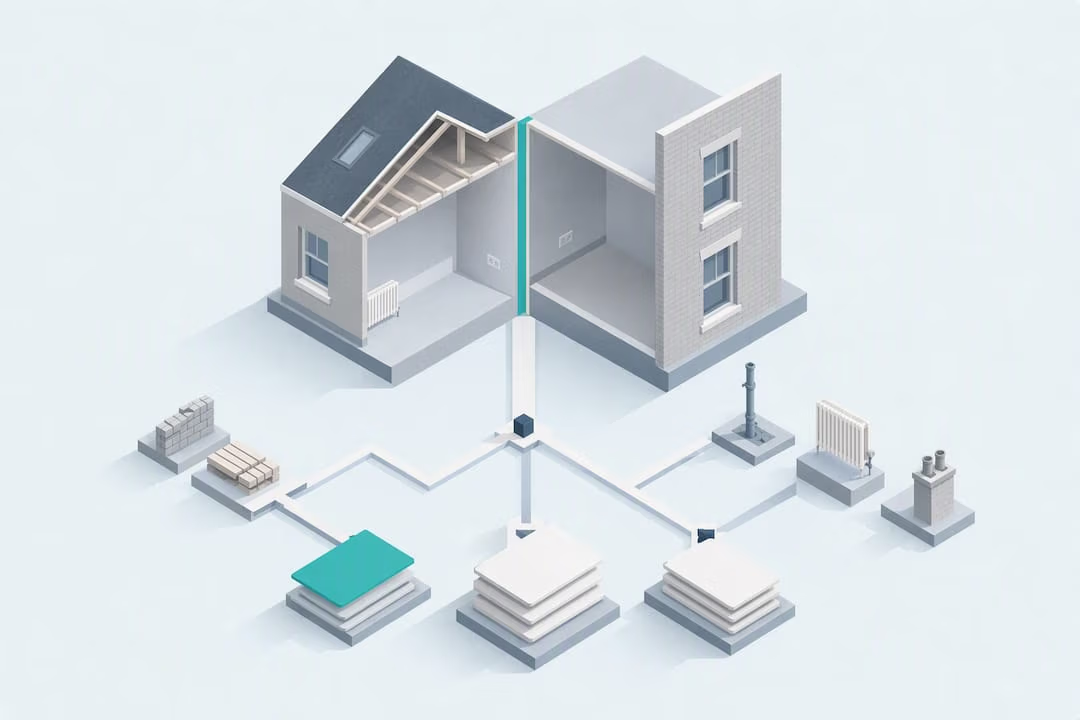

The building owner pays under the Party Wall etc. Act 1996, and that includes the adjoining owner’s surveyor fees in most cases. Nationally, expect £700 to £2,500 for a straightforward job with an agreed surveyor, rising to £3,000 to £17,500 for complex, multi-owner or basement works in London. The biggest swings come from how many neighbours are involved, whether they cooperate, and how technically demanding the build is.
TL;DR:
- Costs for party wall surveys in London range from around £900 to £17,500, with complexity, number of neighbours, and cooperation levels significantly impacting the final bill.
- Surveyor hourly rates vary from £90 for new associates to £450 for experienced senior chartered professionals, with disbursements and VAT adding to the total.
- The cost increases notably with each dissenting neighbour, especially when multiple surveyors are involved, and delays can inflate expenses by several weeks or months.
- The building owner is responsible for paying all reasonable costs, including adjoining owners’ surveyor fees, unless the works qualify for cost splitting due to repairs or mutual benefits.
- Early, written estimates and cooperative neighbour relations can reduce costs, while unanticipated site issues and dispute delays tend to escalate expenses.
Table of Contents
- Party wall survey cost: typical rates and what’s included
- Party wall cost by project type in London
- What pushes your party wall agreement cost up or down
- Who pays under the Party Wall etc. Act 1996
- Agreed surveyor or separate surveyors: which route costs less?
- How delays inflate your party wall survey cost
- What Upkeep UK checks before your budget is set
- Party wall surveyor fees versus structural engineers
- Hidden fees to watch for in party wall quotes
- A London-weighted take on party wall budgeting for 2026
- Arrange an inspection or fixed-fee quote with Upkeep UK
- Sources
- FAQ
Party wall survey cost: typical rates and what’s included
A surveyor’s invoice rarely reflects a single flat fee. It’s built from hourly time, fixed elements, and disbursements, and understanding that mix helps you spot a fair quote from an inflated one.
Hourly rates quoted across the market commonly sit between £90 and £450, with London surveyors clustering at the top end because of higher professional indemnity premiums and denser, more complex sites, according to the Homeowners’ Association’s cost guide. A newly qualified associate might charge £90 to £150 an hour; a senior chartered surveyor with two decades of party wall experience can bill £300 to £450.
Statistic Callout: London market banding puts simple agreed-surveyor jobs from around £900, climbing to £17,500 for complex multi-party basement schemes, with the capital running 20 to 40 percent above national averages.
A typical fee covers several distinct pieces of work, and a good surveyor itemises them rather than bundling everything into one number:
- Drafting and serving the statutory notice on adjoining owners
- Preparing a schedule of condition (photographic record of the neighbouring property before work starts)
- Site inspections, both before works begin and during construction
- Drafting the party wall award itself, the legal document that sets out what can be done and how
- Disbursements: printing, postage, travel, and any specialist reports commissioned along the way
VAT gets added on top of most invoices at the standard rate, and it’s easy to miss when comparing quotes. Always ask whether a figure is quoted inclusive or exclusive of VAT before you commit a budget line. RICS guidance is clear that fees included in an award must be reasonable and proportionate to the tasks actually needed to reach agreement, and disbursements should be listed separately from the core surveyor fee. That separation matters when you’re trying to work out what’s driving a high bill.
Party wall cost by project type in London
The type of work you’re planning dictates the cost band more than almost anything else. A chimney breast removal and a basement dig sit at opposite ends of the surveyor workload. The invoice reflects that.
Each additional adjoining owner adds cost, and not in a straight line. When several neighbours dissent and appoint their own surveyors, negotiation time, correspondence, and the risk of a third-surveyor referral all stack up. A detailed London fee analysis notes that the cost uplift from a second or third dissenting owner is disproportionate to the first, because each new party brings its own record-keeping and scheduling demands.
An agreed surveyor route for a single-storey extension with one cooperative neighbour might land at £900 to £1,400 in London. The same project with two dissenting neighbours, each appointing separate surveyors, can push past £4,000 once you account for duplicated inspections and correspondence between three professionals instead of one.
What pushes your party wall agreement cost up or down
Several factors sit largely outside your control once works are notified, and a few sit firmly within it.
Neighbour response is the single biggest swing factor. A neighbour who consents quickly and accepts an agreed surveyor keeps costs low. A neighbour who dissents, appoints their own surveyor, or contests the schedule of condition adds weeks and hundreds, sometimes thousands, of pounds.
Technical complexity matters just as much. Underpinning, basement excavation, or works needing structural monitoring bring in additional consultant reports, which get billed as disbursements on top of the core surveyor fee.
Other levers worth knowing:
- Property type: flats and mansion blocks with shared structural walls tend to involve more affected parties than a semi-detached suburban house
- Access constraints: terraced streets with limited parking or narrow rear access slow inspections and add site-visit time
- Professional indemnity requirements: senior surveyors carrying higher PI cover often charge more per hour, particularly on complex London sites
- Number of separate surveyor appointments: each one is a distinct professional relationship to manage
Pro Tip: Ask any prospective surveyor for a written fee estimate before you serve notice, not after. A surveyor who won’t put a ballpark figure in writing at the enquiry stage is unlikely to give you a predictable final bill.
Who pays under the Party Wall etc. Act 1996
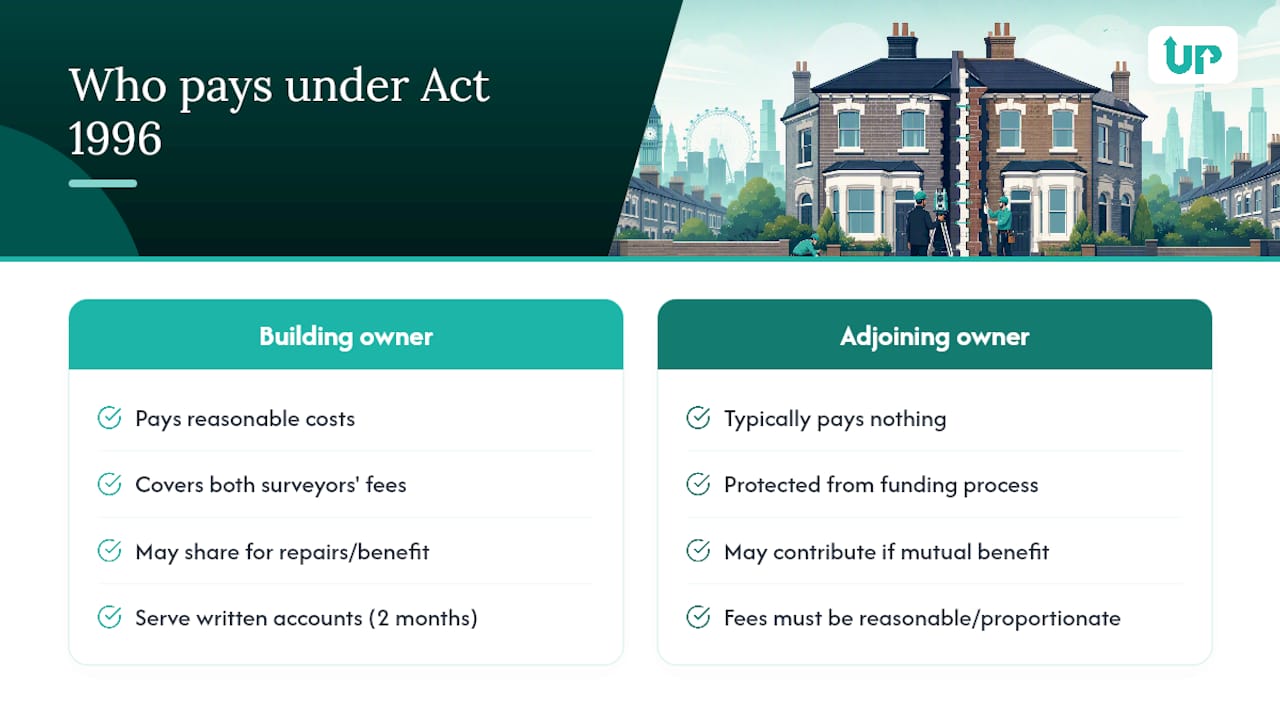
The statutory position is unambiguous. Under Section 10(13) of the Party Wall etc. Act 1996, the building owner carrying out the works pays all reasonable costs of the party wall procedure. That normally includes the adjoining owner’s surveyor fees as well as their own, because the Act is designed to protect the neighbour from having to fund a process they didn’t initiate.
The adjoining owner typically pays nothing towards the process itself, which is worth stating plainly to any client who assumes costs get split evenly. RICS guidance reinforces that surveyor fees included in an award must be reasonable and proportionate to the tasks necessary to reach that award, not an open cheque for unlimited hours.
There are exceptions. Where works are necessary for repair rather than improvement, or where both owners genuinely benefit from the structural change, apportionment can shift so each side contributes something. This is decided by the surveyors, not negotiated informally between neighbours.
Written accounts must be served within two months of completion where costs are to be defrayed, giving the building owner a clear paper trail of what was spent and why. If a third surveyor is appointed to resolve a dispute between the two appointed surveyors, their fees are usually split between the parties or allocated according to the award itself, and that cost sits on top of everything already discussed.
Agreed surveyor or separate surveyors: which route costs less?
An agreed surveyor is a single professional appointed by both the building owner and the adjoining owner, acting impartially for both sides. It’s the cheapest and fastest route for straightforward, cooperative jobs.
- Check the market saving first. An agreed surveyor typically costs 25 to 35 percent less than two separate appointments, because there’s only one set of inspections, one schedule of condition, and one award to draft.
- Know when separate surveyors are unavoidable. If a neighbour dissents, distrusts the building owner’s proposal, or the works are technically contentious, they’re entitled to appoint their own surveyor regardless of cost. A third surveyor may then be needed to settle disagreements between the two.
- Improve your odds of an agreed appointment. Notify neighbours early, before scaffolding or contractors are booked, and offer a fixed-fee proposal from a mutually acceptable surveyor. Early, clear communication is the single biggest lever a building owner has over cost.
How delays inflate your party wall survey cost
The consented route, where a neighbour agrees promptly, typically runs four to six weeks from notice to award. The disputed route, involving separate surveyors and possibly a third surveyor referral, commonly stretches to three to six months.
Delays add cost because surveyors bill for time, and disputes generate more of it:
- Late responses to the initial notice can trigger a formal 14-day deemed dissent, automatically escalating to the separate-surveyor route
- Requests for further inspections or additional schedules of condition add billable hours that weren’t in the original estimate
- Third-surveyor referrals bring in a new professional relationship, with its own correspondence and fee structure
Build in a contingency of 20 to 30 percent above the initial quote for any project involving more than one neighbour, and don’t schedule contractor start dates until the award is signed.
What Upkeep UK checks before your budget is set
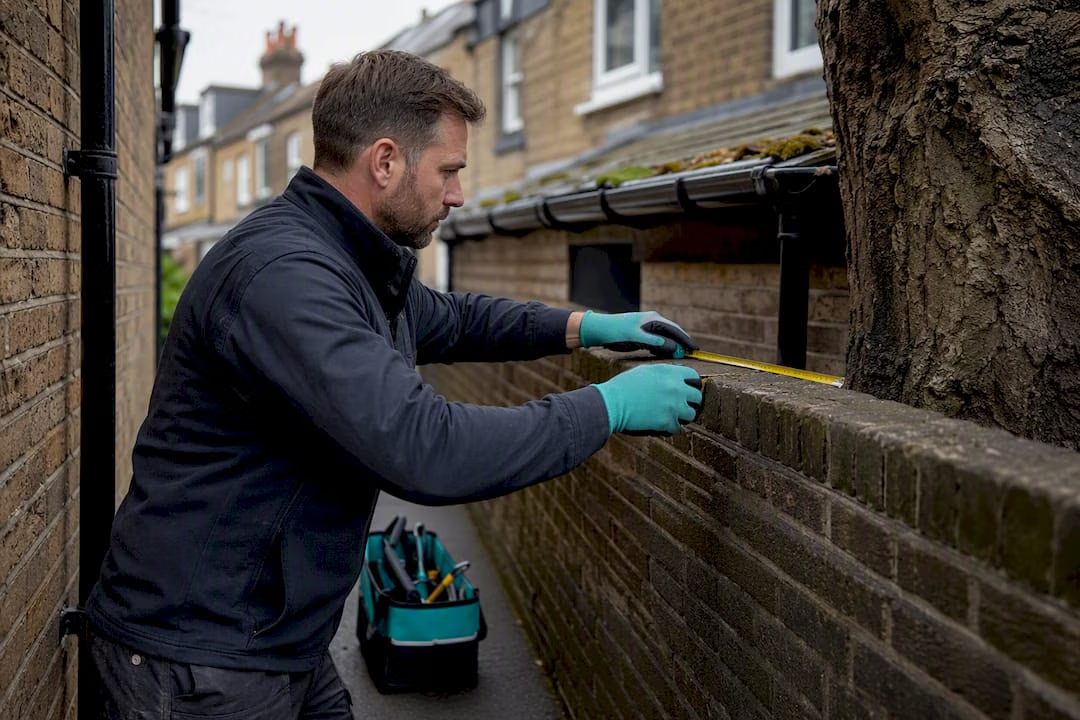
Site visits for London clients routinely flag the details that turn a modest party wall process into an expensive one: restricted access for inspection, mature trees near shared boundaries, and terrace gutters serving multiple properties where existing damp damage predates the works. Spotting these early, alongside any pre-existing defects worth recording in the schedule of condition, keeps disputes and add-on costs to a minimum. It is advisable for landlords and agents to lock in fixed-fee elements where possible and only schedule builders once the award or signed schedule of condition is in hand.
Party wall surveyor fees versus structural engineers
Property managers often confuse these two roles, and the fee structures reflect genuinely different jobs. A party wall surveyor’s fee, at £90 to £450 an hour or a fixed project band, covers the statutory notice process, the schedule of condition, and the award itself. That’s a legal and procedural function, not a design one.
A structural engineer, brought in separately for calculations on beam sizing, underpinning design, or foundation loading, typically charges £75 to £150 an hour, or £500 to £2,500 for a single structural report on a domestic extension. On complex basement or underpinning jobs, both professionals are usually needed, and their fees are billed separately rather than bundled.
The overlap causes confusion because a party wall surveyor may request a structural engineer’s report as a disbursement if the works raise questions about the neighbouring wall’s stability. That report then appears as a line item on the surveyor’s invoice, not as a hidden extra. If your project involves structural wall removal, budget for both professionals from the outset rather than assuming one fee covers both functions. Treat them as a pairing, not a substitute, when you’re scoping a job that touches both statutory notice requirements and structural calculation.
Hidden fees to watch for in party wall quotes
The headline figure a surveyor quotes rarely tells the full story, and the gaps tend to fall in predictable places.
VAT is the most common surprise. A quote of £1,200 can become £1,440 once VAT is added, and not every surveyor states clearly whether their figure is inclusive. Ask directly, every time.
Disbursements are the second trap. Structural engineer reports, additional site visits beyond the original scope, and postage or courier costs for formal notices can add several hundred pounds that weren’t itemised in the initial estimate. RICS guidance recommends surveyors separately identify disbursements precisely so clients can query anything disproportionate.
Third-surveyor costs catch people out too. If your neighbour’s surveyor and your own can’t agree, a third surveyor’s fee lands on top of both existing invoices, and it’s rarely mentioned at the quoting stage because nobody expects a dispute at the outset.
Finally, watch for surveyors who quote a low headline hourly rate but bill an unusually high number of hours for routine tasks. Ask for an estimated total hours figure alongside the rate, not just the rate in isolation.
A London-weighted take on party wall budgeting for 2026
The conventional advice, get three quotes and pick the middle one, misses the point for London property managers. The number that matters most isn’t the headline fee. It’s the number of adjoining owners and how quickly you notify them, because that single variable does more to move your final invoice than any amount of shopping around.
Most guidance treats the Party Wall Act as a compliance hurdle to clear quickly. Treat it instead as a budgeting exercise that starts the moment you scope a project, not when notices go out. Early notice, a fixed-fee push for an agreed surveyor, and a written schedule of condition before contractors mobilise will save more money than negotiating an hourly rate down by £20.
Prioritise the relationship with the neighbour over the relationship with the surveyor. A cooperative neighbour with a mediocre surveyor costs less than a hostile neighbour with a brilliant one.
— Drahim Hasula
Arrange an inspection or fixed-fee quote with Upkeep UK
There are practical options for London landlords and managing agents who want a written cost note before works are notified, not after a dispute has already inflated the bill. Where a standalone party wall survey leaves you guessing about the wider building work around it, some providers cover the inspection, the maintenance context, and a fixed-price construction quote in one relationship.

If you’re planning a loft conversion, extension, or refurbishment in London that will require party wall notice, consider having the property inspected first. We’ll flag access issues, shared structures, and pre-existing defects before you serve notice, and provide a written budgeting note alongside your construction and refurbishment quote. For ongoing portfolio work, our planned maintenance service keeps future party wall triggers, ageing gutters, mature trees, shared terraces, on your radar before they become disputes. Get in touch to book an inspection.
Sources
Cross-check any quote against the Party Wall etc. Act 1996, the Gov, and a London fee calculator for current banding.
- Legislation
- RICS — Party wall legislation and procedure (7th edition)
- Party wall surveyor fees London (Survey of Party Wall)
- Homeowners’ Association — party wall surveyor costs guide
FAQ
What is the 3 metre rule for a party wall?
The 3 metre rule refers to Section 6 of the Party Wall etc. Act 1996, which requires notice when excavation work comes within 3 metres of a neighbouring building and goes deeper than its foundations. A separate 6 metre rule applies at a shallower angle for deeper excavations, so check both distances before assuming notice isn’t needed.
Do I really need a party wall surveyor?
You need to serve notice under the Act if your works fall within its scope, but you don’t strictly need a surveyor if your neighbour consents in writing without conditions. Most building owners appoint one anyway, because a surveyor produces the schedule of condition that protects both parties if disputes arise later.
Can a neighbour refuse a party wall agreement?
A neighbour can dissent to the notice, which triggers the formal dispute process rather than blocking the works outright. Dissent means separate surveyors get appointed, and this typically pushes the total cost higher than an agreed-surveyor route, since each side now pays for its own professional’s time.
Should I get a level 2 or level 3 survey?
Level 2 and Level 3 refer to RICS Home Surveys, a different service from a party wall survey, and the terms shouldn’t be confused. For party wall matters, what matters is whether you need an agreed surveyor or separate surveyors, not a RICS home survey level.
How much does Upkeep UK charge for a property inspection ahead of party wall works?
Upkeep UK doesn’t publish a fixed price for this service online, so current rates are available on request through the property maintenance page. Contact the team directly for a written quote tailored to your London property and project scope.
































