TL;DR:
- Estate agents play a strategic role in guiding homeowners to avoid overcapitalization by focusing on market-appropriate renovations. They coordinate repairs, vet contractors, and ensure documentation to streamline sales and maximize property value. Targeted upgrades like kitchens, bathrooms, and kerb appeal deliver high returns, while pre-sale defect repairs and proper sequencing are crucial for a successful sale.
Estate agents help with renovations by showing which improvements local buyers and tenants will actually pay for, using comparable sales to set a sensible budget and steering owners away from work that will not add value. For homeowners and investors preparing to sell or let, that advice is often the difference between a well-timed sale and an expensive mistake.
Key takeaways
| Point | Details |
|---|---|
| Agents prevent overcapitalising | Estate agents align renovation spend with what local buyers actually pay for, not what owners prefer. |
| Documentation matters as much as work | Certificates, receipts, and compliance records are as persuasive to buyers as the physical improvements themselves. |
| Coordination is a core agent service | Agents vet contractors, manage timelines, and keep renovation schedules aligned with listing dates. |
| High-ROI works are specific | Kitchens, bathrooms, kerb appeal, and EPC upgrades consistently deliver the best return relative to cost. |
| Timing determines outcomes | Poorly sequenced renovations cause approval delays and can stall or collapse a sale at exchange. |
How estate agents advise on renovation decisions
The most common mistake sellers make is renovating to their own taste rather than to buyer expectations in their specific neighbourhood. Estate agents bring comparative market data to that conversation. They know whether buyers on your street are paying a premium for open-plan layouts, whether a new bathroom actually shifts the asking price bracket, or whether the local market simply does not reward certain upgrades at all.
Agents guide sellers towards the improvements buyers of comparable homes nearby are paying for, which is the most reliable way to avoid overcapitalising. A bespoke loft conversion in a street where similar homes sell with unconverted lofts may recoup only a fraction of its cost.
Good agents also help set a realistic renovation budget by working backwards from the likely post-renovation sale price. If your property is conservatively worth £425,000 in current condition and comparable renovated properties achieve £455,000, your renovation ceiling is clear. Anything beyond £25,000 to £30,000 in spend starts eroding your margin.
Staging advice sits within this same advisory function. Fresh neutral paint, decluttered rooms and well-lit photography often produce more buyer interest per pound spent than structural renovation ever will.
Pro Tip: Before committing to any renovation spend, ask your agent to pull three to five recently sold comparables within 0.5 miles and identify exactly which features those buyers paid above-asking for. That data should dictate your renovation priorities entirely.
The most high-impact improvements agents typically recommend before cosmetic work are:
- Repainting in neutral tones throughout
- Replacing dated light fittings and door handles
- Refreshing tired kitchens with new doors and worktops rather than full replacements
- Improving kerb appeal through landscaping, a new front door, or clean render
- Addressing any visible damp, cracking, or staining before photography
Pre-sale condition and repair priorities
Before any cosmetic improvements are considered, agents focus on a different category entirely: defects. A structurally sound property with dated décor will outperform a beautifully presented home with a leaking roof every single time, because defects give buyers leverage and create anxiety that cosmetic finishes cannot offset.

Repair priorities before listing centre on issues that trigger buyer concern during viewings or emerge during surveys. Agents who have managed hundreds of transactions know exactly which findings cause buyers to renegotiate, reduce offers, or withdraw entirely. Their pre-sale inspection walk-through is designed to identify these before a surveyor does.
The sequencing of repairs also matters considerably. Agents help clients understand the order in which works should be completed to avoid approval delays:
- Address structural and weatherproofing issues first (roofing, guttering, damp proofing) as these require the longest lead times for contractor availability and certification.
- Complete electrical and plumbing compliance checks and obtain relevant certificates before listing, as buyers’ solicitors routinely request these.
- Commission any specialist surveys for issues such as subsidence or Japanese knotweed early, so responses are documented before exchange.
- Undertake cosmetic and finishing works last, once structural integrity is confirmed, to avoid redoing finishes damaged by earlier repair work.
Renovation documents including receipts, certifications, and compliance records act as evidence during the sale process, reducing buyer anxiety and limiting room for renegotiation on price. Many sellers overlook this entirely and arrive at exchange without documentation for works they completed years ago, creating entirely avoidable friction.
Pro Tip: Keep a property file from the moment you begin any repair or renovation work. Gas Safe certificates, electrical installation condition reports, planning permissions, and contractor guarantees should all be stored together. Agents who can hand this file to a buyer’s solicitor at the start of conveyancing report significantly smoother transactions.
Agents also play a compliance advisory role, flagging situations where qualified and certified tradespeople are legally required. Certified renovators and lead-safe practices are mandated in specific circumstances, and agents who understand these requirements protect their clients from legal exposure and failed sale outcomes.
Coordinating renovation contractors
One of the most underappreciated aspects of estate agent services for renovations is contractor coordination. Sellers and landlords often have little experience managing building works, and the consequences of hiring an unreliable contractor before a sale are significant. Delays, substandard workmanship, or missing certifications can push back listing dates by weeks and erode buyer confidence once the property is on the market.
Experienced agents either maintain a vetted panel of reliable local tradespeople or work closely with property maintenance partners who can deliver renovation works to specification and on schedule. When evaluating contractors for pre-sale or rental renovation projects, agents typically look for:
- Relevant accreditations and insurance including public liability cover and, where applicable, Gas Safe or NICEIC registration
- A track record of pre-sale and let renovation work specifically, not just general building experience
- Responsiveness and scheduling reliability, given the fixed listing timelines agents are managing around
- The ability to provide all completion certificates and documentation on handover, not weeks after the fact
Agents also act as intermediaries between clients and contractors to keep design choices aligned with what the market demands rather than personal preference. A seller may want bold feature walls; an agent will redirect that conversation toward neutral finishes that photograph well and appeal to the widest buyer pool. This quiet calibration of specification is part of what builders and realtors working together consistently demonstrate adds measurable value to the process.
Sequencing renovations to align with listing plans and compliance documentation is one of the areas where agent coordination prevents the most costly delays. Most owners significantly underestimate the time required to obtain permits, approvals, or sign-off from building control, and agents who have managed this process repeatedly bring a realistic timeline to the project from day one.
| Without agent coordination | With agent coordination |
|---|---|
| Client selects contractor without vetting | Agent provides a vetted contractor panel |
| Works completed without documentation | All certificates collected on handover |
| Listing delayed by permit or approval gaps | Sequencing planned around listing date |
| Cosmetic choices based on personal taste | Specification aligned with buyer expectations |
| Budget determined by contractor quotes alone | Budget calibrated to expected price uplift |
Renovations that maximise value and marketability
Not all renovation types perform equally, and the impact of agents on property renovations is most visible in their guidance on where to spend and where to hold back. Top agents steer renovation budgets toward targeted repairs and selective refreshes that address buyer perception hotspots, rather than lavish full-scale remodels that rarely recoup their cost.
Kitchens and bathrooms consistently rank as the highest-return renovation areas, but agents often point out that full replacement is rarely necessary. A tired kitchen can often be transformed with resurfacing, new doors and updated hardware for a fraction of the cost of a full replacement, which in most price brackets adds only marginally more value.
Kerb appeal deserves more credit than it typically receives. First impressions form within seconds of a buyer arriving at the property, and agents know that viewings where the exterior disappoints rarely convert to offers at asking price. A fresh coat of masonry paint, new fascia boards, a composite front door and tidy landscaping cost relatively little and can add considerably more in perceived value.
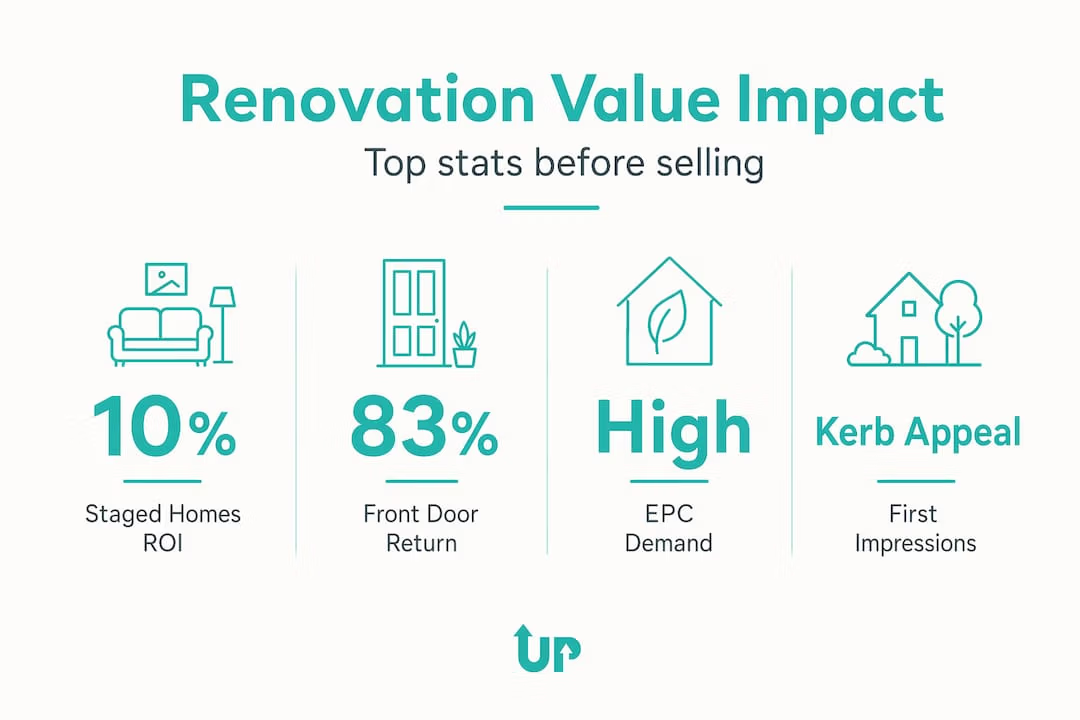
Smaller high-ROI projects such as replacing a front door or refreshing a hallway closet can recover up to 80 to 83 per cent of their cost in added sale price, while full kitchen remodels often recover closer to 60 per cent. Agents who understand these ratios steer clients toward the former.
EPC improvements are increasingly significant in the UK market. Properties with better energy ratings attract more buyer interest and, in the lettings market, are becoming a regulatory requirement. Sustainable renovation choices such as loft insulation, upgraded boilers, and improved glazing simultaneously raise EPC ratings and reduce running costs, two factors buyers and tenants now actively weigh.
When to hold back is equally important. Extensive vanity projects such as bespoke fitted wardrobes, luxury en-suite additions in mid-range properties, or landscaped garden rooms in areas where buyers prioritise parking will not deliver a return. Agents who know the local market will tell you this plainly, and that candour is part of what makes renovation guidance from estate agents genuinely worth seeking.
My perspective on agents as renovation strategists
I have worked alongside property professionals and owners through enough renovation cycles to hold a firm view on this: the agent conversation should happen before any contractor is appointed, not after the works are complete.
In my experience, the sellers who achieve the best outcomes are not the ones who spent the most on renovation. They are the ones who spent precisely on what their specific buyer pool valued, documented everything correctly, and listed at the right moment in the market cycle. Estate agents who take renovation coordination seriously are providing a service that goes well beyond finding buyers. They are de-risking the entire pre-sale process.
The most common misconception I encounter is that renovation is about making a property look impressive. It is not. It is about removing buyer objections systematically. A damp patch in a corner will generate far more negotiating leverage for a buyer than a beautiful new kitchen will generate for the seller. Agents who walk a property with that mindset, identifying objections before buyers do, are the ones whose clients consistently achieve asking price or above.
What has shifted noticeably in recent years is how timely refurbishment decisions are now treated as a scheduled management task rather than a last-minute panic before sale. Landlords in particular are beginning to understand that maintaining properties in a consistently lettable condition, with documentation in order, produces better yields and faster re-lets. Estate agents who embed this thinking into their landlord relationships are adding real, measurable value.
Drahim Hasula, Founder & CEO, UpKeep UK
How Upkeep UK supports estate agents and their clients

Upkeep UK works directly with estate agents across London to deliver pre-sale refurbishment and landlord renovation projects that are planned around listing schedules, completed to specification, and fully documented on handover. Whether your client needs a targeted cosmetic refresh before photography, a full pre-tenancy refurbishment, or structural repairs that need to be completed before a sale can proceed, Upkeep UK provides the contractor reliability and project management that agents need to keep transactions on track.
For letting agencies managing landlord portfolios, understanding the maintenance red flags that affect compliance and tenant retention is part of the service Upkeep UK is built to support. Our team of experienced tradespeople, project managers, and compliance specialists works to fixed pricing with transparent timelines, so there are no surprises for agents or their clients. To discuss how Upkeep UK can support your renovation coordination requirements, get in touch for a consultation and quote.
FAQ
Can an estate agent recommend renovation works?
Yes. Recommending renovation works is a standard part of pre-sale advisory services. Agents use local comparable sales data to identify which improvements are likely to increase sale price or reduce time on market, and many maintain a panel of vetted contractors to support clients in carrying out those works.
What renovations add the most value before selling?
Kitchen and bathroom refreshes, kerb appeal improvements, and EPC upgrades consistently deliver the strongest return relative to cost. Smaller targeted projects such as front door replacements often recover more of their cost than large-scale remodels, which frequently underperform in cost recovery terms.
Are estate agents responsible for property maintenance?
Estate agents acting as managing agents for let properties carry responsibility for coordinating maintenance on behalf of landlords, within the scope agreed in their management agreement. Agents advising on sales are not responsible for maintenance, but they do advise sellers on which repair issues to address before listing.
What should landlords expect from estate agents on maintenance?
Landlords using full management services should expect their agent to coordinate routine maintenance, respond to tenant repair requests within agreed timeframes, obtain competitive quotes from qualified contractors, and maintain records of all works completed including compliance certificates.
How do estate agents handle emergency repairs?
Agents operating under a full management agreement typically have a 24-hour emergency contact line and a panel of contractors available for urgent works. Response time expectations and cost authorisation limits should be clearly defined in the management agreement before instruction.