Scheduled property maintenance saves money because planned work costs less than emergency repairs, catches faults before they spread and keeps you compliant, which avoids penalties and tenant claims. This guide explains where the savings come from and how a planned programme protects your property’s value and keeps tenants satisfied.
Table of Contents
- Key takeaways
- Understanding scheduled property maintenance: what it is and why it matters
- The financial impact of scheduled versus reactive maintenance in UK property management
- Nuances and challenges in scheduling maintenance: legal, site-specific, and operational factors
- Implementing effective scheduled maintenance: best practices for UK property owners and managers
- How UpKeep UK supports your scheduled property maintenance needs
- Frequently asked questions
Key Takeaways
| Point | Details |
|---|---|
| Cost savings from PPM | Planned Preventative Maintenance reduces total maintenance costs by 25 to 40 per cent across property portfolios. |
| Emergency cost multiplier | Emergency repairs can cost four to five times more than planned work. |
| Regulatory compliance | Scheduled maintenance helps meet UK property regulations and legal obligations. |
| Tenant retention benefits | A proactive maintenance programme improves tenant satisfaction and reduces void periods. |
Understanding scheduled property maintenance: what it is and why it matters
Scheduled property maintenance, known as Planned Preventative Maintenance (PPM), involves conducting regular inspections and servicing activities before failures occur. This proactive approach prevents issues from escalating, extends asset lifespan, ensures regulatory compliance, improves tenant retention, and provides cost predictability for UK property owners and managers.
The core objectives of scheduled maintenance extend beyond simple repairs. You’re investing in systematic care that identifies wear patterns early, addresses minor issues before they cascade into major failures, and maintains equipment at optimal performance levels. For UK residential and commercial properties, this means boilers receive annual servicing, electrical systems undergo periodic inspections, roofs get checked for deterioration, and drainage systems stay clear of blockages.
Typical PPM activities include:
- Annual gas safety inspections and boiler servicing
- Five-yearly electrical installation condition reports (EICR)
- Quarterly gutter clearing and drainage checks
- Bi-annual HVAC system servicing
- Monthly fire safety equipment testing
- Seasonal roof inspections and minor repairs
Reactive maintenance alone fails UK property owners because it creates unpredictable costs, disrupts tenants with emergency callouts, and allows small problems to become expensive catastrophes. When you only fix things after they break, you’re paying premium rates for urgent labour, accepting longer downtime whilst sourcing parts, and risking compliance breaches that attract penalties. Understanding the importance of regular property maintenance transforms how you approach property care, shifting from crisis management to strategic asset preservation.
For letting agencies and portfolio managers, scheduled maintenance delivers tangible benefits including reduced void periods, higher tenant satisfaction scores, improved property valuations, and demonstrable compliance records that protect against legal challenges. The predictability of planned work also allows better budgeting and resource allocation throughout the year.
The financial impact of scheduled versus reactive maintenance in UK property management
Planned maintenance usually costs less over time than a reactive-only approach, because emergency repairs carry premium call-out charges, rushed material orders and the disruption of unexpected failures.
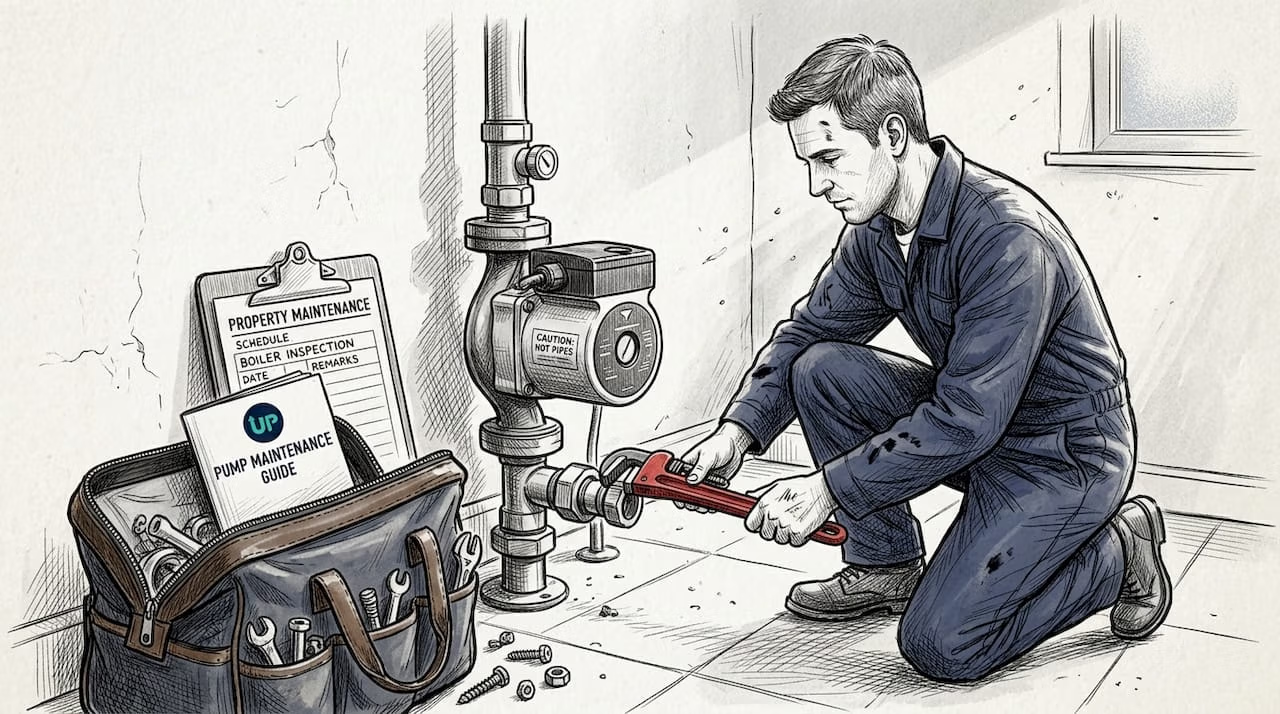
Consider a typical scenario: replacing a worn heating pump during scheduled summer maintenance is a routine job. The same pump failing in January needs an emergency call-out, out-of-hours labour, rushed parts and temporary heating for tenants, so the bill is several times higher, before any tenant compensation claims.
The return goes beyond direct repair costs. Preventive maintenance catches deterioration early, when repairs are still simple. A small roof leak found during a routine inspection needs a minor flashing repair; left until ceiling damage appears, it becomes a job for structural repairs, redecoration and possibly mould treatment.
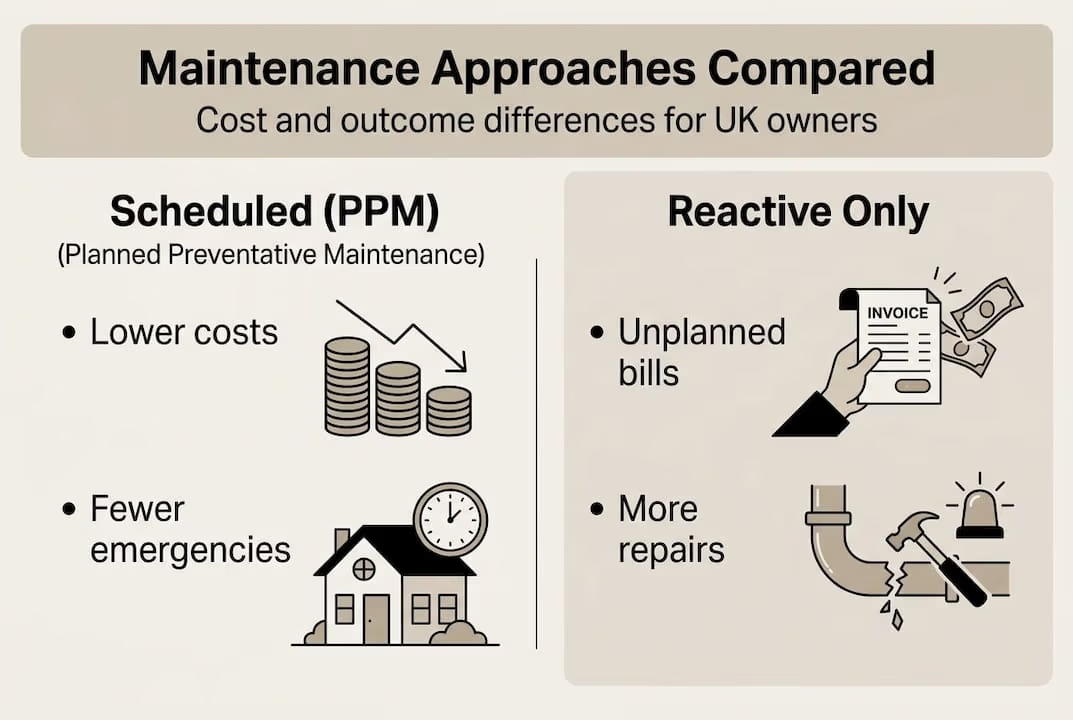
Postponing maintenance creates compounding costs as minor issues cascade into system failures. Neglected gutter clearing leads to overflow, which causes fascia rot, which lets water in, which damages insulation and internal finishes. What started as a small maintenance task becomes a major remedial project.
Pro Tip: Track your maintenance ROI by recording every scheduled activity cost alongside avoided emergency expenses. Digital maintenance platforms automatically calculate savings by comparing your actual spending against industry benchmarks for reactive-only approaches, providing concrete evidence of PPM value for stakeholder reporting.
Nuances and challenges in scheduling maintenance: legal, site-specific, and operational factors
Effective maintenance scheduling requires understanding subtle complexities beyond basic task lists. FRI lease obligations (Full Repairing and Insuring) place repair responsibility on tenants, but schedules of condition limit liability by documenting pre-existing issues. Property managers must navigate these arrangements carefully, ensuring maintenance occurs whilst respecting contractual boundaries.
Maintenance triage categorises work into three priority levels:
- Emergency (immediate safety risk, requiring 24-hour response)
- Urgent (functional impairment, requiring 48-72 hour response)
- Routine (scheduled preventive work, planned weeks ahead)
This classification system helps allocate resources efficiently whilst ensuring critical issues receive immediate attention. However, distinguishing between repair and renewal complicates scheduling decisions. When a boiler reaches its expected lifespan, continued repairs become economically questionable compared to replacement. Life-expired assets require different strategic thinking than routine maintenance.
Coastal and high-pollution sites need more frequent exterior PPM due to accelerated deterioration from salt spray or industrial emissions. A property 200 metres from the sea might require twice-yearly render inspections and gutter clearing, whilst an inland equivalent manages with annual checks. Site-specific risk factors demand tailored schedules rather than generic templates.
| Factor | Standard schedule | Adjusted schedule | Rationale |
|---|---|---|---|
| Coastal location | Annual render check | Bi-annual inspection | Salt accelerates deterioration |
| High footfall | Quarterly door checks | Monthly inspection | Increased wear on mechanisms |
| Listed building | Standard PPM | Enhanced monitoring | Specialist materials and approvals |
| Multi-occupancy | Annual fire tests | Monthly checks | Regulatory requirements |
SFG20 provides defendable maintenance baselines recognised across the UK facilities management sector, but limitations exist in its generic task durations. The guidance ignores site-specific factors like restricted access, reactive demand peaks, and local labour availability, leading to pricing gaps of 25-28% between SFG20 estimates and actual costs. Smart property managers use SFG20 as a starting framework, then adjust for their portfolio’s unique characteristics.
Hybrid approaches blend PPM with predictive maintenance using IoT sensors and data analytics. Temperature monitoring on motors detects bearing wear before failure, vibration sensors identify pump imbalances, and smart thermostats reveal heating inefficiencies. These technologies complement scheduled inspections by providing continuous condition monitoring between visits, optimising intervention timing based on actual asset health rather than calendar intervals alone.
Pro Tip: Document site-specific risk factors affecting your properties in a maintenance risk register. Note coastal exposure, pollution levels, building age, occupancy intensity, and access constraints. Use this register to justify schedule adjustments and demonstrate due diligence in your maintenance planning approach, particularly valuable for compliance audits and insurance claims.
Understanding property maintenance terminology ensures clear communication with contractors and accurate specification of required work, reducing misunderstandings that delay projects or inflate costs.
Implementing effective scheduled maintenance: best practices for UK property owners and managers
Successful implementation starts with setting measurable targets. Aim for 80% planned work as your maintenance KPI, meaning four out of every five tasks occur according to schedule rather than as emergency responses. This ratio maximises value preservation whilst maintaining flexibility for genuine unexpected issues.
Follow these steps to establish your maintenance programme:
- Conduct comprehensive asset surveys documenting all equipment, installation dates, and current condition
- Create maintenance schedules using SFG20 baselines adjusted for site-specific risks and manufacturer recommendations
- Implement digital tracking systems that schedule tasks, record completions, and store compliance certificates
- Establish seasonal checklists addressing weather-related maintenance needs throughout the year
- Review performance quarterly, analysing emergency callout frequency and adjusting schedules accordingly
- Budget for both routine maintenance and a contingency fund for life-expired asset replacements
Seasonal maintenance priorities include:
- Spring: gutter clearing, exterior painting, garden preparation, air conditioning servicing
- Summer: roof inspections, window repairs, external decoration, heating system servicing
- Autumn: drainage checks, heating system testing, weather seal inspection, tree maintenance
- Winter: pipe insulation checks, emergency access verification, snow clearance planning, boiler monitoring
Digital tools transform maintenance management by automating schedule generation, sending task reminders, capturing photographic evidence, and demonstrating ROI through cost tracking. Modern platforms integrate with accounting systems, providing real-time budget monitoring and variance analysis. The audit trail these systems create proves invaluable during compliance inspections or tenant disputes.
Meeting UK compliance standards requires specific attention to statutory inspections. Gas safety certificates need annual renewal, EICRs require five-yearly completion for rental properties, and fire safety equipment needs regular testing according to type. Missing these deadlines creates legal liability and invalidates insurance coverage, making compliance tracking a critical maintenance function.
Balancing maintenance triage with planned works optimises resource allocation. Reserve 20% of your maintenance budget for reactive work, allowing prompt response to genuine emergencies without derailing scheduled activities. This buffer prevents the common trap of perpetually postponing planned maintenance to address urgent issues, which ultimately increases overall costs.
Repair versus renewal decisions require economic analysis. Calculate the total cost of ownership including energy efficiency, reliability, and remaining lifespan. A 15-year-old boiler consuming 30% more gas than modern equivalents whilst requiring frequent repairs presents a clear renewal case, even if individual repairs remain technically possible. Following guidance in building maintenance programmes helps navigate these decisions systematically.
Pro Tip: Foster tenant communication by sharing maintenance schedules in advance, explaining how planned work protects their comfort and safety. Document all maintenance activity with photographs and completion notes, creating a comprehensive property history that supports valuations, demonstrates diligence, and provides evidence if disputes arise. This transparency builds trust whilst protecting your interests.
How UpKeep UK supports your scheduled property maintenance needs
Navigating the complexities of planned maintenance becomes straightforward with the right professional support. UpKeep UK offers tailored building and property maintenance services across London and the wider UK, helping property owners and managers implement effective PPM programmes that deliver measurable cost savings and compliance assurance.
Our comprehensive resources guide letting agencies and portfolio managers through common challenges, including identifying property maintenance red flags before they escalate into expensive problems. Whether you need help establishing maintenance schedules, conducting property surveys, or managing ongoing service contracts, our experienced team provides the expertise and reliability that UK property professionals depend on. Explore our building maintenance service guide to understand how professional support streamlines compliance and protects your investment, or learn more about regular property maintenance importance for letting agencies seeking to enhance their service standards.
Frequently asked questions
How often should scheduled property maintenance tasks be conducted?
Frequency varies by task type and site-specific risks, but typical schedules follow seasonal checklists and SFG20 guidelines tailored to UK property requirements. Annual gas safety inspections and five-yearly electrical checks form statutory minimums, whilst quarterly gutter clearing and monthly fire equipment tests address ongoing operational needs. Properties in coastal areas or high-pollution zones require more frequent exterior inspections to catch accelerated deterioration early.
What is the difference between scheduled maintenance and reactive maintenance?
Scheduled maintenance is proactive work planned in advance to prevent failures, conducted according to manufacturer recommendations, regulatory requirements, and condition-based assessments. Reactive maintenance occurs after faults arise, responding to breakdowns or tenant reports of problems. Reactive work costs significantly more due to emergency callout premiums, rushed material procurement, and operational disruption, whilst scheduled maintenance allows cost-effective intervention before issues escalate.
How can UK property owners demonstrate compliance with maintenance obligations?
Keeping detailed records of scheduled maintenance activities supports compliance with laws such as Section 11 Landlord and Tenant Act and FRI lease terms, providing audit trails for inspections or disputes. Digital maintenance platforms automatically store completion certificates, inspection reports, and photographic evidence in accessible formats. Using recognised maintenance schedules like SFG20 aids in defendable compliance by demonstrating adherence to industry standards and best practice frameworks accepted across the UK property sector.
What role do digital tools play in managing scheduled property maintenance?
Digital tools improve schedule adherence through automated task reminders, provide comprehensive audit trails for compliance demonstration, and help calculate ROI by tracking costs against avoided emergency expenses. Modern platforms integrate IoT sensor data, enabling predictive insights that complement PPM by identifying deteriorating assets between scheduled inspections. These systems transform maintenance from reactive firefighting into strategic asset management, delivering measurable improvements in cost control, compliance assurance, and tenant satisfaction across property portfolios.