

Many UK property owners use the terms refurbishment and renovation interchangeably, creating confusion when planning improvements. This misunderstanding can lead to unrealistic budgets, incorrect planning applications, and missed opportunities to maximise property value. Understanding what property refurbishment involves helps landlords and estate agents make informed decisions about upgrading their properties. This guide clarifies the definition, processes, and benefits of property refurbishment specifically for UK real estate stakeholders seeking to enhance value and tenant appeal.
Table of Contents
- What Is Property Refurbishment?
- Typical Stages Of A Property Refurbishment Project
- Benefits Of Property Refurbishment For UK Landlords And Owners
- Refurbishment Versus Renovation: Key Differences
- Legal And Maintenance Considerations During Refurbishment
- Discover Professional Refurbishment And Maintenance Services With UpKeep UK
- Frequently Asked Questions
Key takeaways
| Point | Details |
|---|---|
| Definition clarity | Refurbishment restores and upgrades existing structures without complete rebuilding, focusing on improvements rather than structural changes. |
| Project stages | Successful refurbishment follows assessment, design, permissions, execution, and final inspection phases. |
| Value benefits | Regular refurbishment increases market value, attracts better tenants, and ensures regulatory compliance. |
| Refurbishment vs renovation | Refurbishment is less invasive and costly than renovation, which involves extensive structural alterations. |
| Legal requirements | Landlords must navigate building regulations, health standards, and maintenance obligations during refurbishment. |
What is property refurbishment?
Property refurbishment involves restoring and improving existing building structures and finishes without completely rebuilding. It focuses on upgrading worn or outdated elements whilst maintaining the property’s fundamental structure. For UK landlords and estate agents, refurbishment represents a strategic approach to enhancing property appeal and functionality without the extensive costs and timescales associated with full renovation projects.
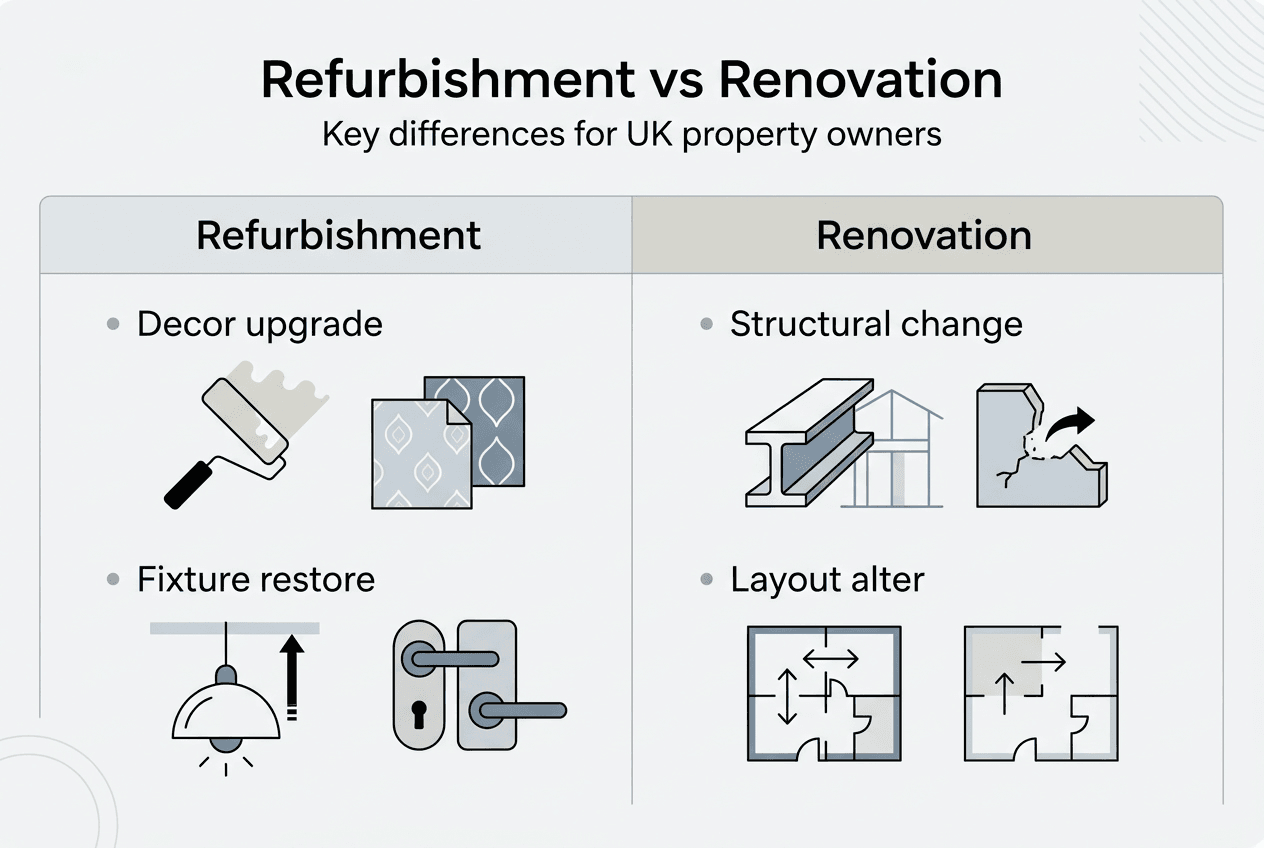
Refurbishment differs significantly from renovation and routine maintenance. Renovation typically involves extensive structural changes, such as removing walls, adding extensions, or reconfiguring floor plans. Maintenance covers routine tasks like fixing leaks, replacing broken fixtures, or repainting surfaces. Refurbishment sits between these extremes, addressing substantial improvements without fundamental structural alterations.
Typical refurbishment activities include:
- Repairing and upgrading kitchen and bathroom fixtures
- Replacing flooring, carpets, and interior finishes
- Updating electrical systems and plumbing within existing layouts
- Redecorating rooms with modern colour schemes and finishes
- Installing energy efficient windows and heating systems
- Improving insulation and ventilation without structural changes
Many property owners mistakenly believe refurbishment requires planning permission or delivers the same results as full renovation. Understanding these distinctions helps you allocate budgets appropriately and set realistic expectations. Refurbishment works particularly well for rental properties where maintaining competitive appeal matters more than radical transformation.
Pro Tip: Document your property’s condition before refurbishment with photographs and written notes. This record helps you track improvements, justify rental increases, and provides evidence if disputes arise with tenants or contractors.
Typical stages of a property refurbishment project
A successful refurbishment project generally follows stages from initial assessment through design, approval, execution, and finishing touches. Understanding these phases helps you plan effectively and anticipate potential challenges before they disrupt your timeline or budget.
- Initial assessment identifies refurbishment needs by inspecting property condition, noting defects, and prioritising improvements based on value impact and tenant requirements.
- Design and planning phase involves creating detailed specifications, selecting materials and finishes, obtaining quotes from contractors, and establishing realistic budgets and timescales.
- Permissions and compliance stage requires checking whether works need building control approval, notifying tenants appropriately, and ensuring all activities comply with UK property regulations.
- Execution phase encompasses actual refurbishment works, coordinating tradespeople, managing quality control, and addressing unexpected issues that emerge during the project.
- Final inspection and handover includes checking completed works against specifications, addressing any snagging items, obtaining necessary certificates, and preparing properties for occupation or marketing.
Each stage requires careful attention to detail and realistic scheduling. Rushing through initial assessment often leads to discovering problems mid-project, causing delays and budget overruns. Similarly, inadequate planning creates confusion amongst contractors and results in substandard finishes that fail to deliver expected value improvements.
Pro Tip: Build a contingency fund of 15-20% into your refurbishment budget. Hidden problems like outdated wiring or concealed water damage frequently emerge once works begin, and having financial flexibility prevents project stoppages.
Effective project management makes the difference between smooth refurbishment and chaotic execution. Whether you manage works yourself or engage professional project managers, maintaining clear communication with contractors and regular site inspections ensures quality standards and timely completion.
Benefits of property refurbishment for UK landlords and owners
Regular refurbishment efforts contribute to enhancing property market value and attracting better tenants over time. Strategic improvements deliver multiple advantages that extend beyond aesthetic appeal, impacting your property’s financial performance and long-term viability in competitive rental markets.
Key benefits include:
- Increased market value through modernised interiors and improved property condition, enabling higher sale prices or rental rates
- Enhanced tenant satisfaction leading to longer lease periods, reduced void periods, and lower turnover costs
- Regulatory compliance with evolving UK property standards, including energy performance requirements and safety legislation
- Preventative maintenance that addresses minor issues before they escalate into expensive repairs requiring emergency intervention
- Competitive positioning in local rental markets where well-maintained properties command premium rates and attract quality tenants
Refurbishment particularly benefits landlords operating in areas with high rental demand. Tenants increasingly expect modern finishes, efficient heating systems, and well-maintained fixtures. Properties failing to meet these expectations struggle to attract reliable tenants and often experience higher vacancy rates.

The financial impact extends beyond immediate rental income. Properties with documented refurbishment histories demonstrate responsible ownership, making them more attractive to buyers and mortgage lenders. This factor becomes crucial when refinancing or selling, as evidence of regular improvements supports higher valuations.
Pro Tip: Focus refurbishment efforts on kitchens and bathrooms first. These rooms deliver the highest return on investment and significantly influence tenant decisions when viewing properties.
Energy efficiency improvements through refurbishment also reduce running costs for tenants, making your property more affordable and attractive. Installing modern boilers, improving insulation, and upgrading windows can substantially lower energy bills whilst meeting increasingly stringent Energy Performance Certificate requirements.
Refurbishment versus renovation: key differences
Renovation typically involves extensive structural changes, while refurbishment focuses on restoring and upgrading without full rebuild. Understanding these distinctions helps you choose the appropriate approach based on your property goals, available budget, and desired outcomes.
| Aspect | Refurbishment | Renovation |
|---|---|---|
| Scope | Restoring and upgrading existing features | Extensive structural alterations and rebuilding |
| Typical duration | Few weeks to 3 months | 3 months to over a year |
| Cost range | £10,000 to £40,000 for standard properties | £50,000 to £150,000+ depending on extent |
| Planning permission | Usually not required | Often necessary for structural changes |
| Property occupation | May remain partially habitable | Typically requires full vacation |
| Value increase | 10-15% improvement typical | 20-40% potential with major works |
Refurbishment suits properties in reasonable structural condition requiring modernisation rather than fundamental changes. You maintain the existing layout whilst upgrading finishes, fixtures, and systems. This approach minimises disruption, reduces costs, and delivers faster results compared to full renovation projects.
Renovation becomes necessary when properties suffer from structural defects, require layout reconfiguration, or need substantial extension work. These projects involve architects, structural engineers, and extensive planning processes. Whilst renovation delivers more dramatic transformations, the investment and complexity make it unsuitable for many landlord scenarios.
Choosing between refurbishment and renovation depends on several factors. Consider your property’s structural condition, target tenant market, available budget, and intended holding period. Properties in prime locations with strong rental demand often benefit more from regular refurbishment maintaining competitive standards rather than expensive renovation projects.
Legal and maintenance considerations during refurbishment
Landlords and agents must be aware of maintenance red flags and legal obligations to prevent refurbishment complications. Understanding regulatory requirements and common pitfalls protects you from costly disputes, ensures tenant safety, and maintains compliance with UK property legislation.
Key legal and maintenance considerations include:
- Building regulations compliance for electrical work, gas installations, and structural alterations, even when planning permission isn’t required
- Health and safety standards including fire safety measures, carbon monoxide detectors, and electrical safety certificates required for rental properties
- Tenant notification requirements when refurbishment affects occupied properties, respecting quiet enjoyment rights whilst conducting necessary improvements
- Hidden maintenance issues often revealed during refurbishment, such as outdated wiring, damp problems, or inadequate insulation requiring immediate attention
- Professional certifications and warranties ensuring work meets required standards and provides recourse if problems emerge after completion
Many landlords underestimate the importance of proper documentation during refurbishment. Maintaining records of all works, certificates, and contractor details protects you if disputes arise and demonstrates due diligence to regulatory authorities. This documentation becomes particularly valuable when selling properties or defending against tenant complaints.
Refurbishment projects frequently uncover previously hidden problems requiring urgent attention. Removing old fixtures might reveal electrical wiring that fails current safety standards or plumbing systems showing signs of imminent failure. Building contingency time and budget for addressing these discoveries prevents project delays and ensures compliance.
Engaging qualified professionals for specialist tasks proves essential. Whilst some refurbishment activities suit DIY approaches, electrical work, gas installations, and structural assessments require certified tradespeople. Using unqualified contractors creates liability risks and may invalidate insurance coverage if problems occur.
Pro Tip: Always obtain detailed written quotes specifying exact works, materials, timescales, and payment terms before engaging contractors. Clear documentation prevents disputes and ensures everyone understands project expectations from the outset.
Discover professional refurbishment and maintenance services with UpKeep UK
Navigating property refurbishment requires expertise, reliable contractors, and careful project management. UpKeep UK specialises in delivering comprehensive refurbishment and maintenance solutions tailored to landlords, property owners, and estate agents across London and the wider UK. Our experienced team handles everything from initial assessments through to final inspections, ensuring your refurbishment projects meet quality standards whilst remaining on schedule and within budget.
We understand the challenges property owners face when coordinating multiple tradespeople, managing compliance requirements, and maintaining tenant relationships during improvement works. Our professional project managers oversee all aspects of refurbishment, providing transparent communication and fixed pricing that eliminates unwelcome surprises. Whether you need comprehensive property upgrades or targeted improvements addressing specific maintenance concerns, our team delivers reliable solutions backed by full insurance and quality guarantees.
Discover how our building maintenance service management approach can transform your property portfolio. Contact UpKeep UK today to discuss your refurbishment requirements and receive a detailed quote tailored to your specific needs.
Frequently asked questions
What is the difference between property refurbishment and renovation?
Refurbishment focuses on restoring and updating existing property elements without major structural changes, such as upgrading kitchens, replacing flooring, or modernising bathrooms whilst maintaining the original layout. Renovation involves extensive structural alterations like removing walls, adding extensions, or completely reconfiguring floor plans. Refurbishment typically costs less, completes faster, and rarely requires planning permission compared to renovation projects.
How long does a typical property refurbishment take in the UK?
Most refurbishment projects range from three weeks to three months depending on scope and property size. Minor refurbishments addressing single rooms or specific upgrades complete within weeks, whilst comprehensive whole-property refurbishments require two to three months. Planning stages and obtaining necessary approvals can add several weeks before physical works begin, so factor this preparation time into your overall schedule.
Do I need planning permission for property refurbishment?
Most refurbishment works don’t require planning permission as they involve internal improvements without structural alterations or external changes. However, building regulations approval may be necessary for electrical work, plumbing modifications, or structural repairs even when planning permission isn’t required. Always check with your local planning authority before starting refurbishment, particularly for listed buildings or properties in conservation areas where restrictions apply.
Can property refurbishment increase rental income?
Refurbishment significantly enhances rental income potential by improving property appeal and allowing you to command higher rents. Well-maintained properties with modern finishes attract quality tenants willing to pay premium rates and typically experience shorter void periods. The rental increase depends on refurbishment extent and local market conditions, but improvements to kitchens, bathrooms, and energy efficiency typically deliver the strongest returns on investment.
What refurbishment improvements deliver the best return on investment?
Kitchen and bathroom upgrades consistently deliver the highest returns, often recouping 75-100% of costs through increased property value and rental rates. Energy efficiency improvements including modern boilers, improved insulation, and double glazing also provide strong returns by reducing running costs and meeting regulatory requirements. Fresh decoration, quality flooring, and modern lighting fixtures offer cost-effective improvements that significantly enhance property appeal without substantial investment.