TL;DR:
- Regular scheduled maintenance prevents costly emergency repairs and ensures legal compliance.
- Proper maintenance safeguards property value, attracts tenants, and reduces void periods.
- Documented routine checks improve safety, insurance claims, and long-term investment returns.
Scheduling regular maintenance protects your property’s value and cuts costs, because planned checks catch small faults before they become emergencies, keep you legally compliant and reduce void periods. This article explains what regular maintenance involves, how often to schedule each task and how documented checks support insurance claims and long-term returns.
Key Takeaways
| Point | Details |
|---|---|
| Legal compliance | Scheduled maintenance ensures you meet UK legal requirements and avoid fines. |
| Cost savings | Routine checks prevent expensive repairs and keep your property profitable. |
| Property value boost | Regular upkeep enhances your property’s appeal and long-term market value. |
| Happier tenants | Well-maintained homes attract reliable tenants and reduce complaints. |
Understanding regular property maintenance: what does it involve?
Regular property maintenance is not simply fixing things when they break. It is a planned, scheduled approach to keeping a building structurally sound, legally compliant, and comfortable to occupy. This distinction matters enormously. Reactive repairs, addressing problems after they occur, are almost always more expensive and more disruptive than the routine checks that would have caught the same issue months earlier.
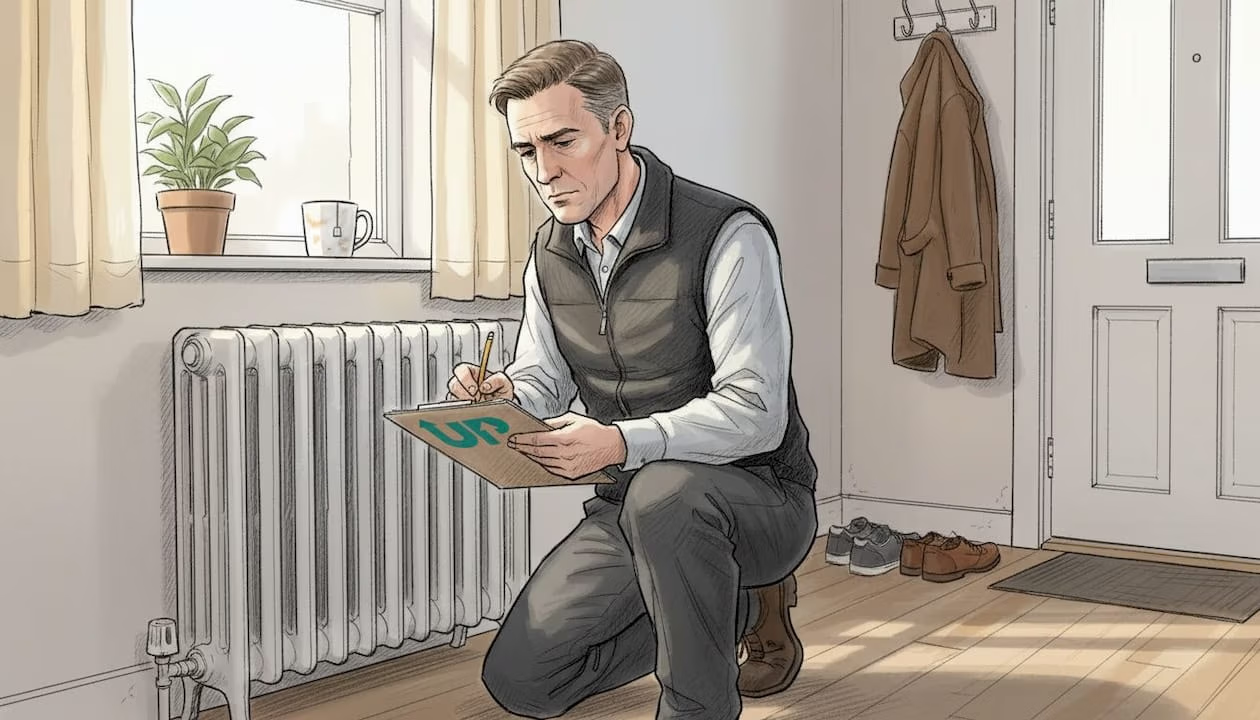
For UK property owners, a clear understanding of maintenance terminology is a useful starting point. Scheduled maintenance covers everything from annual boiler servicing to periodic roof inspections. It is methodical, predictable, and documentable. Reactive maintenance, by contrast, is unplanned spending triggered by failure, often at the worst possible time, such as a heating breakdown mid-winter or a leak discovered after water has already damaged flooring and plasterwork.
The scope of regular maintenance for a typical UK residential property includes:
- Annual Gas Safety checks carried out by a Gas Safe registered engineer, mandatory for landlords with gas appliances
- Electrical Installation Condition Reports (EICR) to verify that wiring and consumer units are safe and up to standard
- Boiler servicing to maintain efficiency, extend the appliance’s working life, and satisfy manufacturer warranty conditions
- Roof and guttering inspections to identify cracked tiles, blocked downpipes, and early signs of penetrating damp before water ingress causes structural harm
- Damp and ventilation checks to prevent mould growth, which has become an increasingly prominent concern following changes to housing standards guidance
- Fire safety checks, including smoke alarm testing, carbon monoxide detector verification, and fire door inspections in HMOs and blocks of flats
- Plumbing inspections covering pipework, stop valves, and sanitary fittings to prevent slow leaks that cause hidden timber rot
Under Section 11 of the Landlord and Tenant Act 1985, landlords are legally required to maintain structure, exterior, utilities, heating, and sanitation, with annual Gas Safety checks and five-year EICRs essential for compliance. This legal framework essentially codifies what good practice looks like, giving property owners a clear baseline to build a maintenance schedule around.
Pro Tip: Create a digital maintenance log for each property, recording the date, contractor, and findings for every inspection and service visit. This protects you legally, simplifies insurance claims, and makes the property far more attractive when you come to sell.
Getting planning maintenance steps right from the outset saves you from the reactive trap, where each urgent repair pulls resources away from the structured schedule you were trying to maintain.
Legal obligations: why regular checks matter
Now that the basics of regular maintenance are clear, it is vital to understand the legal drivers for UK property owners. The law does not leave much room for interpretation here. Landlords carry defined responsibilities that, if ignored, carry real consequences.
Section 11 of the Landlord and Tenant Act 1985 places clear obligations on landlords to keep properties fit for habitation. Specifically, landlords must maintain the structure and exterior of the property, sanitation and water supply, and all installations relating to heating and hot water. This is not aspirational guidance. It is a legal minimum, and tenants have the right to take action if a landlord fails to meet it.
“A landlord’s duty to repair is not triggered only by a formal complaint. If a landlord is aware of a defect, they are expected to act promptly, regardless of whether the tenant has raised it formally.”
The practical steps required to stay compliant are straightforward when you break them down:
- Annual Gas Safety certificate: Commission a Gas Safe registered engineer to inspect all gas appliances, pipework, and flues. Provide a copy of the certificate to each tenant within 28 days of issue, or to new tenants before they move in.
- Five-year EICR: Arrange an Electrical Installation Condition Report every five years, or at each change of tenancy if sooner. Any unsatisfactory findings must be remedied within 28 days.
- Smoke and carbon monoxide alarms: Fit a working smoke alarm on every floor and a carbon monoxide detector in any room containing a fixed combustion appliance. Test at the start of each tenancy.
- Ongoing structural checks: Document any inspections of the roof, exterior walls, windows, and drainage to demonstrate active compliance with habitation standards.
- Keep clear records: Maintain a file of all certificates, contractor invoices, and inspection reports. These records are your evidence of compliance if a dispute arises.
The consequences of failing these obligations are significant. Councils can issue improvement notices, civil penalties of up to £40,000 (since 1 May 2026) and, in serious cases, prosecution. Tenants can pursue rent repayment orders. Insurers may refuse to pay out on claims if a property was not maintained to required standards. Even a single missed Gas Safety check can have serious financial and legal repercussions.
Engaging a reliable partner for professional building care makes this process considerably less stressful. Having a trusted contractor who tracks your compliance schedule removes the risk of anything slipping through.
Financial impacts: saving money through prevention
Understanding the law is crucial, but the financial argument seals the case for regular maintenance. Property owners who treat maintenance as a cost to minimise often end up spending far more than those who treat it as a structured investment.
Owners who defer routine maintenance to save money in the short term usually face repair bills far larger than the cost of a managed programme, because problems compound when they are left.
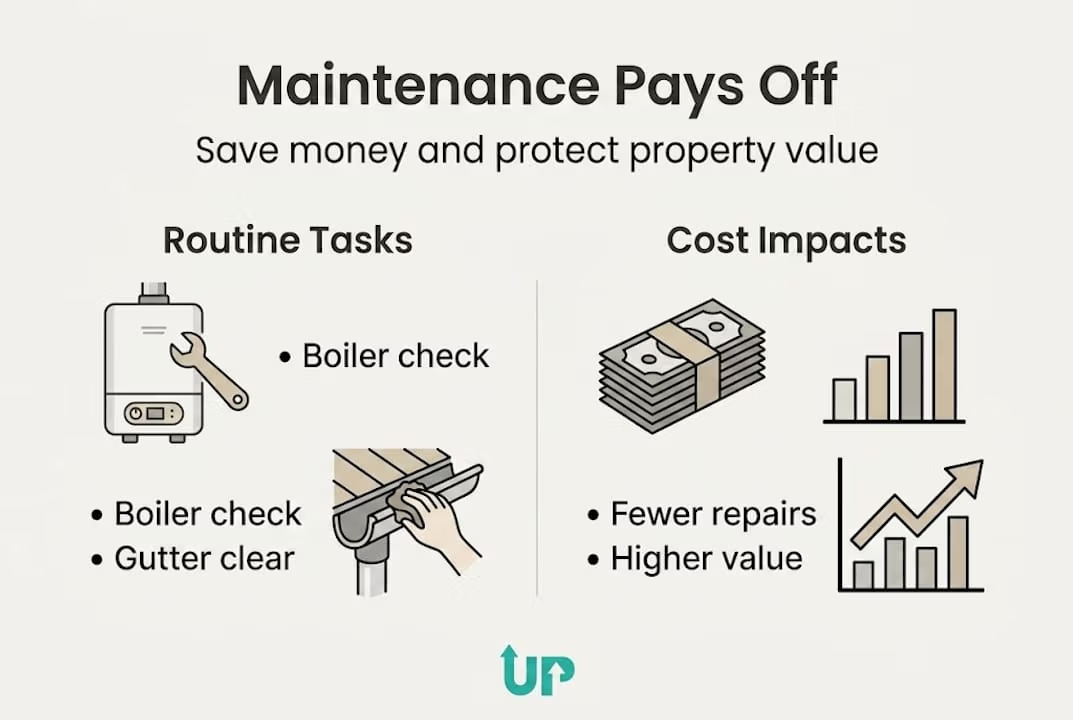
| Maintenance type | If left unaddressed |
|---|---|
| Annual boiler service | Boiler replacement |
| Gutter clearance | Damp remediation |
| Roof tile replacement (minor) | Full roof repair |
| EICR (every 5 years) | Emergency rewire |
| External repainting | Structural timber rot repair |
The pattern is consistent: small, predictable spends prevent large, unpredictable ones. This is not theoretical. It reflects what tradespeople encounter repeatedly when called in for emergency work that could have been avoided.
The insurance angle is equally important. Many property insurance policies include clauses relating to maintenance. If an insurer can demonstrate that a claim arose from neglect, such as a burst pipe in a property with known plumbing issues that were never addressed, they may reject the claim. Maintaining your schedule and documenting it protects your cover and gives you a strong position when making any claim.
Resale value is another area where maintenance pays dividends. A well-maintained property with a clear service history commands stronger buyer interest and typically achieves a better price. Buyers and their surveyors know exactly what to look for, and a record of regular plumbing maintenance and other checks reassures them that the property has been looked after.
Pro Tip: Where possible, bundle maintenance visits to reduce call-out costs. For example, scheduling a plumber to inspect pipework and service radiators in one visit costs significantly less than two separate call-outs across the year.
For landlords managing the balance between planned spending and emergency work, understanding reactive maintenance costs in context helps you make the case internally for increasing your preventive budget. And for those thinking about longer-term property stewardship, exploring sustainable property upkeep approaches can reduce your overall spend further while improving the property’s environmental credentials.
Maximising property value and tenant satisfaction
Beyond cost savings, maintenance schedules play a key role in property valuation and management experience. A property that is consistently well-maintained is simply a better asset, generating stronger rental income, attracting better tenants, and retaining them for longer periods.
Tenants notice the difference quickly. When a landlord or managing agent responds promptly to maintenance needs and proactively services systems before they fail, it communicates professionalism and genuine care for the property. This directly reduces the likelihood of disputes, complaints to councils, and early tenancy terminations. Long tenancies mean fewer void periods, less expenditure on cleaning and redecoration between lets, and more predictable income.
The value uplift effect of regular maintenance is well-established. Properties in good condition attract a wider pool of potential buyers and tenants. Even in a competitive rental market, a well-presented, fully compliant property with evidence of regular upkeep stands apart. Conversely, deferred maintenance accumulates visually and structurally, reducing the property’s kerb appeal, its survey performance, and ultimately its market value.
A comparison between the two approaches makes this clear:
| Factor | Scheduled maintenance | Reactive maintenance |
|---|---|---|
| Repair costs | Low and predictable | High and unpredictable |
| Tenant satisfaction | High, fewer complaints | Lower, more disputes |
| Void periods | Shorter, faster re-letting | Longer, more remedial work needed |
| Property condition | Consistently well-maintained | Deteriorating between repairs |
| Legal compliance | Continuously maintained | Gaps and risks |
| Resale value | Stronger, supported by records | Weaker, survey flags issues |
Implementing a tenant-friendly maintenance plan requires a few deliberate steps:
- Set a clear schedule and share the key dates with tenants. For example, let them know when the annual gas check is due and arrange access in advance.
- Use a reliable reporting system so tenants can flag small issues before they escalate. A simple email address or property management portal works well.
- Respond quickly to reported issues. Even if a full repair cannot happen immediately, acknowledging the problem within 24 hours builds trust.
- Review the schedule annually in line with effective maintenance plans as the property ages and requirements change.
- Document everything. As legally required for checks like Gas Safety and EICR, good records protect you and reassure tenants that safety is a genuine priority.
The difference between a satisfied, long-term tenant and a series of costly disputes often comes down to one thing: consistency of care.
A smarter way: what most owners overlook about maintenance scheduling
Even with all the practical facts on the table, there is a layer that most owners miss when they think about maintenance scheduling. They see it purely as a cost line on a spreadsheet. We have worked with enough property owners across London and the wider UK to know that this view misses the bigger picture.
A consistent maintenance schedule is also a relationship tool. When tenants see that their landlord takes upkeep seriously, they reciprocate. They report issues early. They care for the property. They stay longer. The return on that investment is difficult to quantify but very real.
For insurers, a documented schedule is a signal of low risk. It can influence your premium and, critically, your ability to make a claim when you genuinely need to. We have seen owners lose significant insurance pay-outs because they could not demonstrate they had maintained their property appropriately before a loss occurred.
The contrarian view we would offer here is this: spending regularly on maintenance is not a cost of ownership. It is how you grow the real value of your asset over time. Properties maintained with discipline consistently outperform neglected ones in yield, condition, and saleability. Exploring maintenance terminology insights helps you speak to contractors and insurers with confidence, ensuring nothing gets lost in translation.
Expert help with your maintenance strategy
Putting a structured maintenance schedule in place does not need to be complicated, but it does benefit from the right support.
At UpKeep UK, we work with landlords, property managers, and homeowners across London and the wider UK to develop maintenance strategies that are practical, compliant, and cost-effective. Our team of experienced tradespeople, builders, electricians, and roofers can handle everything from Gas Safety checks to full property refurbishments, with fixed pricing and full insurance cover. If you are unsure where to start, reviewing property maintenance red flags is a useful first step. You can also browse our current maintenance projects to see the standard of work we deliver every day. Get in touch to discuss a tailored plan for your property.
Frequently asked questions
What happens if I skip regular maintenance on my UK property?
Skipping regular maintenance can result in legal action from your local council, significant repair costs, voided insurance policies, and serious tenant complaints. Under section 11 of the Landlord and Tenant Act 1985, landlords must keep the structure, exterior and installations in repair, and councils can issue civil penalties of up to £40,000 for housing offences.
How often should essential checks like gas and electrical safety be carried out?
A Gas Safety check must be carried out every 12 months by a Gas Safe registered engineer, and an Electrical Installation Condition Report is required every five years, or at each change of tenancy if that occurs sooner.
Is routine maintenance really cost-effective for landlords?
Absolutely. Avoiding routine maintenance typically leads to emergency repairs and structural damage that cost several times more, not to mention potential legal penalties.
Does regular maintenance really help attract better tenants?
Yes. A well-maintained, compliant property signals professionalism and reliability to prospective tenants, reducing void periods and complaints. Legal compliance through regular Gas Safety and EICR checks also reassures tenants that their safety is taken seriously, which builds the long-term trust that keeps good tenants in place.