TL;DR: Check a flat roof every three months, clear outlets every time and get a professional inspection every one to two years. Good maintenance can roughly double the life of a felt roof. Targeted repairs typically cost £400 to £2,500, while full replacement runs about £80 to £140 per m².
A flat roof in London needs a quick visual check every three months and a professional inspection every one to two years, with outlets, gutters and downpipes cleared at every check. That simple routine is the difference between a felt roof that fails in 10 to 14 years and one that lasts 20 or more, and between a £150 re-seal and a £2,000 emergency repair when water finally finds its way through.
London has a huge number of flat roofs, from rear kitchen extensions and dormers to post-war blocks and commercial units, and the city’s wet autumns, freeze-thaw winters and tree-lined streets are hard on all of them. This guide covers the main flat roof types and how long each lasts, what to check and when, a seasonal maintenance checklist, typical repair and replacement costs, and what landlords are legally responsible for. UpKeep UK inspects, repairs and replaces flat roofs across London with fixed-price quotes and fully insured roofers.
What types of flat roof are common in London properties?
The four flat roof systems found most frequently on London buildings are mineral felt, EPDM rubber, GRP fibreglass, and built-up bitumen. Each has a different lifespan and a different maintenance profile, so knowing which system you have is the first step in planning upkeep.

UK flat roof lifespans vary significantly by material. A standard 3-layer mineral felt roof lasts 10–14 years unmaintained, but rises to 18–25 years with consistent care. EPDM rubber membranes last 18–25 years as standard and 30–40 years when well maintained. GRP fibreglass sits at 15–22 years unmaintained and 25–35 years with proper upkeep. Single-ply PVC or TPO membranes achieve 20–28 years unmaintained and 30–45 years maintained. Maintenance, in short, can double the working life of a felt roof and add a decade or more to a membrane system.
The table below summarises the key differences to help you plan budgets and replacement timelines.
| Roof type | Unmaintained lifespan | Maintained lifespan | Relative maintenance cost |
|---|---|---|---|
| 3-layer mineral felt | 10–14 years | 18–25 years | Low upfront, higher long-term |
| EPDM rubber membrane | 18–25 years | 30–40 years | Low, specialist products required |
| GRP fibreglass | 15–22 years | 25–35 years | Moderate |
| Built-up bitumen | 15–20 years | 25–30 years | Moderate to high |
| Single-ply PVC/TPO | 20–28 years | 30–45 years | Low to moderate |
Built-up bitumen is common on older London commercial buildings and larger residential blocks. It performs well but requires periodic torch-on repairs to blistered or cracked sections. GRP fibreglass is popular on domestic extensions because it is seamless and hard-wearing, though it can crack if the substrate moves.
How often should a flat roof in London be inspected?
Professional flat roof inspection services recommend two levels of checking: owner-led visual checks every three months, and a professional inspection every one to two years. London’s weather pattern, with wet autumns, freeze-thaw cycles in winter, and UV exposure in summer, accelerates wear faster than the national average.
During your own quarterly checks, look for the following warning signs:
- Ponding water that remains more than 48 hours after rainfall
- Blistering or bubbling on the membrane surface, indicating trapped moisture or air
- Cracking or splitting along seams, upstands, or around penetrations such as pipes and rooflights
- Damaged or lifted flashings at parapet walls and abutments
- Blocked gutters and outlets causing water to back up onto the roof surface
- Moss, lichen, or vegetation growth, which retains moisture and degrades membranes
Pro Tip: Ponding under 10mm depth that clears within 48 hours is generally acceptable on modern membranes. Persistent or deeper ponding signals a drainage or structural problem and requires a professional assessment, not a DIY patch.
Flat roofs are designed with a minimum fall of 1:80 to drain water away from the surface. Insufficient falls or blocked outlets cause ponding that accelerates membrane deterioration. Failed flashings and damaged upstands around penetrations are among the most common causes of internal water ingress in London properties.
Common maintenance tasks and flat roof troubleshooting tips
Preventative maintenance is far cheaper than reactive repair. Blocked outlets and gutters are behind a large share of flat roof failures, because standing water speeds up membrane breakdown and eventually finds a weak seam. Clearing debris every three months is the single most valuable maintenance task on any flat roof, and it costs almost nothing.
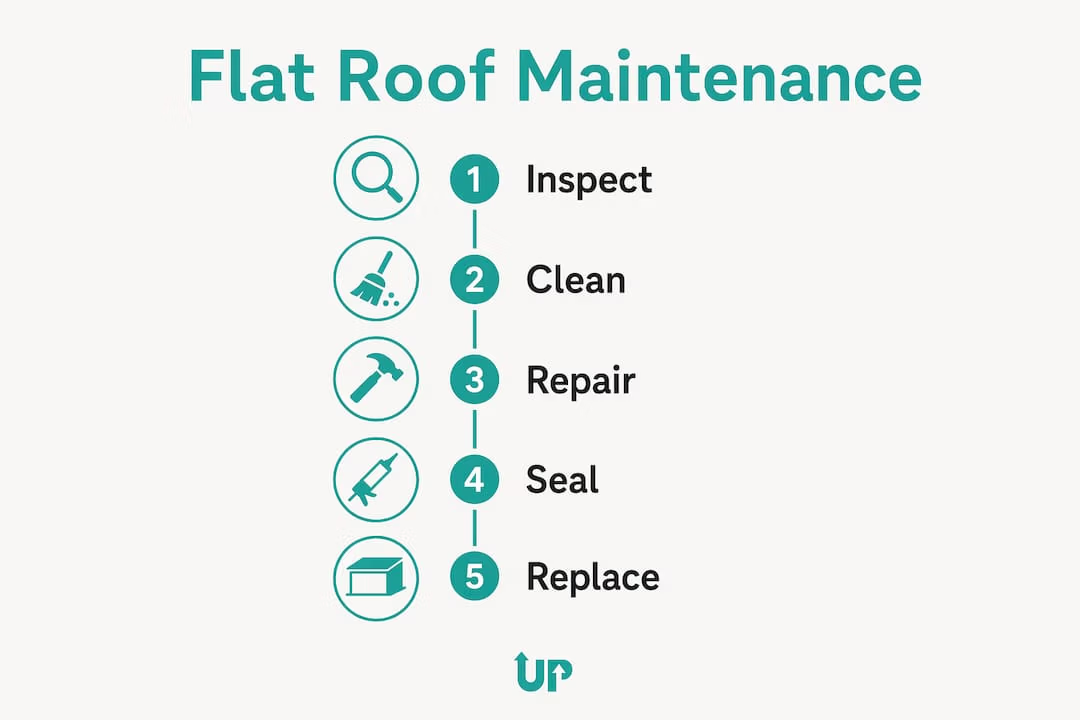
A practical quarterly maintenance routine covers these steps:
- Clear all gutters, downpipes, and roof outlets of leaves, moss, and debris. Use a trowel and flush with water to confirm flow.
- Inspect and re-seal lifted seams and flashings with a compatible sealant before water finds a path inside. Different membranes require specific products. Only EPDM-grade primers work with EPDM roofs; incompatible sealants cause accelerated failure.
- Trim back overhanging vegetation and apply a biocide treatment to any moss or lichen growth. Left unchecked, roots penetrate membranes within one to two seasons.
- Check upstands and parapet cappings for cracks or movement. These are the highest-risk leak points on any flat roof.
- Document your findings with dated photographs. This record protects you legally and helps contractors diagnose problems faster.
Pro Tip: Never apply a bitumen-based sealant over an EPDM or GRP surface. The chemical incompatibility causes the existing membrane to lift and crack within months. Always confirm the membrane type before purchasing any repair product.
Preventative repairs such as resealing joints, patch repairs, and flashing replacement are quicker, less disruptive, and more cost-effective than major interventions. The difference between a £150 re-seal and a £2,000 emergency repair is usually one missed quarterly check. Maintaining a healthier building envelope through consistent gutter and outlet cleaning is the single most cost-effective habit a property owner can adopt.
Seasonal flat roof maintenance checklist
| Season | What to check | Why it matters |
|---|---|---|
| Autumn | Clear leaves from outlets, gutters and downpipes; check flashings before winter | Leaf fall is the main cause of blocked outlets and ponding in London |
| Winter | Look for ponding, lifted seams and storm damage after heavy rain, wind or snow | Freeze-thaw cycles open up small cracks and split weak seams |
| Spring | Inspect for cracking, blistering and moss; treat vegetation; book the professional inspection | Winter damage shows up now and is cheapest to fix before summer |
| Summer | Check for UV cracking and blistering on felt and GRP; re-coat where needed | Heat and sunlight dry out older membranes and coatings |
Keep dated photos from every check. They help a roofer diagnose problems quickly and give landlords a record that the roof has been properly maintained. If you already have a leak, our guides to roof leak repair costs and roof leak detection explain what to expect, and our flat vs pitched roof guide covers the bigger decision if you are planning a new roof.
Repair vs replacement: what does it cost in London?
Understanding cost ranges helps you make the right call at the right time. Targeted flat roof repairs in the UK typically range from £400 to £2,500, depending on the scope of work. Larger section rebuilds or cases involving wet insulation push costs higher. Most targeted repairs take one to three days to complete.
Full like-for-like membrane replacement costs approximately £80–£140 per square metre. A 20m² rear extension roof therefore costs between £1,600 and £2,800 for a straightforward replacement. Overlay systems, where a new membrane is laid over a sound existing deck, cost 40–55% of full replacement and add 12–18 years of service life. Overlay is only viable when the insulation and decking beneath are dry and structurally sound.
| Option | Typical cost range | Best suited when | Lifespan added |
|---|---|---|---|
| Targeted repair | £400–£2,500 | Isolated damage, sound membrane | Varies |
| Overlay system | 40–55% of full replacement | Sound deck, dry insulation | 12–18 years |
| Full replacement | £80–£140 per m² | Wet insulation, repeated leaks | 20–40 years |
The decision to replace rather than repair becomes clear when any of the following apply: the insulation tests wet on a moisture survey, leaks recur within 12 months of a repair, the membrane is beyond its maintained lifespan, or Building Regulations require an upgrade to thermal performance. Persistent ponding that results from deck deflection rather than blocked outlets also points toward replacement, because no surface repair addresses an underlying structural issue.
Repair costs vary by complexity and material, so always obtain at least two written quotes from qualified contractors before committing to either route.
Landlord obligations when a flat roof fails
Landlords in England carry a legal duty to maintain the structure and exterior of a rented property in good repair under the Landlord and Tenant Act 1985. A failing flat roof falls squarely within that obligation. Ignoring a known leak exposes a landlord to disrepair claims, rent reduction demands, and potential enforcement action by the local authority if the defect creates a category one hazard under the Housing Health and Safety Rating System (HHSRS).
Practical obligations for landlords managing flat-roofed properties include:
- Carry out repairs promptly once a defect is identified or reported by a tenant. Delay converts a minor repair into a major one and increases legal exposure.
- Use NFRC-registered or CompetentRoofer-certified contractors for any work affecting upstands, seams, or the roof structure. NFRC or CompetentRoofer certification enables self-certification to Building Regulations, removing the need for a separate local authority inspection and saving both time and cost.
- Keep a written record of every inspection, repair, and contractor report. This documentation is your primary defence in any dispute.
- Communicate with tenants about access requirements and expected timescales. Clear communication reduces complaints and demonstrates good faith.
- Review your maintenance schedule after any repair. A roof that has leaked once is more likely to leak again unless the root cause is addressed.
Landlords managing blocks of flats should also consider how block management maintenance responsibilities are allocated between freeholders and leaseholders, as flat roof sections above individual units can create ambiguity in service charge disputes.
Key takeaways
Consistent flat roof maintenance in London reduces repair costs, extends membrane lifespan by up to double, and protects landlords from legal liability when roofs fail.
| Point | Details |
|---|---|
| Maintenance doubles lifespan | Regular upkeep extends felt roofs to 18–25 years and membrane systems to 30–40 years. |
| Quarterly gutter clearing is critical | Blocked outlets cause a large share of flat roof failures; clearing them every three months is the most cost-effective task. |
| Repair costs £400–£2,500 | Targeted repairs are far cheaper than replacement; overlay systems cost 40–55% of a full replacement. |
| Use certified contractors | NFRC or CompetentRoofer registration enables self-certification to Building Regulations and reduces admin. |
| Landlords have a legal duty | The Landlord and Tenant Act 1985 requires prompt structural repairs; delayed action increases legal and financial risk. |
What we see on London flat roofs
We see the same pattern across London properties again and again. A landlord or property manager notices a small damp patch on an upstairs ceiling, assumes it is condensation, and leaves it. Six months later, the insulation is saturated, the deck is soft, and what would have been a £600 flashing repair has become a £4,000 full replacement. The roof did not fail suddenly. It failed gradually, and the warning signs were there at every quarterly check that never happened.
The London climate is genuinely harder on flat roofs than most property owners realise. The combination of heavy autumn rainfall, freeze-thaw cycles between November and February, and summer UV exposure creates a stress cycle that no membrane escapes indefinitely. Properties in areas with heavy tree cover, such as parts of Islington, Hackney, and Lewisham, face accelerated gutter blockages that turn into ponding within a single season.
The most common mistake we see is choosing a contractor based on price alone, without checking whether they hold NFRC or CompetentRoofer registration. An unregistered contractor may charge less upfront, but their work cannot be self-certified to Building Regulations. That gap creates problems when you sell the property or make an insurance claim. The property maintenance mistakes that cost landlords the most money are almost always the ones that seemed like savings at the time.
Our recommendation is simple: schedule a professional inspection every 12 months, do your own visual check every three months, and treat every blocked outlet as an urgent task rather than a minor inconvenience. The cost of prevention is a fraction of the cost of cure, and in a London property market where asset values are high, protecting the building fabric is simply good financial management.
– Drahim Hasula, UpKeep UK
How UpKeep UK supports London property owners with flat roofs
UpKeep UK provides flat roof inspections, repairs and full replacements across London for residential and commercial properties. Whether you manage a single rear extension or a portfolio of post-war blocks, you get insured roofers, a clear written assessment and a fixed price before any work starts. We are TrustMark and Federation of Master Builders accredited, with 25+ years of combined experience on London buildings.

We can add flat roof checks to a planned maintenance schedule so outlets are cleared and seams checked before problems start, or respond quickly through our emergency repairs service when water is already coming in. If your roof is showing any of the warning signs in this guide, call 020 3148 8884 or book an inspection for a written recommendation on the most cost-effective fix.
FAQ
How long does a flat roof last in London?
A maintained EPDM or single-ply membrane lasts 30–45 years in London conditions. An unmaintained 3-layer felt roof typically fails within 10–14 years.
How often should a flat roof be inspected?
Property owners should carry out a visual check every three months and commission a professional inspection every one to two years. After severe weather, an additional check is advisable.
How much does flat roof replacement cost in London?
Like-for-like membrane replacement costs approximately £80–£140 per square metre. A 20m² extension roof typically costs between £1,600 and £2,800 for a full replacement.
What are the most common signs of flat roof damage?
The main warning signs are ponding water that persists beyond 48 hours, blistering or cracking on the membrane surface, lifted flashings at parapet walls, and internal damp patches on ceilings below the roof.
Do flat roof repairs require Building Regulations approval?
Work affecting upstands, seams, or the roof structure may require Building Regulations compliance. Using an NFRC or CompetentRoofer-registered contractor enables self-certification, removing the need for a separate local authority inspection.