For most UK homeowners, a pitched roof is the better long-term choice for a main house, while a flat roof is the sensible, lower-cost option for extensions, garages and dormers. Flat roofs cost less per square metre to build, but a well-built pitched roof in slate or tile usually lasts longer and needs fewer major repairs, which narrows the gap over the life of the building.
In practice, installation quality and drainage design matter more than the roof type you pick: most roof failures come from poor falls, blocked outlets and badly detailed flashing, not the material itself. UpKeep UK surveys, repairs and replaces flat and pitched roofs across London. This guide compares costs, lifespan, maintenance, materials, Building Regulations and structural requirements, with a checklist to use before you get quotes.
TL;DR:
- Proper installation and drainage design are critical, regardless of material, to ensure longevity and prevent failures in flat and pitched roofs.
- Flat roofs are generally cheaper upfront but tend to have shorter lifespans without regular maintenance.
- Pitched roofs often last longer, especially with quality materials like slate or tiles, but need a higher initial investment.
- Structural considerations, including load-bearing capacity and load transfer, need evaluation before replacing or changing roof types, especially when switching between flat and pitched systems.
- Regular inspections focusing on drainage outlets and flashing are essential to prolong roof life and avoid costly repairs.
Table of Contents
- Flat vs pitched roof: pros, cons and who each suits
- What a flat or pitched roof will cost, now and over its life
- Maintenance and the failure modes that drain your budget
- Common materials and how they perform in UK weather
- Planning permission and Building Regulations you shouldn’t skip
- How to choose: a practical checklist before you get quotes
- Structural requirements and load-bearing differences
- UpKeep UK’s perspective from London roofs
- How UpKeep UK can help with your roofing project
- Sources
- FAQ
Flat vs pitched roof: pros, cons and who each suits
The choice between a flat and pitched roof usually comes down to what you’re building and how long you plan to own it. A flat roof wins on upfront cost and speed; a pitched roof wins on lifespan and drainage.
Flat roof advantages and drawbacks:
- Lower installation cost and faster build times, which suits extensions and garages
- Creates usable space for roof terraces, plant equipment or solar panels
- Needs more frequent inspection because ponding and blocked outlets cause most failures
- Shorter typical lifespan than a well-built pitched roof
Pitched roof advantages and drawbacks:
- Sheds rainwater naturally, reducing the leak risk that plagues poorly maintained flat systems
- Offers loft conversion potential and tends to add more resale appeal
- Higher upfront cost and scaffolding needed for most repairs
- Fewer major repairs once flashing and tiles are correctly detailed
Terraced extensions, garages and dormer additions in tight London plots usually favour flat roofs. Detached houses, bungalows and anything where loft space matters usually favour pitched.
What a flat or pitched roof will cost, now and over its life
Budget realistically: a flat roof costs less per square metre than a pitched roof, and on a single-storey extension the difference shows in the total build cost too. UpKeep UK gives a fixed quote after a site visit, so you can compare both options for your property.
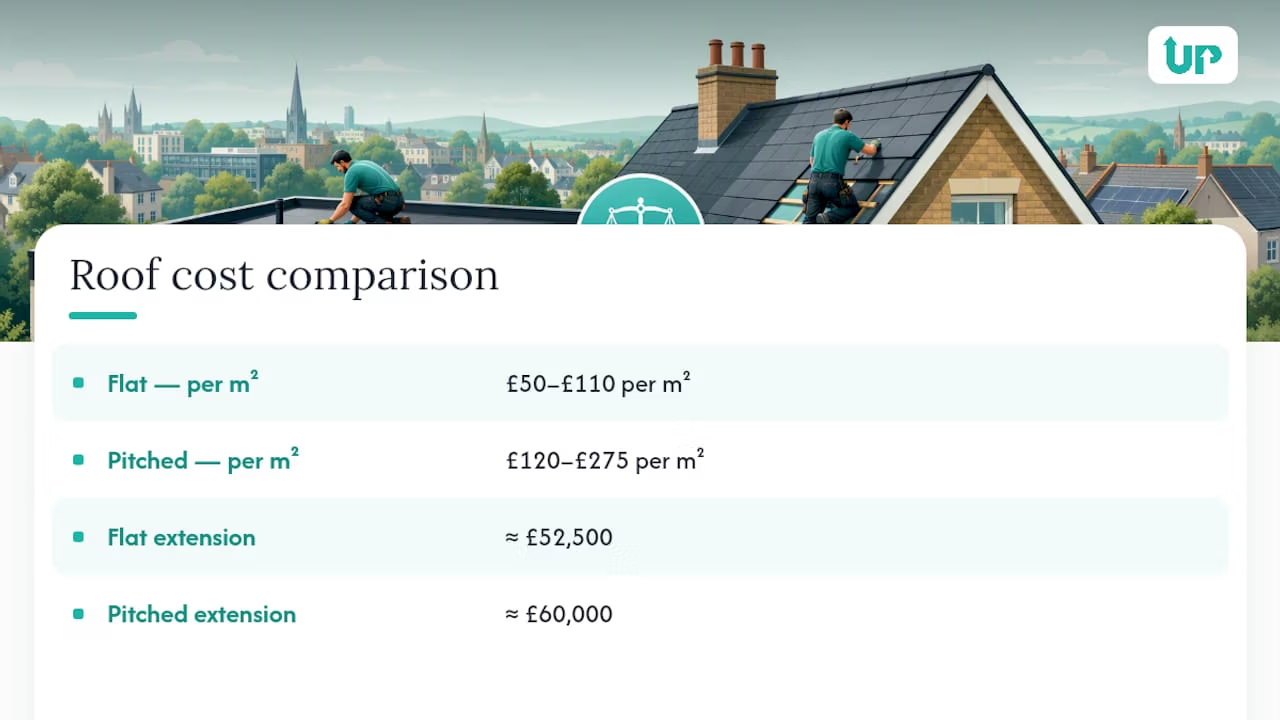
The material you specify moves both figures. EPDM and GRP have pushed flat roof lifespans well beyond old bitumen felt, with properly installed systems reaching several decades. Natural slate or good concrete tiles on a well-built pitched roof will typically outlast most flat systems by a wide margin, which changes the whole-life sum even when the upfront bill is higher.
One cost trap catches many homeowners out. Replace a significant area of roof covering and you can trigger Building Regulations requirements under Part L, meaning insulation upgrades get folded into the job whether you budgeted for them or not. Ask for this to be priced upfront, not discovered halfway through the build.
Maintenance and the failure modes that drain your budget
Neither roof type is maintenance-free, but the failure points differ sharply enough to change your inspection routine.
Flat roofs need:
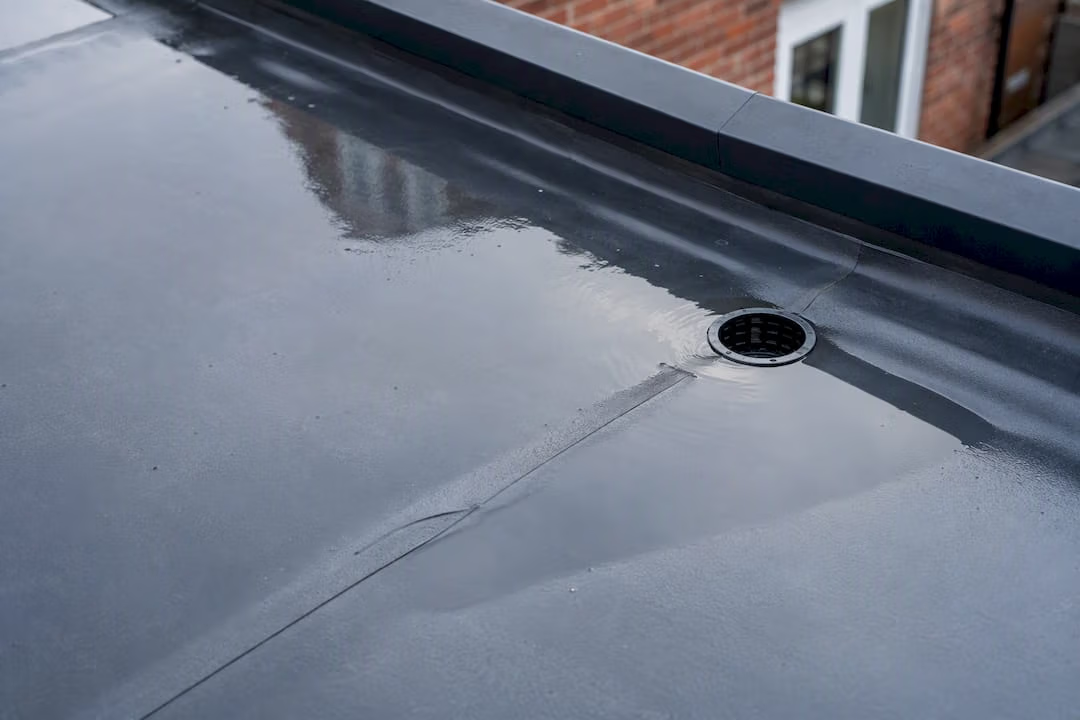
- Checks on outlets and gullies at least twice a year to prevent blocked drainage
- Visual inspection for ponding water after heavy rain, since standing water accelerates membrane failure
- A full membrane survey roughly every three to five years depending on material
Pitched roofs need:
- Periodic checks on flashing and valleys, the two spots where most leaks originate
- Guttering clearance and loft ventilation checks to prevent timber decay
- Tile or slate replacement as individual units crack or slip, usually cheaper than a full re-cover
Proactive drainage management on flat roofs and regular flashing checks on pitched roofs are what separate a roof that lasts from one that doesn’t. Access costs matter too: scaffolding for a pitched roof repair often costs more than the repair itself, while flat roofs are usually walkable without special equipment.
Pro Tip: If you spot a damp patch on a ceiling directly below a flat roof, don’t wait for the next dry spell to check it. Ponding water can sit invisibly for weeks and the membrane underneath may already be compromised by the time a stain appears indoors.
Common materials and how they perform in UK weather
Knowing the vocabulary on a quote sheet helps you spot corner-cutting before it costs you.
On flat roofs, EPDM (a synthetic rubber membrane) is now the most common specification because it’s durable and relatively easy to repair. GRP, known as fibreglass, forms a rigid, seamless surface popular on balconies and dormer tops. PVC single-ply membranes offer good UV resistance, and torch-on felt remains the budget option, though it has the shortest realistic lifespan of the four.
On pitched roofs, clay tiles are the traditional choice in much of southern England and carry strong resale appeal. Concrete tiles cost less and perform similarly, though they’re heavier. Natural slate looks better and lasts longest, but comes at a premium; synthetic slate closes some of that price gap while mimicking the appearance.
Whichever system you choose, insulation and ventilation detailing around the deck matter as much as the surface material. A poorly ventilated loft or a badly insulated flat roof deck will undermine even the best covering.
Planning permission and Building Regulations you shouldn’t skip
Most straightforward re-roofing work, where you’re keeping the same shape and materials, falls under permitted development and doesn’t need planning permission. Where things change is height, footprint or the roof covering’s weight.
Re-roofing a significant area will typically require Building Regulations sign-off covering structural stability, fire safety and thermal performance under Part L. If you’re raising a roof, converting a loft or extending outward, planning permission and permitted development rules both need checking before work starts, particularly in conservation areas or on flats with shared freeholds.
Swapping a lightweight flat roof for heavy clay tiles, or vice versa, can shift the load on the structure beneath it. Planning Portal guidance flags that a material change in covering weight may require structural engineering input before work proceeds. If you’re considering a loft conversion alongside a pitched roof upgrade, it’s worth reviewing London loft extension planning rules before committing to a design.
How to choose: a practical checklist before you get quotes
Work through these questions before you call a contractor, and you’ll ask sharper questions when the quotes land.
- Decide your time horizon: a flat roof suits a five to ten year hold, a pitched roof suits a permanent family home
- Check height restrictions and how a raised or altered roofline will look against neighbouring properties
- Ask every contractor about membrane fall, drainage outlet positions and warranty length in writing
- Request references and photos of completed jobs at least three years old, not just recent work
- Get a written scope, a fixed price and a realistic timeline before signing anything
A contractor who can’t explain how water leaves your flat roof, or how flashing details a valley on a pitched roof, hasn’t thought the job through properly. If you already have a leak, our guides to roof leak repair costs and roof leak detection explain what to expect.
Structural requirements and load-bearing differences
A pitched roof distributes weight through trusses or rafters onto load-bearing walls, spreading the load across the whole perimeter. This structure copes comfortably with heavier coverings like slate or concrete tile, provided the walls and foundations were designed for it. A flat roof instead relies on a deck, often timber joists or a concrete slab, carrying insulation and a membrane with a designed fall towards drainage outlets. That fall is structural, not cosmetic: get it wrong and water pools rather than drains.
Converting between the two isn’t a like-for-like swap. Adding a pitched roof over an existing flat structure, or raising a roofline for a loft conversion, adds significant weight and usually needs new or reinforced load-bearing walls. Equally, replacing a pitched roof with a flat one to create usable terrace space changes how loads transfer through the building, and older properties weren’t always built with that flexibility in mind.
This is precisely where Planning Portal guidance advises consulting a structural engineer before swapping covering materials of different weights. A structural survey costs far less than discovering mid-project that your walls can’t take the new load. Workmanship quality shows up here too: even the right structural design fails if the installer skips proper load calculations or cuts corners on fixings.
UpKeep UK’s perspective from London roofs
Across many residential and commercial properties in London, the pattern is consistent: roofs fail from poor installation and drainage design far more often than from material choice alone. On a recent full renovation in Clifton, the decision came down to matching the extension’s flat roof to the main house’s pitched structure, with drainage falls checked against the original design before a single membrane was laid. That groundwork, not the brand of membrane, is what kept the job watertight. Whichever roof type you’re weighing up, installation quality and drainage detailing remain the decisive factors.
Chris, Site Manager, UpKeep UK
How UpKeep UK can help with your roofing project
Deciding between a flat or pitched roof is only half the job. Getting a fixed price, a clear scope and a contractor who stands behind the drainage design is what protects your investment. UpKeep UK works with homeowners, landlords and property managers across London on roof surveys, repairs, re-roofing and insulation upgrades, plus planned maintenance that keeps outlets, gutters and flashing in good order long after installation day. We are TrustMark and Federation of Master Builders accredited, and every job is fully insured.

Before instructing any roofing work, ask for a written scope, a fixed price, proof of insurance and references from jobs completed at least a few years ago, not just recent installations. If you manage rental property, our landlord property maintenance service covers roof inspections alongside the rest of your compliance and repair schedule. You can view completed roofing and renovation work on our projects page, or book a survey on 020 3148 8884 for a written quote.
Sources
For primary guidance, see the Planning Portal’s Building Regulations advice on re-roofing.
FAQ
Is a flat roof cheaper than a pitched roof?
Yes, flat roofs usually cost less to build per square metre than pitched roofs, though pitched roofs often last longer, which narrows the whole-life cost gap.
How long does a flat roof last compared with a pitched roof?
Modern EPDM and GRP flat roofs can last several decades when properly installed, but a well-built pitched roof with quality slate or tiles typically outlasts most flat systems.
Do I need planning permission to change my roof type?
Straightforward re-covering usually falls under permitted development, but raising height, changing footprint or significantly altering the covering’s weight often requires planning permission and a structural check.
What causes most flat roof leaks?
Blocked outlets and standing water, known as ponding, cause the majority of flat roof failures, which is why regular drainage checks matter more than membrane brand.
Should I get a survey before choosing a roof type?
Yes, a professional roof survey identifies structural load capacity, drainage requirements and Building Regulations implications before you commit to a design.