Most UK landlords pay £60 to £100 for a gas safety check (CP12). Each extra gas appliance, such as a hob or gas fire, adds a little to the price, and the visit takes roughly 30 to 60 minutes. London sits at the upper end of the range, and last-minute checks cost more.
The check is a legal requirement every 12 months under the Gas Safety (Installation and Use) Regulations 1998, so the real cost to avoid is a lapsed certificate: fines, invalid insurance and, at worst, a dangerous appliance left in use. UpKeep UK’s Gas Safe registered engineers carry out landlord gas safety checks across London at a fixed price, and can bundle them with EICRs and other compliance visits. This guide covers what drives the price, what the check includes, your legal duties and how to keep costs down. For the full compliance picture, see our gas safety certificate guide for landlords.
Table of Contents
- How much does a gas safety check cost, and what changes the price?
- What a gas safety check covers and how long it takes
- Your legal duties as a landlord: timing, copies and record keeping
- Finding and verifying a genuine Gas Safe registered engineer
- Practical ways to manage your gas safety check costs
- How UpKeep UK supports landlords through the compliance process
- A landlord’s habit worth building now
- Get a fixed-price gas safety check quote from UpKeep UK
- Sources
How much does a gas safety check cost, and what changes the price?
The range holds for most single-let homes, but it isn’t fixed. Where a quote lands comes down to a handful of predictable variables rather than luck.
Number of appliances is the biggest swing factor. A flat with just a combi boiler sits at the cheaper end. Add a gas hob, a gas fire, and a gas water heater, and you’re looking at three or four extra checks on top of the boiler, and each one adds to the price.
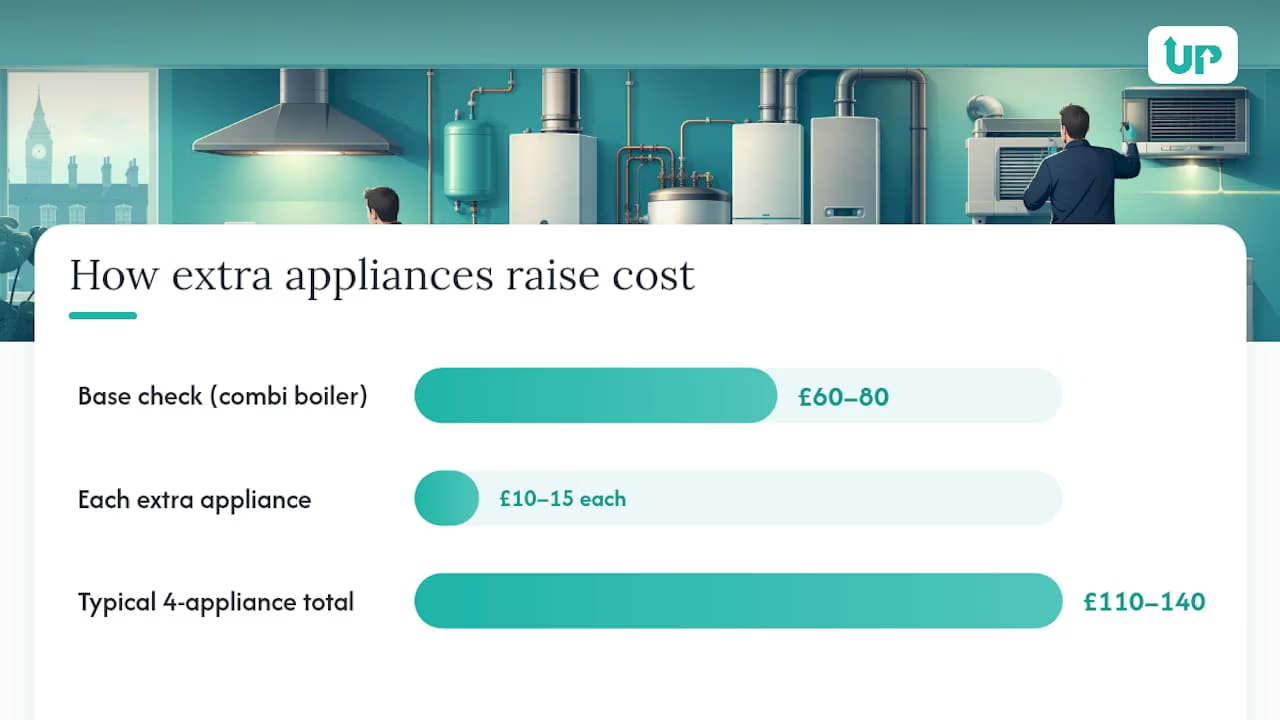
Location matters more than most landlords expect. Engineers working in central London and the South East generally charge more than those in the North East or parts of Wales, reflecting higher call-out costs and business overheads. If you manage properties across several regions, don’t assume the quote from one will match another.
Timing changes the price too. A scheduled check booked in advance, ideally within HSE’s 10 to 12 month flexible window, costs less than an emergency call-out triggered by a tenant complaint or a lapsed certificate. Emergency visits often carry a premium call-out fee on top of the standard check.
Remedial work is the wildcard. If the engineer flags a faulty flue or an unsafe appliance, that’s billed separately from the check itself, sometimes running into hundreds of pounds depending on the fault.
A few example scenarios help put this in context:
- Single flat, one boiler, scheduled visit: the lower end of the range
- Terraced house, boiler plus gas hob: around the middle of the range
- HMO with boiler, hob and communal gas fire: above the range, plus VAT if the engineer’s firm is VAT registered
- Emergency check after certificate lapse: the upper end or above, because of the call-out premium
Gas Safe Register itself confirms that engineers set their own charges, which is precisely why getting more than one quote pays off. Landlords managing multiple properties in London, where call-out costs bite hardest, benefit most from comparing at least three engineers before committing.
What a gas safety check covers and how long it takes
A gas safety check, universally shorthanded to CP12 even though HSE prefers the term “gas safety record”, walks through a fixed set of statutory checks rather than a general inspection. The engineer isn’t eyeballing your boiler and signing a form. They’re working through a defined list.
The core checks include:
- Appliance condition: verifying each gas appliance operates safely and hasn’t developed faults since the last visit
- Flue and ventilation: confirming combustion gases vent correctly and the property has adequate ventilation for the appliance type
- Safety devices: testing that cut-off mechanisms and other safety features function as intended
- Gas pressure and burner performance: checking the appliance runs within the manufacturer’s safe parameters
- Pipework condition: a visual check for corrosion, damage, or unsafe installation
Why it matters: poorly maintained appliances put tenants at risk, and the annual check exists to pick up problems early, before they turn into urgent repairs or worse. poorly maintained appliances put tenants at risk. Fire incident data tracked on GOV.UK: Fire incidents involving gas explosions 2015 16 to 2021 22 underlines why these checks exist in the first place. Faulty gas appliances remain a documented cause of domestic fires and explosions, which is exactly the risk a CP12 is designed to catch before it becomes a headline.
Time-wise, expect 30 to 60 minutes for a single boiler, with each additional appliance adding roughly 10 to 20 minutes. A four-appliance HMO visit can run past 90 minutes.
The resulting gas safety record must name the engineer, their Gas Safe registration number, the appliances checked, and the outcome of each check. Treat it as an audit trail, not a trophy. If it doesn’t identify the engineer by registration number, question it.
Your legal duties as a landlord: timing, copies and record keeping
Regulation 36 of the Gas Safety (Installation and Use) Regulations 1998 sets the statutory floor every landlord operates under. It requires checks at intervals of no more than 12 months, carried out by a Gas Safe registered engineer, with proper record keeping throughout the tenancy.
That’s not a summary of good practice. It’s the legal minimum, confirmed by GOV.UK’s landlord safety guidance.
Three obligations sit inside that duty:
- Annual checks at intervals never exceeding 12 months from the previous check date
- Tenant copies within 28 days of the check for existing tenants, and before move-in for new tenants
- Two-year retention of every gas safety record, even after a tenancy ends
The 2018 amendment gave landlords useful breathing room here. Rather than forcing a check on the exact anniversary date, HSE’s INDG285 guidance confirms a 10 to 12 month flexible window, letting you book the renewal early without losing paid coverage or resetting your annual cycle awkwardly. Book outside that window and too early, though, and you risk shortening the effective period you’ve paid for, since the new check date becomes your fresh anniversary.
Don’t treat the CP12 itself as the finish line. HSE is explicit that it’s a record, not a standalone certificate of safety in perpetuity, and it works best supplemented with remedial invoices and follow-up paperwork forming a complete history for each property.
Finding and verifying a genuine Gas Safe registered engineer
Anyone can claim to be a gas engineer. Only a Gas Safe registered one can legally work on your appliances, and verifying that status takes minutes, not hours.
- Check the Gas Safe Register directly, either online or by phone, using the engineer’s name or licence number before booking anything.
- Ask to see their ID card on arrival and check the security hologram and photo match the person in front of you.
- Confirm their qualification categories cover the specific appliance types in your property. A gas fire specialist isn’t automatically qualified on commercial catering equipment.
- Request an itemised quote covering the base check, per-appliance fees, and how any remedial work would be priced if something fails.
- Ask how the certificate is delivered and whether a digital copy is provided immediately or posted afterwards.
HSE’s own guidance backs this up directly: verify credentials via the Gas Safe Register and check the physical card before allowing any work to start. Skipping this step isn’t just a compliance risk. An unregistered worker invalidates your insurance position and leaves you exposed if something later goes wrong.
Pro Tip: Photograph the engineer’s ID card and save it alongside the gas safety record. If a dispute ever arises over who did the work, you’ll have proof in seconds rather than chasing paperwork weeks later.
Practical ways to manage your gas safety check costs
Compliance costs money, but a few habits keep the spend predictable rather than reactive.
- Book inside the 10 to 12 month window rather than right on the deadline, avoiding both the risk of lapsing and the trap of losing paid-for time by renewing too early.
- Bundle checks across a portfolio. If you manage several properties in the same postcode, ask engineers for a multi-property rate. Travel costs drop per visit when they’re not driving across London for a single boiler.
- Get at least three quotes. Gas Safe Register itself encourages this, since engineers set their own prices and the spread between quotes can be significant.
- Keep appliances maintained between checks. A boiler serviced annually is far less likely to throw up a remedial fault that turns a routine check into a repair bill. Our guide to plumbing maintenance for landlords covers the basics worth staying on top of.
Pro Tip: Ask your engineer to flag any appliance nearing the end of its expected lifespan during the visit, even if it passes this time. Replacing it on your own timeline costs less than an emergency swap after a failed check.
Some vulnerable tenants may qualify for free checks through a supplier’s Priority Service Register, but as the landlord, the legal duty and the cost both remain yours regardless of any scheme a tenant is separately eligible for, per HSE’s INDG238 guidance.
How UpKeep UK supports landlords through the compliance process
A gas safety check rarely happens in isolation. It is one piece of a wider maintenance calendar that includes fire safety, water hygiene and electrical compliance, and juggling separate contractors for each creates gaps where things fall through.
UpKeep UK works with landlords and property managers across London to close those gaps:
- Fixed pricing on compliance visits, so quotes don’t shift once the engineer is on-site
- Insured, Gas Safe registered engineers carrying out the statutory checks
- Bundled visits where gas, fire, and water hygiene compliance can be scheduled together to cut repeat call-outs
- Written remedial invoices issued alongside every CP12, building the audit trail HSE recommends rather than leaving it to guesswork later
Ask for an itemised quote before every visit, and insist on a written record for anything flagged as remedial work. It’s the difference between a paper trail that holds up under scrutiny and one that doesn’t.
A landlord’s habit worth building now
The single biggest compliance failure isn’t a missed check. It’s a missed renewal date because nobody was tracking it. One calendar, one digital folder per property, and every CP12 plus remedial invoice filed the day it arrives. That’s the whole system.
Booking renewals inside the flexible window, rather than scrambling at the deadline, keeps your anniversary date intact and your paperwork clean. Let a check lapse and you’re not just risking a fine. You’re risking your insurer refusing a claim if something goes wrong with an appliance nobody’s checked in over a year.
Eugen, Operations Manager, UpKeep UK
Get a fixed-price gas safety check quote from UpKeep UK
UpKeep UK is the practical alternative to juggling separate contractors for every compliance task. Rather than booking a gas engineer here, an electrician there and hoping the paperwork lines up, you get one team handling the check, any remedial follow-up and the written record, all on fixed pricing agreed before the engineer arrives. We are Gas Safe registered and also NAPIT, TrustMark, FMB, SafeContractor and SSIP accredited.

If you manage rental properties across London and want gas safety checks bundled with your wider maintenance schedule, our landlord property maintenance service covers what is included and how visits are scheduled. For portfolios that also carry fire safety obligations, our fire safety guide for London landlords is worth reading alongside it. For an itemised quote, call 020 3148 8884 or contact us with your property address, appliance count and current certificate expiry date, and you will get a fixed price back before anyone books a visit.
This article is general information, not a substitute for advice from a qualified lawyer. Consult a qualified legal professional about your own circumstances before acting on anything here.
Sources
- The Gas Safety (Installation and Use) Regulations 1998: regulation 36
- INDG285 Landlords: gas safety guidance, HSE