Most roof leak repairs in the UK cost between £150 and £2,500, from under £200 for a simple tile fix to more than £1,500 for extensive flashing or valley work. Access changes almost every quote, because scaffolding adds a significant cost before a single tile is touched. Get a roofer to inspect before agreeing a price, because a small job seen from the ground can turn out bigger once someone is on the roof.
Table of Contents
- What does a roof leak repair cost in the UK right now?
- How much does each type of roof repair actually cost?
- Does the roofing material change the repair cost?
- What actually drives the cost up on your quote?
- What happens between inspection and finished repair?
- Will insurance or a grant cover the repair cost?
- How do you get a quote you can actually trust?
- When does it make more sense to replace than repair?
- What UpKeep UK sees on London roofs, and why it changes the quote
- Why most cost guides get the “average price” question slightly wrong
- Book a professional roof inspection with UpKeep UK
- Where these figures come from
- Sources
- FAQ
What does a roof leak repair cost in the UK right now?
For quick reference, most jobs fall into three brackets, and where yours lands depends heavily on what the roofer finds once they’re up there.
- Minor repairs (a handful of slipped or cracked tiles, a small flashing patch): typically £150 to £500, often completed in half a day.
- Medium repairs (patching a whole slope, renewing flashing around a chimney, fixing a valley gutter): usually £400 to £1,500, sometimes stretching to £2,500 where multiple defects are found.
- Emergency make-safe visits (tarping a hole, securing loose tiles after a storm): commonly £150 to £400 for a same-day temporary fix, with permanent repair quoted separately.
- Larger or structural work (partial re-roof): typically £1,500 to £4,000, and a full re-roof on a typical three-bedroom house can run £5,000 and upwards.
Roof repairs are often priced per square metre, with rates falling once you move beyond a couple of square metres of damage. That per-metre figure is useful shorthand, but it rarely tells the whole story on its own.
Why averages mislead: two seemingly similar jobs can cost very differently depending on whether scaffolding is needed and whether the roofer finds rot in the timber underneath.
All the figures above exclude VAT unless a roofer states otherwise, and most exclude scaffold hire unless it’s explicitly listed. Always ask whether a quote is VAT-inclusive and whether access costs are already factored in. If a quote for London or the South East looks higher than a figure you’ve seen quoted for the Midlands or the North, that’s usually a genuine regional labour premium rather than padding.
How much does each type of roof repair actually cost?
Pricing varies enormously by job type, partly because of materials but mostly because of how much of the roof structure needs disturbing to reach the problem. Here’s a realistic breakdown for common roof repairs seen most often across London properties.
-
Tile and slate replacement. Swapping a handful of cracked or slipped tiles typically costs £150 to £350, taking two to four hours including access. Where the roofer finds the battens underneath have rotted, which happens more often on roofs over 25 years old, the job can climb to £500 or more once those battens are replaced.
-
Flashing repair or renewal. Flashing around chimneys, dormers and roof-to-wall junctions is one of the most common leak sources. A localised repair runs £200 to £450; a full renewal around a chimney stack, which often means re-pointing the mortar joint too, tends to sit at £350 to £700. Flashing failures are notorious for looking minor from the ground and turning out to be extensive once a roofer gets close.
-
Ridge tile repair. Loose or missing ridge tiles usually get re-bedded in fresh mortar for £150 to £400, depending on how much of the ridge line is affected and whether dry-fix ridge systems are being retrofitted instead of traditional mortar.
-
Valley repair. Valleys, where two roof slopes meet, concentrate rainwater and take the most punishment on any pitched roof. Repairing a valley gutter typically costs £300 to £800, and it’s one of the jobs most likely to reveal hidden decay in the underlay because water has often been tracking sideways for months before a leak becomes visible indoors.
-
Rooflight and skylight resealing. Reseating or resealing a leaking rooflight costs £150 to £400 for a single unit; if the frame itself has failed and needs replacing, budget £400 to £900.
-
Flat roof patch repair. A localised patch on felt, GRP or EPDM flat roofing runs £200 to £600. Where the membrane has failed more broadly rather than in one spot, a full re-cover of a small flat roof section can reach £1,000 to £2,500.
-
Emergency make-safe. Same-day temporary work, tarping over a hole or securing storm-damaged tiles, typically costs £150 to £400, rising for out-of-hours or bank-holiday call-outs. This is separate from, and doesn’t replace, the permanent fix that follows.
The pattern across all seven is consistent: jobs that stay on the surface (a few tiles, a resealed rooflight) stay cheap. Jobs that involve water tracking through layers, valleys, flashings, flat roof membranes, are the ones where the price rises once the roofer opens things up and finds saturated timber or perished felt underneath.
Does the roofing material change the repair cost?
Material matters more than most homeowners expect, both for the tiles themselves and for how much skilled labour a repair demands. As a rough per-square-metre guide for repair or partial replacement work:
- Concrete tiles: the most affordable and widely available option, so matching repairs is rarely a problem.
- Clay tiles: usually dearer than concrete, with older or discontinued profiles sometimes needing a specialist supplier to match.
- Natural slate: the dearest to match, and this is where costs spike hardest. Reclaimed slate to match a Victorian or Edwardian roof can cost considerably more than new slate, and sourcing a decent match sometimes adds weeks to a project timeline.
- Bitumen and felt flat roofing: among the cheapest to repair but also the shortest-lived, so patch repairs are common.
- EPDM rubber roofing: more durable than felt with fewer repeat call-outs over its lifespan.
- GRP (fibreglass) flat roofing: harder to patch invisibly than EPDM, so larger sections sometimes get recoated rather than spot-repaired.
- Polycarbonate rooflights and panels: cost depends on thickness and UV rating.
The real cost driver with older properties isn’t the tile itself, it’s finding a match. A three-bedroom terrace with 1930s clay pantiles can hit a wall where the exact profile is no longer manufactured, forcing either a reclaimed-tile search or a compromise repair using a close-but-not-identical tile on a less visible slope. Natural slate roofs carry this risk most acutely, since colour and thickness vary by quarry and even by the specific batch originally laid.
What actually drives the cost up on your quote?
Two roofs with an identical leak can generate wildly different invoices, and the difference almost always comes down to access, complexity, and what’s hiding under the surface rather than the visible damage itself.
- Scaffolding. Where a roof can’t be safely reached by ladder or tower, scaffold adds to the cost depending on roof pitch and property size. This is frequently the single biggest line item on a repair invoice for anything beyond a ground-floor extension roof.
- Hidden damage. Rotten battens, saturated felt or perished underlay found once tiles come off are the most common reason a quoted price grows mid-job, along with access.
- Roof complexity. Dormers, multiple valleys, chimneys and steep pitches all add labour time. A roof with three chimney stacks and two valleys takes considerably longer to repair than a simple gable roof of the same size.
- Skip hire and waste disposal. A small skip covers tile and felt waste on most repairs; larger jobs may need a bigger skip or a licensed waste carrier.
- Urgency and timing. Out-of-hours, weekend or bank-holiday emergency call-outs carry a premium over a standard weekday booking, and demand spikes noticeably after major storms.
Pro Tip: Ask your roofer directly whether scaffold and skip hire are included in the headline figure or billed separately. A quote that looks much cheaper than a competitor’s is often simply excluding access costs the other roofer has already factored in.
What happens between inspection and finished repair?
Getting from “there’s a leak” to “it’s fixed” usually runs through three distinct stages, and skipping the first one is the most common reason budgets go wrong.
- Inspection. A competent roofer walks the roof, checks tiles and flashing from close up, and, critically, lifts a sample of tiles to check the condition of the underlay and battens beneath. This is the step that reveals whether you’re looking at a quick tile swap or a batten replacement, and it’s why a fixed quote given from a photo or a ground-level look is worth treating with caution.
- Emergency make-safe (if needed). Where a leak is active and causing internal damage, a temporary fix, tarping, sealing, or securing loose material, typically happens within hours to a day of the call-out. This buys time for a proper repair without further water ingress.
- Permanent repair. Once the inspection findings are known, a written quote for the permanent fix follows, usually scheduled within a few days to two weeks depending on materials availability and weather. Straightforward repairs are completed in a single day; anything involving scaffold, multiple trades, or material sourcing can run to a week.
It’s genuinely common for the quote to shift between stage one and stage three. A roofer who tells you the price “might change once we’re up there” isn’t hedging, they’re being honest about how roof damage actually behaves. Leaks travel sideways along battens and rafters before they show up as a stain on a ceiling, so the visible entry point rarely marks the full extent of the problem.
Will insurance or a grant cover the repair cost?
Whether you’re covered often comes down to a single distinction: was the damage sudden, or has it built up gradually?
Storm damage, a slipped tile after high winds, a branch through the felt, is generally the kind of event home insurance is designed to cover, subject to your policy excess. Gradual wear and tear, tiles that have simply degraded over 30 years or flashing that’s slowly perished, is almost always excluded, since insurers treat that as a maintenance responsibility rather than an insurable event.
To support a claim, photograph the damage before any temporary repair, keep the invoice from any emergency make-safe work, and note the date of the storm or incident that caused it. Insurers typically want evidence the damage was sudden rather than the tail end of a longer decline.
- Check your policy excess before claiming. On a small repair, the excess may make a claim not worth pursuing.
- For structural work involving planning considerations or listed buildings, check building regulations guidance before starting.
- Grants for roof repair are limited in the UK. Broader home energy schemes such as ECO occasionally cover insulation-related roof work, but rarely cover leak repair itself, so check current eligibility on gov.uk rather than assuming coverage.
How do you get a quote you can actually trust?
A comparable quote spells out exactly what’s included, and the gaps are usually where surprise costs hide later.
Before accepting any quote, check it states: the specific repair being carried out, materials and their grade or type, whether scaffold or tower access is included, whether waste disposal is included, whether VAT is added or already included, and what guarantee or workmanship warranty applies. Which? recommends getting at least three written quotes and checking each one covers the same scope, since a “cheap” quote missing scaffold or waste disposal isn’t actually cheaper once those get added.
Red flags worth taking seriously: a roofer who won’t put a quote in writing, one who insists on full payment upfront before any work starts, or one who quotes a firm price without ever inspecting the roof directly.
- Book repairs outside peak storm season (autumn/winter) where the leak isn’t urgent; demand and prices both ease in spring and summer.
- If you can safely arrange your own skip or clear access yourself, ask whether that trims the quote.
Pro Tip: If a roofer quotes without climbing onto the roof, ask how they can be confident about scope. A phone quote for anything beyond a single obvious tile is a guess, not an estimate.
When does it make more sense to replace than repair?
Repeated repairs on the same roof are a warning sign, not bad luck. If you’ve paid for three or more separate leak fixes on the same roof within a couple of years, or if an inspection reveals the felt and battens are failing generally rather than in one spot, further patching is usually false economy.
A useful rule of thumb: once cumulative repair spending starts approaching a meaningful fraction of a full re-roof cost, replacement typically becomes the better financial call, because you stop paying repeatedly to access the same roof and instead pay once for a lasting fix.
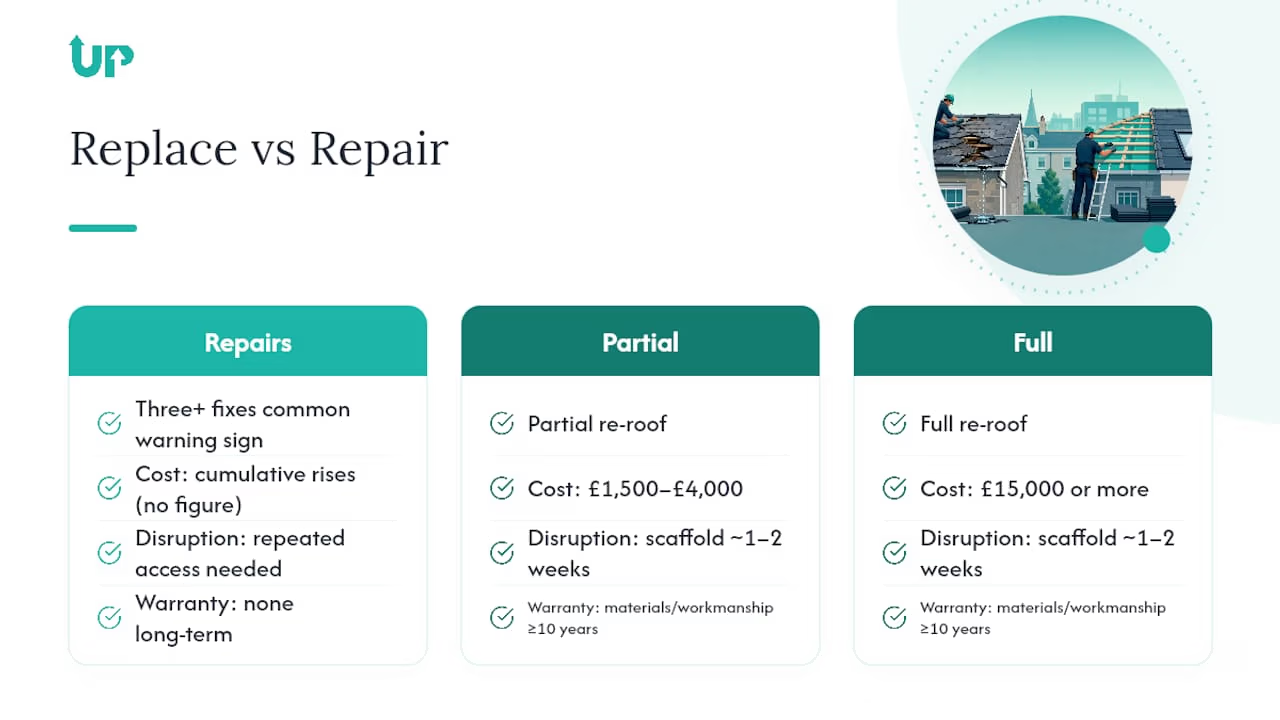
Disruption matters here too. A full re-roof means scaffold up for one to two weeks and no realistic way to use the property normally, while a new roof typically carries a materials and workmanship warranty of ten years or more, something a fifth repair on a 40-year-old roof simply can’t offer.
What UpKeep UK sees on London roofs, and why it changes the quote
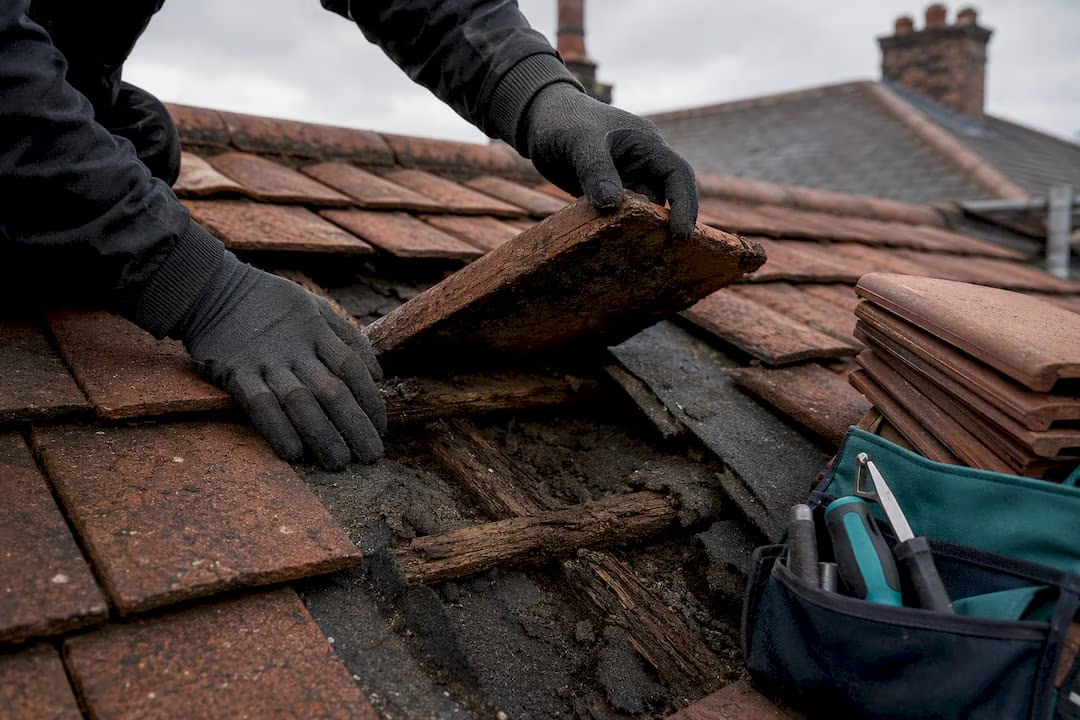
Across residential and commercial roofs in London, the most common surprise isn’t the leak itself, it’s what’s underneath it. Older terraces and conversions frequently reveal perished felt underlay or rotten battens the moment tiles come off, even when the visible damage looked minor from the street. That’s precisely why UpKeep UK’s roofers inspect before finalising a fixed price, rather than quoting from a description or a photo over the phone.
For landlords and managing agents, the practical advantage is a written quote that reflects what’s actually happening on the roof, with clear scaffold, waste, and material costs broken out separately. Emergency call-outs are handled with a same-day make-safe where the damage demands it, followed by a proper fixed-price quote for the permanent repair once the inspection is complete, so there’s never a guessing game between “it’s fixed” and “here’s an invoice for twice what we discussed.”
Why most cost guides get the “average price” question slightly wrong
Every roof repair guide, this one included, leads with a headline range because readers need somewhere to start budgeting. The honest problem is that a single average figure flatters simple jobs and understates the ones that matter most to your bottom line.
The conventional advice tells homeowners to “get three quotes and compare,” which is sound but incomplete. The more useful discipline is asking each roofer the same specific question: what did you find when you inspected, and how does that change the price from the first estimate? A quote that never moves after inspection is either an unusually lucky roof or a roofer who hasn’t actually checked what’s under the tiles.
If there’s one priority worth acting on before any other, it’s this: don’t chase the cheapest headline number, chase the roofer willing to inspect properly before committing to a figure. That single step protects you from almost every cost surprise this article describes, far more effectively than shopping on price alone.
Drahim Hasula, Founder & CEO, UpKeep UK
Book a professional roof inspection with UpKeep UK
Professional property maintenance companies can offer a practical alternative to chasing quotes from unfamiliar tradespeople every time a leak appears. Such companies typically send a roofer to inspect first, then provide a written, fixed-price quote covering materials, access and waste disposal clearly broken out, so there are no surprise additions once work starts.

Booking works the way it should for anyone managing multiple properties: report the leak, get a same-day or next-day inspection, and receive a fixed price before any permanent work begins. For urgent leaks causing active water ingress, UpKeep UK’s emergency repair response service can arrange a make-safe visit quickly, followed by the permanent fix on a schedule that suits your tenants or your business. If you’re managing rental properties across London and want a maintenance partner rather than a one-off call-out, request an inspection through UpKeep UK’s property maintenance for landlords service and get a proper quote before your next leak becomes a bigger bill.
Where these figures come from
These cost ranges are drawn from established UK trade pricing sources, cross-checked against each other for consistency.
- Gov for building-regulation rules where structural or major roof work is involved.
- Which? for independent trade pricing benchmarks and consumer guidance.
Sources
FAQ
Does home insurance cover roof leaks in the UK?
Home insurance usually covers roof leaks caused by sudden events like storms or falling branches, subject to your excess, but it typically excludes leaks caused by gradual wear and tear or lack of maintenance.
Can I get a grant to repair my roof in the UK?
Direct grants for roof leak repair are limited; broader schemes like ECO mainly support insulation-related roof work rather than leak repair, so check current eligibility on gov.uk before assuming cover.
How can I tell if a roofer is dodgy?
Be wary of anyone who won’t put a quote in writing, demands full payment upfront, or quotes a fixed price without ever inspecting the roof; Which? recommends getting at least three written quotes that each clearly state scaffold, materials and waste disposal.
How much does it cost to reroof a three-bedroom house?
A full re-roof on an average-sized three-bedroom house typically starts around £5,000 and can reach £15,000 or more depending on roof size and the material chosen, with natural slate at the higher end.
What’s the average cost of a roof leak repair in the UK?
Most roof leak repairs cost between £150 and £2,500; the final figure depends heavily on access requirements and whether hidden damage is found once the roofer starts work.