TL;DR:
- Proper assessment and a whole-house, fabric-first approach are essential for effective sustainable renovations.
- Incremental upgrades and expert planning offer better long-term savings than one-off, large-scale fixes.
- Technologies like insulation, smart controls, and renewables should be layered after securing the building fabric.
The sustainable renovations that add most value improve the building fabric first, with insulation, airtightness and good ventilation, then add efficient heating such as a heat pump and renewables such as solar PV. This guide helps UK landlords and owners plan energy-efficient renovations, including for older and listed buildings, balancing upfront costs, long-term returns and regulations.
Key Takeaways
| Point | Details |
|---|---|
| Assessment comes first | Starting with a holistic property assessment is crucial for planning effective, compliant upgrades. |
| Fabric-first strategy | Prioritise insulation and airtightness before moving on to heating or renewable technologies for best results. |
| Incremental, staged upgrades win | Staged approaches, aligned with maintenance cycles, provide better ROI and compliance than piecemeal or rushed fixes. |
| Overcome unique property barriers | Listed and older properties need specialist strategies, but efficiency gains are possible for nearly all homes. |
Assessing your property: The foundations of sustainable renovation
Before spending a pound on insulation or a new heating system, a thorough energy assessment is essential. This is not a box-ticking exercise. It is the foundation on which every subsequent decision rests. Skipping this stage is one of the most common and costly mistakes property owners make, often resulting in upgrades that underperform or, worse, cause moisture and damp problems.
The UK’s PAS 2035 standard sets out a clear framework. It requires a qualified Retrofit Assessor to evaluate the property, a Retrofit Coordinator to manage the project, and a Retrofit Designer to specify the works. This structured, assessment-led approach prevents the kind of piecemeal mistakes that plague poorly planned renovations and ensures the full house is treated as an interconnected system.
The role of project managers in renovations is critical here. Having a single point of accountability across trades reduces errors, keeps timelines on track, and ensures compliance with the relevant standards.
Here are the key steps to follow before committing to any upgrade:
- Obtain a current Energy Performance Certificate (EPC) to establish your baseline rating
- Commission a full retrofit assessment from a PAS 2035-accredited assessor
- Review your renovation checklist to map out works in the correct sequence
- Engage a Retrofit Coordinator if multiple measures are being installed
- Use a whole-house approach, treating insulation, ventilation, and heating as a single system
‘Start with a holistic view: sequence matters. Installing a heat pump before insulating the fabric is like filling a leaking bucket.’
Referring to a thorough property refurbishment guide at this stage will save you significant time and money further down the line.
Fabric-first upgrades: Insulation, airtightness and ventilation
Having established that assessment is vital, we now tackle the physical changes that make the biggest difference first. The term ‘fabric-first’ refers to improving the building’s structural envelope before investing in new technology. This means insulating roofs, walls, and floors, sealing draught points, and ensuring adequate ventilation.
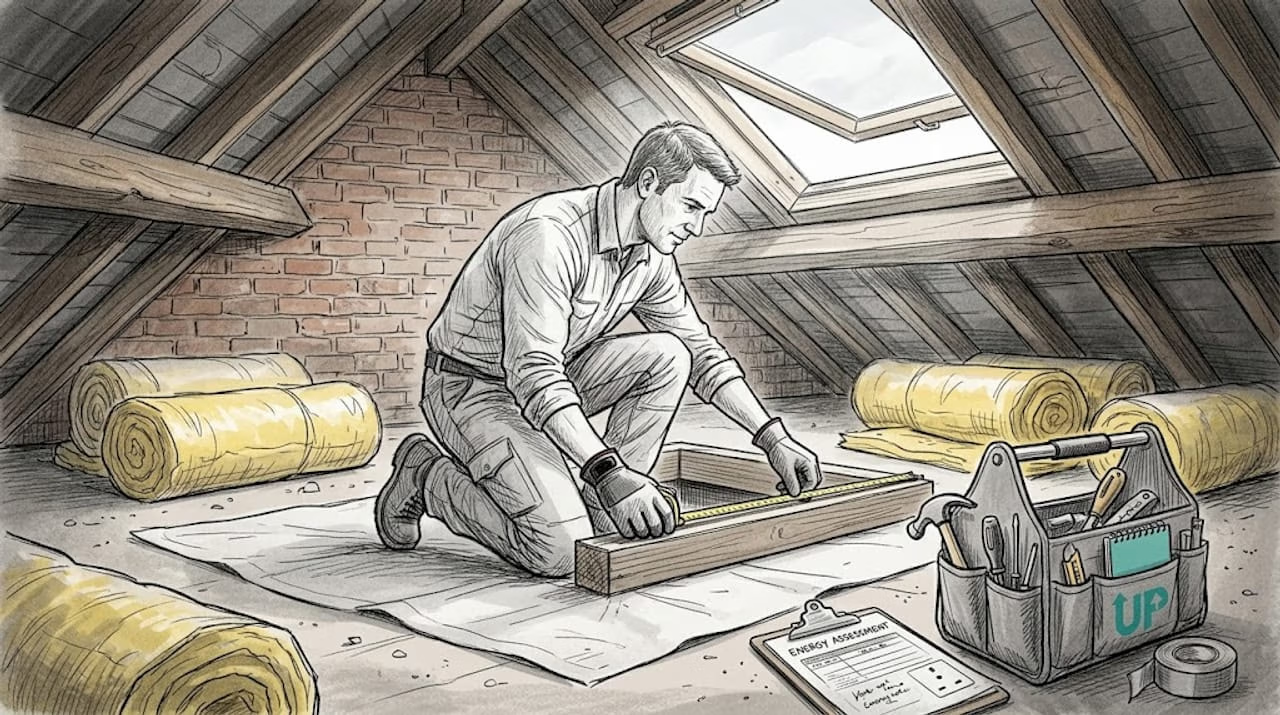
The logic is straightforward. A well-insulated, airtight property needs far less energy to heat, which means any heating system you install works more efficiently and costs less to run. Loft and cavity wall insulation cuts energy use by 15 to 25% and typically pays back within 3 to 8 years. That is a compelling return by any measure.
The key upgrades, in recommended sequence, are:
- Loft insulation: one of the highest-value upgrades, straightforward to install in most properties
- Cavity or solid wall insulation: critical for heat retention, though solid wall requires more specialist work
- Floor insulation, particularly important in older properties with suspended timber floors
- Draught-proofing: sealing gaps around windows, doors, and skirting boards
- Mechanical ventilation with heat recovery (MVHR): essential in airtight properties to prevent condensation
The principle of ‘build tight, ventilate right’ is non-negotiable. Sealing a property without addressing ventilation creates damp and mould, which causes structural damage and poses health risks for tenants.
For ongoing guidance on maintaining these improvements over time, our resource on sustainable property upkeep provides practical advice tailored to UK conditions. You can also explore inspiring refurbishment projects to see how other property owners have approached these challenges.
Pro Tip: Combining multiple fabric measures in a single project often unlocks additional government grants and makes you eligible for broader compliance pathways, reducing the overall cost per measure significantly.
Smart controls and low-carbon technology: Heating, lighting, renewables
With the building’s fabric secure, high-impact technology can now be added for further efficiency and comfort. This is where many landlords want to start, but sequencing matters enormously. Technology layered onto a poorly insulated property rarely delivers the promised savings.
LED lighting cuts electricity use by up to 80% compared to traditional bulbs and is one of the simplest quick wins available. It requires no structural work and pays back rapidly. Smart thermostats and thermostatic radiator valves (TRVs) add control and reduce waste, particularly in multi-room properties where tenants tend to overheat unused spaces.
| Technology | Typical saving | Best suited to | Landlord consideration |
|---|---|---|---|
| LED lighting | Up to 80% on lighting costs | All property types | Minimal disruption, low cost |
| Smart thermostat | 10-15% on heating bills | Modern and retrofit properties | Tenant engagement required |
| TRVs | 5-10% per room controlled | Wet radiator systems | Simple retrofit, low cost |
| Air source heat pump | 30-50% vs gas boiler | Well-insulated properties only | Higher upfront cost |
| Solar PV panels | 20-40% on electricity bills | Properties with suitable roofs | Planning permission may apply |
For landlords considering renewables, the PAS 2035 methodology makes clear that heat pumps should only be installed after insulation works are complete. Installing a heat pump in a poorly insulated property will result in higher, not lower, running costs. Solar PV, by contrast, can be added at almost any stage and complements a wide range of heating systems.
For more detail on technology choices relevant to your portfolio, our guide on eco-friendly property upgrades covers current options with practical landlord-focused advice.
Pro Tip: Use smart meters (known as SMETERs) to track real energy consumption before and after each upgrade. EPC ratings estimate performance; smart meters measure it. The difference is often illuminating and helps you prioritise future investment.
Navigating challenges: Older, listed and rental properties
Not every property faces the same set of options. Let’s examine the unique obstacles to sustainable upgrades in older and rented homes, because the standard advice does not always apply.
56% of private rented homes are energy inefficient, yet many landlords remain reluctant to install solar panels despite relatively high uptake of insulation. Cost, complexity, and the ‘split incentive’ problem, where landlords pay for upgrades but tenants benefit from lower bills, all contribute to inaction.
Listed and historic properties bring additional complications. Certain interventions, such as external wall insulation or double glazing, may require listed building consent or be outright prohibited. Specialist skills are needed to balance preservation requirements with efficiency goals.
Common barriers and practical solutions include:
- Solid walls with no cavity: use internal wall insulation where external changes are restricted
- Listed building restrictions: engage a conservation officer early and consider secondary glazing
- Damp in older properties: address the root cause before insulating, or you will trap moisture
- Tenant disruption: phase works during void periods to minimise impact and cost
- Split incentive problem: use Green Deal-style finance or factor upgrade costs into rent reviews
| Property type | Most feasible measures | Typical barriers |
|---|---|---|
| Modern (post-1980s) | Heat pumps, solar PV, MVHR | Cost, planning |
| Older (pre-1940s) | Loft insulation, draught-proofing, secondary glazing | Solid walls, damp, planning restrictions |
| Listed or heritage | Secondary glazing, internal insulation, LED lighting | Consent required, specialist costs |
| Private rental | Loft insulation, smart controls, LED lighting | Split incentive, tenant disruption |
For fabric retrofit in older homes, specialist assessment is non-negotiable. The techniques differ significantly from modern construction.
‘Professional landlords plan strategically; others react to regulations. The difference shows in both compliance and returns.’
Timely action is also a financial decision. Our article on timely refurbishments and practical tips to boost value offer concrete direction for landlords weighing up when and how to act.
Why incremental steps beat one-off fixes for sustainable renovations
There is a common belief among property owners that sustainable renovation means a single, expensive overhaul. In our experience, this thinking leads to delay, overspending, and disappointment. The evidence points clearly in the other direction.
Incremental fabric upgrades are often far more realistic for most property owners than attempting a deep retrofit all at once. Budget constraints, tenant schedules, and planning requirements all favour a staged approach. Doing one measure well and building on it delivers better outcomes than rushing a full package that does not account for a property’s specific characteristics.
There is also a performance monitoring argument. EPC ratings provide a theoretical baseline, but real savings are only confirmed through in-use monitoring. Staging upgrades allows you to measure the impact of each intervention using smart meters, then refine your next decision based on actual data rather than estimates.
The most successful landlords we work with align upgrades with planned maintenance cycles or tenant changeovers. This reduces disruption, avoids unnecessary costs, and means each measure fits naturally into the property’s ongoing upkeep.
Pro Tip: Align your upgrade schedule with value-boosting refurbishment strategies so each phase of work contributes both to compliance and to rental yield. The best results come from treating sustainability and property value as the same goal, not competing priorities.
Effortless sustainable renovations with expert support
Ready to put these ideas into action? Working with an experienced team makes sustainable upgrades straightforward, compliant, and cost-effective rather than stressful and piecemeal.

At UpKeep UK, we work with landlords and property owners across London and the wider UK to plan and deliver sustainable renovations that meet regulatory requirements and protect long-term property value. From initial assessment to final sign-off, our project managers coordinate every trade and every stage. You can explore our work on complex projects such as Barbican building restoration to see how we handle challenging properties. To discuss your property’s specific needs, get in touch with our team for a consultation today.
Frequently asked questions
What is PAS 2035 and why does it matter for sustainable renovations?
PAS 2035 is the UK’s retrofit standard requiring an assessment-led, fabric-first approach to achieve reliable energy savings while avoiding common renovation mistakes. It defines the roles of Assessor, Coordinator, and Designer to ensure works are properly sequenced and delivered.
How much can loft and wall insulation really save on energy bills?
Proper loft and cavity wall insulation can reduce energy costs by 15 to 25%, with payback periods of 3 to 8 years for most UK homes. The savings are among the most reliable of any single measure available.
Can listed or historic properties be made energy efficient?
Yes, but specialist approaches are essential for historic and listed properties to balance efficiency improvements with preservation requirements. Secondary glazing, internal insulation, and improved draught-proofing are often the most viable options.
Do smart meters and controls really make a difference?
Smart meters and controls can meaningfully track savings and optimise heating patterns, but results are best once insulation and draught-proofing are already in place. Controls alone cannot compensate for a poorly insulated building envelope.