TL;DR:
- London landlords face increasing legal and financial risks from overlooked maintenance issues, especially damp, safety certificates, and documentation. Implementing proactive strategies like regular inspections, digital records, accredited contractors, and clear maintenance SLAs can prevent costly penalties and legal disputes. Proper compliance management protects landlords’ investments and ensures smooth property operation across London’s rental market.
The most costly maintenance mistakes London landlords make are quiet ones: leaving damp too long, letting a gas safety certificate, EICR or EPC lapse, skipping the pre-winter boiler service and hiring contractors on price alone. Each can lead to bigger repair bills, fines or blocked possession claims. This guide covers the mistakes that cost landlords most, with practical steps to prevent each one.
Key takeaways
| Point | Details |
|---|---|
| Damp costs more than any other repair | Damp and mould get more expensive to fix the longer they are left, so early detection is critical. |
| Missing safety certificates blocks possession | Expired EICRs and gas safety certificates can result in fines up to £40,000 and court-blocked possession claims. |
| Documentation is your legal shield | Centralised, digital maintenance records protect against Rent Repayment Orders and failed Section 11 claims. |
| Reactive maintenance SLAs reduce void periods | A formal SLA with your maintenance provider sets response time expectations and retains tenants long-term. |
| EPC compliance is a letting requirement | Non-compliance with minimum EPC standards can result in fines up to £5,000 and restrictions on letting the property. |
1. Ignoring damp and mould until it becomes structural
Of all the property maintenance mistakes London landlords make, neglecting damp is often the most expensive, and the cost climbs quickly once the problem has been left long enough to affect plaster, timber or internal walls.
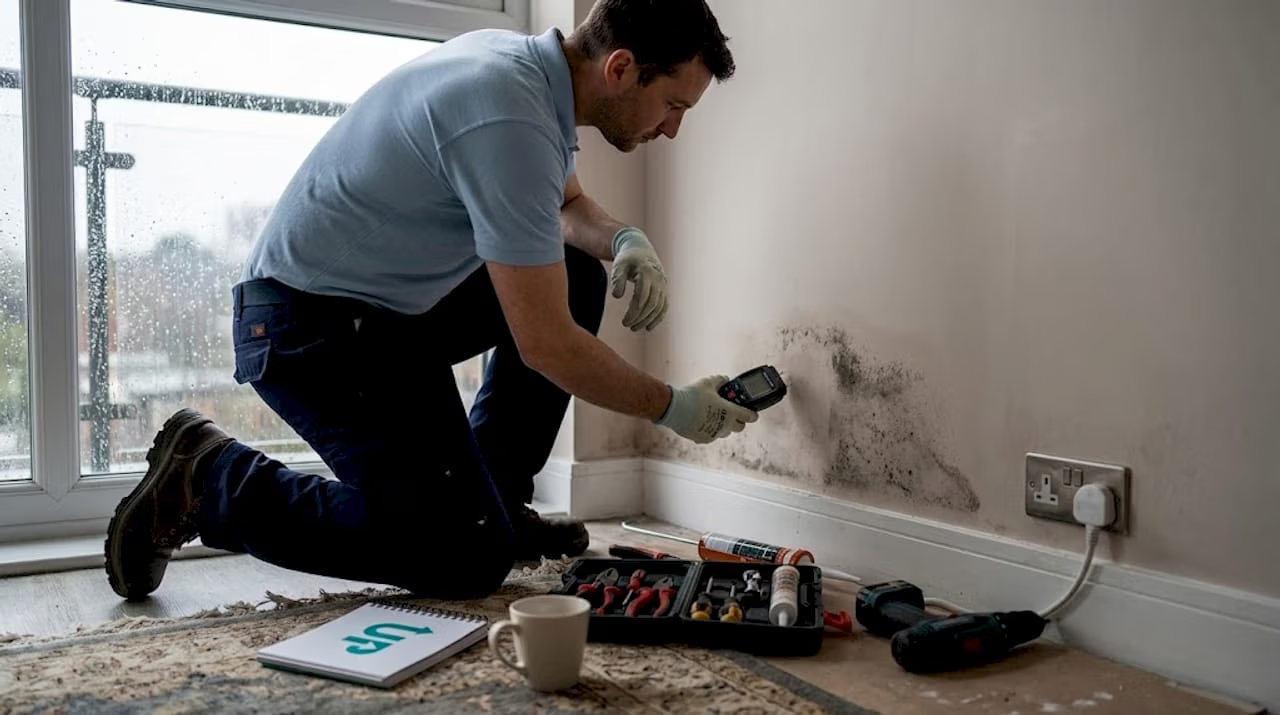
The regulatory pressure is also increasing fast. Awaab’s Law requires landlords to investigate damp and mould complaints within 14 days and complete repairs within 7 days, with full implementation expected from late 2026. Miss those deadlines and you face legal penalties, not just a repair bill.
There are several early warning signs landlords consistently overlook:
- Condensation on windows that lingers beyond cold mornings
- A musty smell in bathrooms or around external walls
- Failed bathroom extractor fans, which quietly cause expensive damp problems when left unrepaired
- Discolouration around skirting boards or window reveals
The consequences of delay go beyond remediation costs. Tenants can pursue Rent Repayment Orders, local councils can issue improvement notices, and courts will not look favourably on a landlord who ignored a documented complaint.
Pro Tip: Invest in a moisture meter. A low-cost handheld device used at each inspection gives you objective readings before a damp problem becomes visible, and that data forms part of your compliance record.
For a detailed look at causes and remedies specific to London’s older housing stock, the damp in London properties guide from Upkeep UK covers the full picture.
2. Missing gas safety certificates and EICR renewals
Gas safety certificates must be renewed every 12 months without exception. Electrical Installation Condition Reports require renewal every five years for rental properties. Neither of these is optional, and the penalty for getting it wrong is severe.
A missing or expired EICR can result in fines up to £40,000, and courts routinely block possession claims when certificates are absent. This is not a technicality that judges overlook. It is a hard stop in proceedings that can cost landlords months of rental income while the legal process restarts.
Here is where the timing drift problem becomes dangerous:
- A certificate is issued mid-tenancy, not on the lease start date.
- The renewal reminder is tied to the wrong date in a spreadsheet.
- The tenancy renews, the certificate expires, and the landlord does not notice for weeks.
- A dispute arises, possession proceedings begin, and the court finds the certificate lapsed.
Proactive compliance means tracking all renewal dates in a single digital system, with automated alerts set at 60 days and 30 days before expiry. Build in a buffer for contractor availability, particularly in autumn when demand peaks.
Pro Tip: Keep copies of all certificates in a cloud-based folder named by property address, not by date. When a legal dispute arises, you need to find the right document in seconds, not minutes.
3. Using unaccredited contractors without public liability insurance
Price-driven contractor selection is one of the most common landlord errors that compounds into much larger problems. A cheaper quote from an unaccredited tradesperson can result in substandard work that fails inspection, causes further damage, or creates a liability claim you cannot defend.
The risks break down into three distinct categories:
- Safety failures: Unregistered gas engineers and unlicensed electricians create work that may not meet Building Regulations, putting tenants at risk and landlords in breach of their legal duties.
- Insurance voidance: Many landlord insurance policies include clauses that void claims if the repair work was carried out by someone without appropriate trade accreditation or public liability cover.
- Litigation exposure: If a tenant is injured because of defective work, and the contractor carries no public liability insurance, the claim falls directly on the landlord.
Accredited contractors carry Gas Safe registration for gas work, NICEIC or NAPIT certification for electrical work, and public liability insurance as standard. Upkeep UK operates with fully insured, accredited tradespeople across all disciplines, which means the work is defensible in court and protected from day one.
4. Failing to document repairs and maintenance activities
Courts and tribunals now expect documented evidence, not just verbal assurances. Scattered or incomplete records are one of the leading reasons landlords lose possession claims under Section 11 and Section 8, even when the repairs were genuinely carried out.
Proper documentation means more than keeping invoices in an email folder. It means:
- Dated photographs taken before and after every repair
- Written confirmation to tenants when a repair request is received and when it is resolved
- Copies of contractor job sheets or completion reports
- A chronological maintenance log per property, accessible without searching through multiple platforms
Rent Repayment Orders are another growing risk. A tenant who can show their landlord was slow to respond and cannot prove otherwise with documented evidence can recover up to 12 months of rent through the tribunal system. Compliance documentation is not just about avoiding fines. It is your primary defence in any legal proceeding.
Pro Tip: Use a dedicated property management platform or shared cloud folder per address with subfolders for certificates, repairs, correspondence, and inspections. The structure should be so clear that a solicitor can navigate it without explanation.
5. Having no reactive maintenance SLA in place
Modern tenants expect fast repairs, comparable in speed and communication to the on-demand services they use every day. A landlord who responds to a leaking boiler report in three days is not meeting that expectation, and the tenant who waits will escalate the complaint, look for alternative accommodation, or both.
London accounts for over a third of all UK tenant maintenance reports, with leaks comprising 17% of reported issues. The volume alone makes an informal, ad-hoc approach to repairs financially unsustainable.
A reactive maintenance Service Level Agreement should define:
- Response times by issue category (emergency, urgent, routine)
- Communication protocols for out-of-hours faults
- Escalation procedures if the first-contact contractor is unavailable
- A record of resolution for compliance purposes
Delays escalate minor issues and extend void periods when tenants leave. A responsive maintenance partner reduces dispute escalation, lowers void periods, and improves tenant retention in a way that directly affects your bottom line. Upkeep UK provides a 24/7 reactive maintenance service with defined response times built in as standard. For more on what a fast reactive service looks like in practice, the reactive maintenance guide for landlords is a practical starting point.
6. Neglecting flat roof and external fabric inspections
Flat roofs are among the most neglected elements of London’s residential stock, particularly on Victorian terraces with rear additions and purpose-built maisonettes. The failure mode is predictable: debris accumulates in outlets, drainage slows, water pools, and then works through membrane seams into the structure below.
Blocked gutters running water down external walls cause penetrating damp that is genuinely difficult to remediate once it reaches internal finishes. An annual gutter clearance, timed before autumn leaf fall, is one of the highest return-on-investment maintenance activities available to a landlord.
External fabric checks each autumn should cover:
- Flat roof membrane condition and drainage outlet clearance
- Parapet capping and pointing
- External render for cracks or missing sections
- Window and door seals, particularly on north-facing elevations
Pro Tip: Schedule flat roof and gutter inspections in October, before the heaviest rainfall and well before the pre-winter boiler rush makes contractor availability tight.
7. Missing EPC improvement deadlines
The minimum Energy Performance Certificate rating to let a property in England is currently E. Proposed legislation may raise that threshold to C in coming years. Being caught unprepared for either standard is an entirely avoidable property upkeep mistake.
Non-compliance with EPC regulations can result in fines up to £5,000 and prevent the property from being legally let until the rating is achieved. For landlords with portfolios across multiple London boroughs, an untracked EPC expiry can quietly remove a property from the market.
Key actions to stay ahead of EPC compliance:
- Track EPC expiry dates alongside your other certificate renewals (EPCs last 10 years)
- Commission an updated assessment well before a new tenancy begins
- Plan improvement works, such as loft insulation, draught-proofing, or boiler upgrades, in advance to avoid rushed costs
Upkeep UK can coordinate compliance improvements and help landlords prioritise the measures with the highest impact on EPC ratings.
8. Mistakes compared: costs, risks, and what to do
| Mistake | Financial or legal consequence | Preventive action |
|---|---|---|
| Ignoring damp and mould | Rising remediation costs; Awaab’s Law penalties | Moisture metre checks; prompt investigation within 14 days |
| Missing gas safety certificate | Blocked possession claim; prosecution risk | Annual renewal with 60-day advance scheduling |
| Lapsed EICR | Fines up to £40,000; court-blocked Section 21 | Five-year renewal tracker; digital certificate storage |
| Unaccredited contractors | Insurance voidance; litigation exposure | Accredited-only contractor list with proof of insurance |
| Poor documentation | Failed Section 11 defence; Rent Repayment Orders | Centralised digital records per property |
| No reactive SLA | Higher void periods; tenant complaints; escalated costs | Formal SLA with defined response times |
| Neglected flat roof | Penetrating damp; structural damage | Annual October inspection and gutter clearance |
| EPC non-compliance | Fines up to £5,000; property unlettable | Ten-year tracking; pre-tenancy assessment |
My honest take on landlord maintenance in London
I’ve worked with landlords across London for years, and the pattern I see most often is not carelessness. It is overconfidence in informal systems. A landlord manages one or two properties, develops a routine that works, and then scales to five or six without updating the system. What worked informally at small scale becomes a compliance liability at portfolio scale.
The damp and certification mistakes I see most often are not caused by landlords who do not care. They are caused by landlords who are tracking renewals on a phone calendar shared with everything else in their lives. When a reminder gets dismissed once, it often does not come back.
What I find most telling is how many landlords treat reactive maintenance and preventive maintenance as opposites when they are actually partners. Skipping a boiler service in September often leads to an emergency call-out in January that costs far more. Seasonal timing for pre-winter inspections is one of the highest-value habits a London landlord can build.
My strongest piece of advice is this: treat your property compliance record as a legal document, not an administrative task. Every certificate, every repair report, every tenant communication is evidence. The landlords I have seen navigate disputes successfully are the ones who can produce that evidence immediately, not the ones who did the right thing but cannot prove it.
Eugen, Operations Manager, UpKeep UK
How Upkeep UK helps London landlords stay protected
Managing compliance across one property is demanding. Across a portfolio of five or ten in different London boroughs, it is genuinely a full-time responsibility. Upkeep UK works with landlords across all 33 London boroughs to take that pressure off.

Our fully accredited and insured contractors cover every trade discipline, from emergency electrical repairs to flat roof inspections and damp remediation. We provide 24/7 reactive maintenance with defined response times, and every job generates documented records you can use for compliance purposes. For landlords who want a clearer picture of what professional maintenance looks like in practice, the red flags in property maintenance guide outlines the warning signs that demand immediate action. For urgent situations, our emergency property repairs service provides fast, traceable resolution. Contact Upkeep UK today to discuss a maintenance plan built around your portfolio.
FAQ
What are landlords most commonly fined for in London?
The most frequent causes of fines are missing or expired gas safety certificates, lapsed EICRs, and EPC non-compliance. Fines for electrical certificate failures can reach £40,000, while EPC breaches attract penalties up to £5,000.
What maintenance mistakes can void landlord insurance?
Using unaccredited or uninsured contractors is the most common reason insurance claims are rejected. Policies typically require that all trade work is carried out by appropriately qualified and insured professionals. Always verify accreditation and public liability cover before any work begins.
How do I avoid Section 11 disputes as a landlord?
Section 11 of the Landlord and Tenant Act 1985 requires landlords to keep the structure, exterior, and installations in repair. Avoiding disputes means responding to repair requests promptly, keeping dated photographic evidence, and maintaining a centralised log of all works completed.
How long does a landlord have to fix damp under Awaab’s Law?
From late 2026, Awaab’s Law requires landlords to investigate damp and mould complaints within 14 days and complete remediation within a further 7 days. Failure to meet these deadlines carries legal and financial penalties.
What is the most expensive maintenance issue for London landlords?
Damp and mould remediation is one of the costliest repair categories in London. Early detection through routine inspections is the most cost-effective way to stop it escalating to a structural repair.